Is our enchantment with enhancement creating a level playing field, or an unwinnable game?

In a productivity obsessed world, anything that gets us closer to shipping is a winning thing by default. Endless tool kits, templates, and tactics, are available to anyone, but the strategic use and proper implementation of such things is in short supply. So it is with GenAI.
Should we disclose when GenAI is used?
After reading an excellent post on labeling GenAI content, and researching a proposed AI-labeling bill in the US Senate, I took to social media (Twitter & LinkedIn) to conduct a rough poll, asking people if they thought labeling GenAI content was something they agreed with in a personal capacity. And the differences in responses were wild…
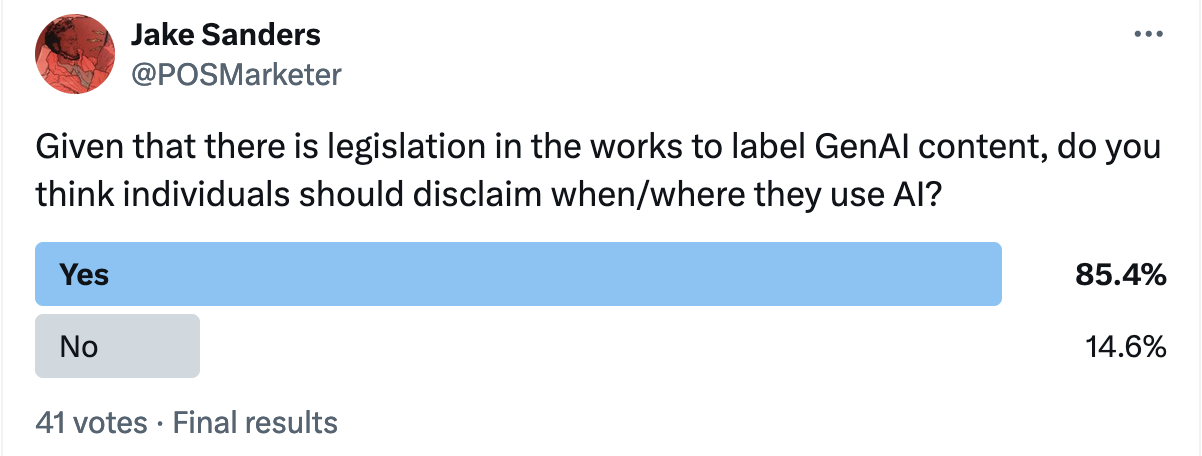
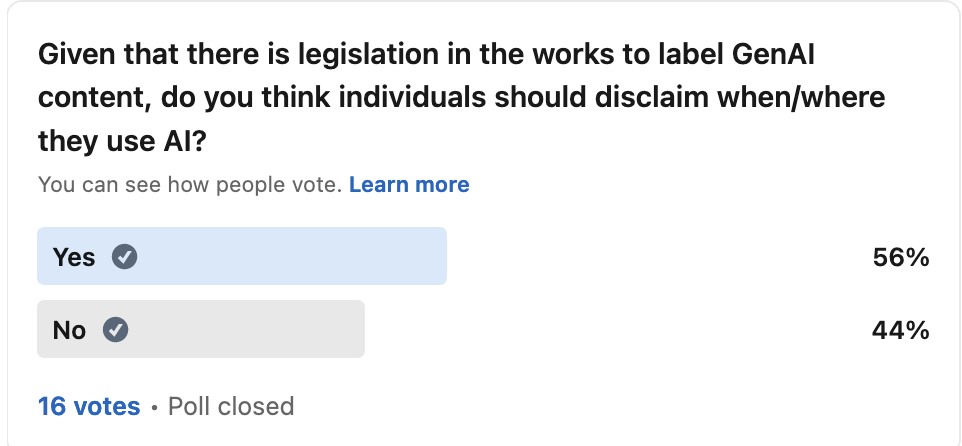
Given that there are probably more connections I have on Twitter that are more like me, and LinkedIn could be the opposite, this could just be a reverberation from an echo chamber. Or it could be something else.
The clapback to labeling includes people likening GenAI software as “just another tool.” But since GenAI is really a SERVICE, and one that has been known to make simple (and advanced) math errors, confabulations, hallucinations, whole-cloth lies, and produce fully-composed outputs that are rapidly fired into the internet without a second thought, GenAI is not anything like a calculator.
But it made me wonder if business professionals are less inclined (maybe scared) to admit when they are using performance enhancing tools, because it’s tied into external perspectives on their innate capacities, boosted productivity, and revenue opportunities.
Is GenAI a performance enhancing drug?
We’ve come a long way from Lance Armstrong. Famously praised for his epic heroism and fight with cancer, and then shit upon and excommunicated for blood doping, the world was rocked by Lance’s lies. But are we turning a corner?

The Enhanced Games are set to debut in 2025, and it’s 100% steroid fueled, proudly.
What’s striking to me, is proponents of chemically-enhanced performance in sports sound like the GenAI enthusiasts, particularly around art, where artistic skills are likened to preferential genetics, and GenAI is just here to level the playing field.
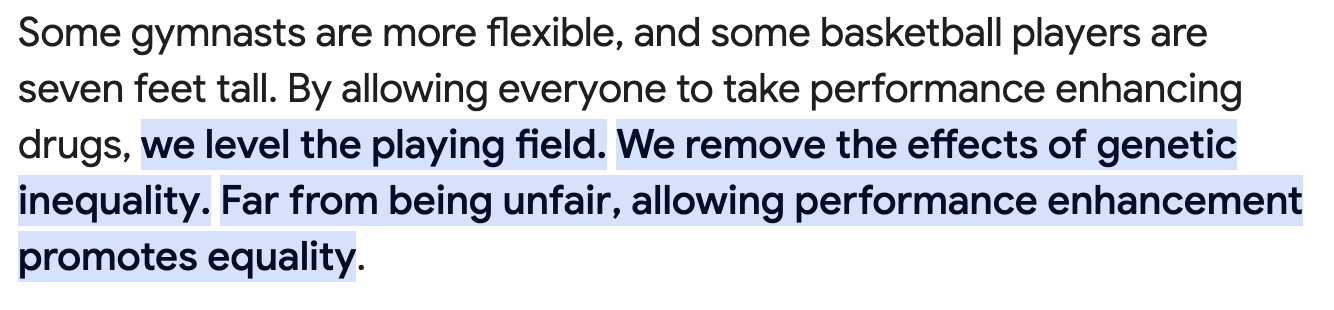
“We weren’t all born with natural talents!” they cry. And rather than cop to the reality that talent only comes from a ton of deep reflection, hard work, tough breaks, and heartbreak, we all are brimming with optimism that we can get a taste of that pixie dust, and damn anyone who takes the sweet stuff off our mirror. It’s only right.
We’re finding ourselves at an inflection point with performance and AI-assisted productivity, with a dangerous side of eugenics and a truly fucked up definition of “equality.”
Faking it ain’t nothing new in biz
It’s my position that this seemingly growing positive ethos around doping in sports is influencing the way GenAI is being used in the business world. A world where ghostwriters/tools/templates are common, but hidden; the origins of thought are masked on purpose, for payment, to give the glory to the God holding the check.
In a way, business has always been fueled by performance enhancements; founders don’t write speeches and come up with strategies and execute plans, the whole team helps. But the success of these founders is usually lumped onto their shoulders and viewed as their win alone. They conducted the tools and talents to extract the win.
So when it comes to labeling GenAI, the business world’s distaste is an historic one, based on precedence. But just because we’ve always operated in this way, shouldn’t mean we don’t evolve. And this evolution has to take place soon, because GenAI is messing everything up, right now.
Tupac, Deep Fakes, and Jake
Last week, Drake released a diss-track response to Kendrick Lamar, wherein which he used voice clones of Snoop and Tupac to deliver a rap he wrote. My initial response was less than enthusiastic, and just today we find out the estate of Tupac sent Drake a cease-and-desist order.
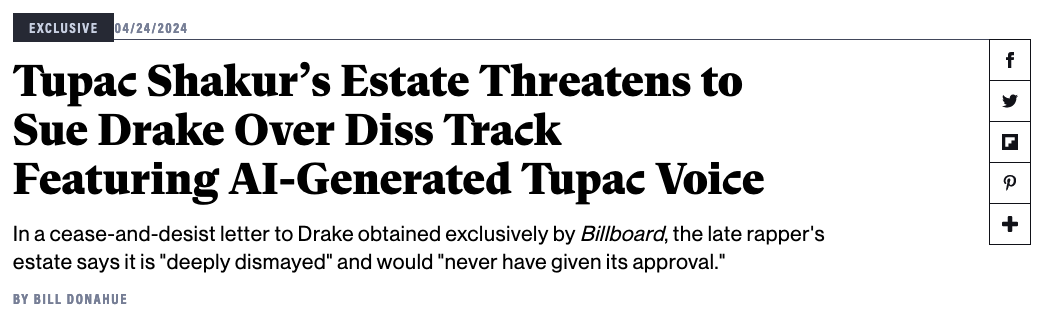
Why would Drake, who has natural talent, use GenAI enhancements? Is this a level playing field? Is it fair? Is it ethical? Is it even hip-hop? Does it take court orders to act right? Well….
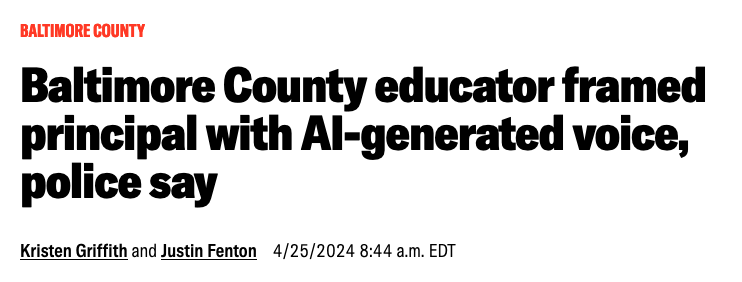
This wild story about a teacher who used GenAI to frame their principal makes it seem like the law is the only barrier to making dumbass ideas come to life in real-time.
What was this person’s damage or problem with their boss? Could they have talked with the principal to air their grievances and fix what was broken? Is the hard work of trying to reach an understanding so difficult, that we resort to crime? Are we so scared to use our own voice that we’d rather puppet audiences with someone else’s?
Well….
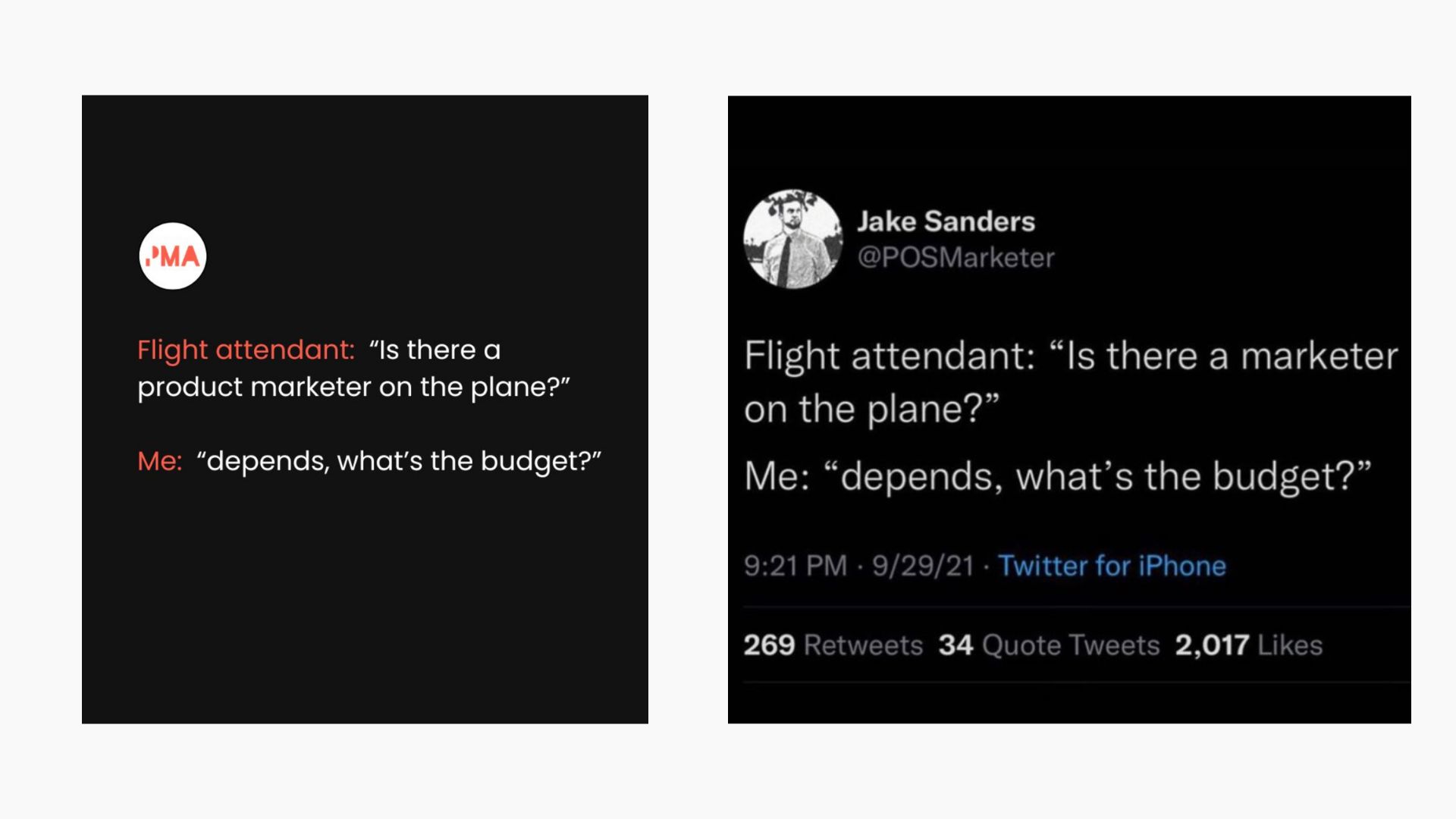
Just this morning, as I started to write this very article, I woke up to a TON of LinkedIn notifications. Someone at the Product Marketing Alliance LinkedIn social team, thought it would be cute to steal my dumb joke, and make it look like they wrote it.
That chapped my hide. And as I looked at the comments, I was chapped even further…
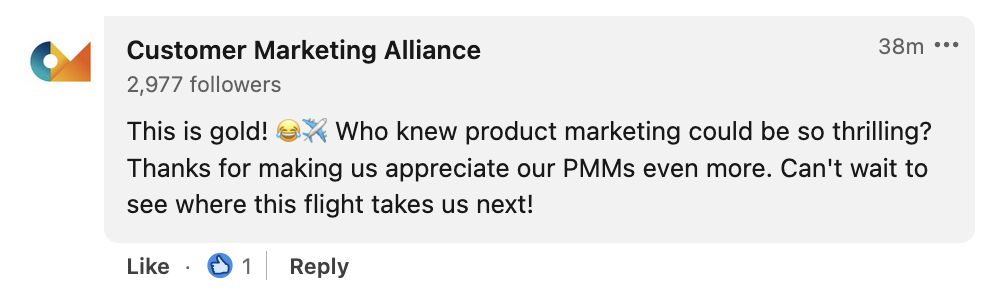
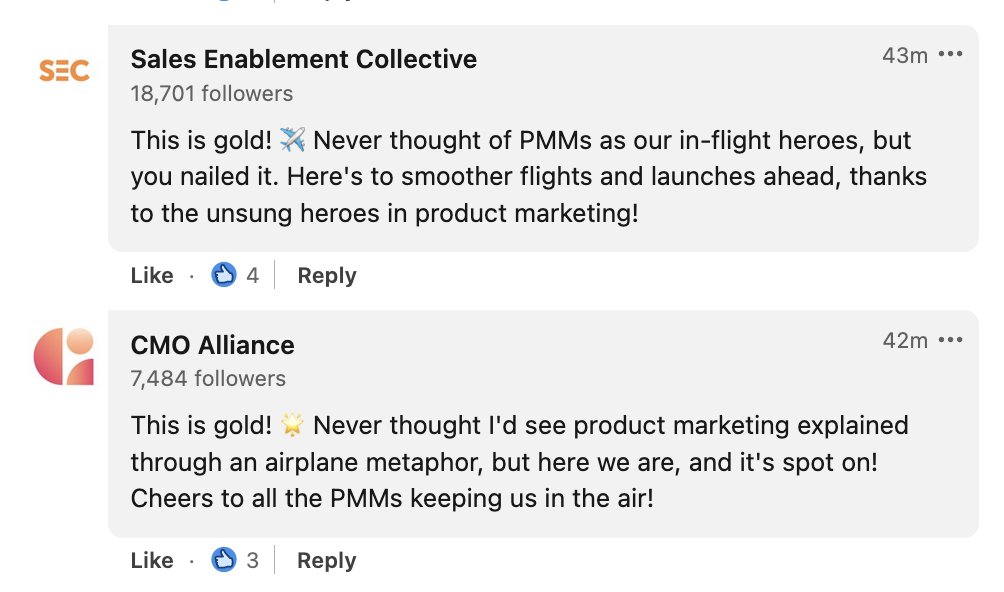
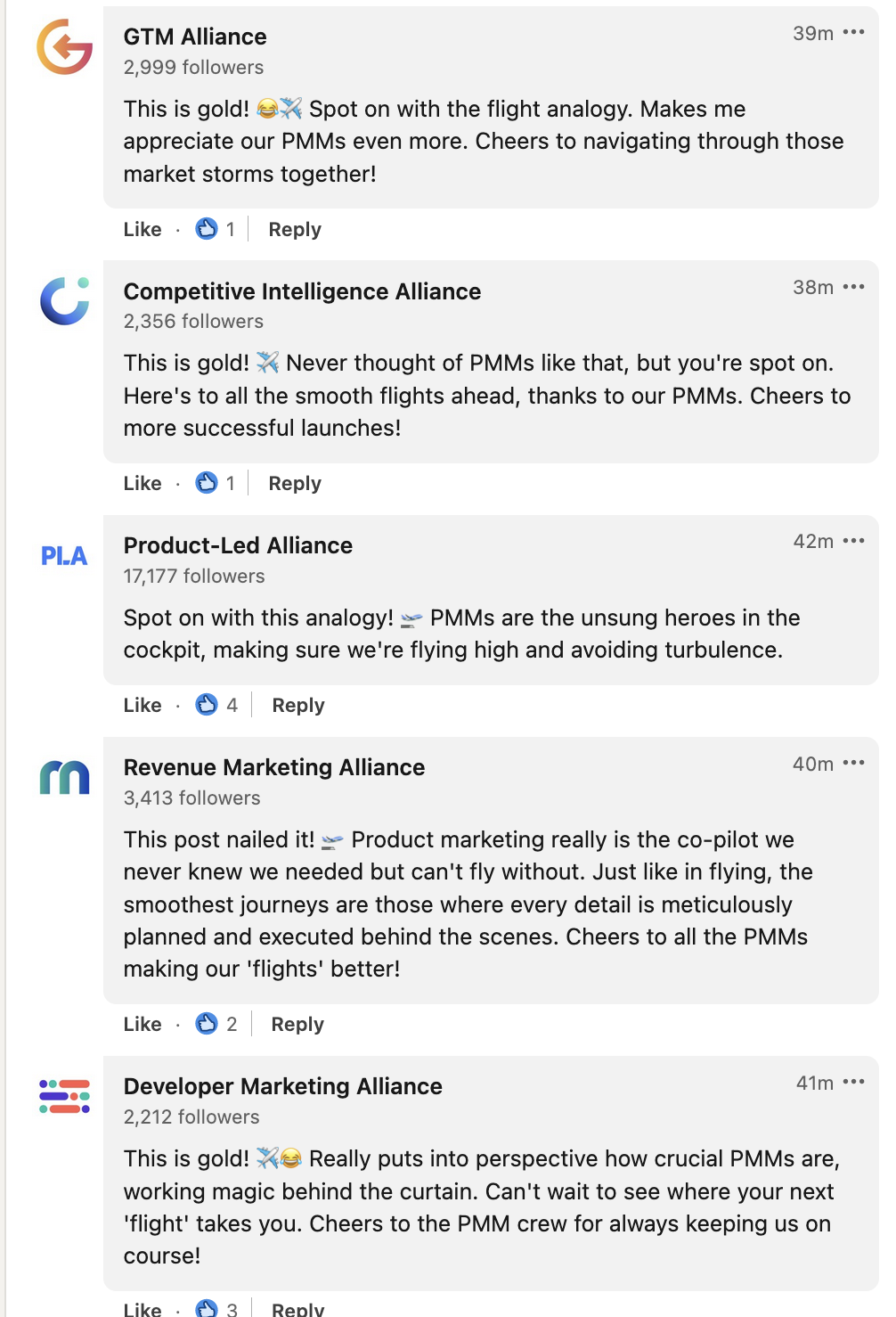
Here I am, an idiot marketer with a penchant for metaphors and humor, and this fleece-machine fleet of fake-ass “alliances” takes my tweet to generate a bunch of GenAI-astroturfed engagement?

They could’ve easily just kept the original tweet and lost nothing, but stealing my talent and pretending they wrote it, wasn’t kosher. I flagged it, asked them nicely to take it down, and it’s gone.
But it clarifies and strengthens my original thought; GenAI is the gas station boner pills of the business world. While we might fool our way through a few one night stands with audiences, we are seriously hampering the perception of authenticity and trust in audiences, and at the same time, reducing our skills and ability to generate quality outputs on our own steam.
Labeling GenAI content is a step in the right direction, but there has to be a larger vibe shift in the acceptance and disavowal of depicted reality. If we don’t make that shift now in the real (or business) world, we might not know when we’ve fully crossed into a fake one.
 POSMarketing