A quick review of Hubert & Stuart Dreyfus 1988 book on AI
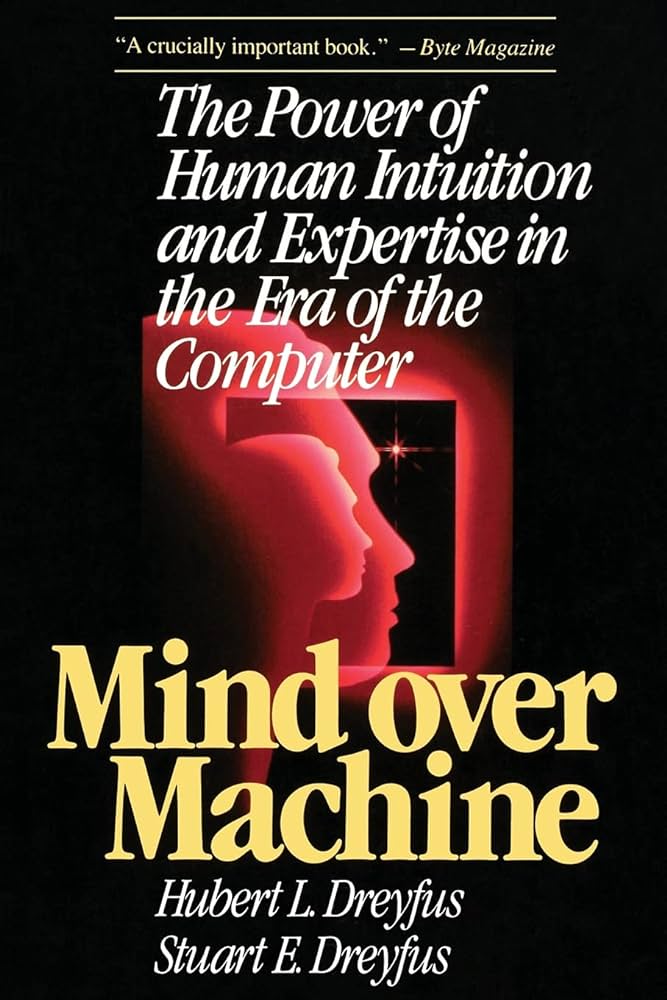
The 1988 book, “Mind Over Machine,” covers the capabilities and limitations of computers in mimicking human intelligence and decision-making. A central theme in the book is skepticism towards the ability of computers to replicate higher-level human cognitive functions. Dreyfus argues that human expertise embodies a kind of knowledge and skill that goes beyond formalized rules and logical reasoning, reaching into the realm of intuition and subtle judgment that machines are unable to replicate.
Stages of Expertise
Dreyfus outlines five stages through which individuals progress to develop expertise in any field:
Novice:
Beginners follow strict rules and guidelines for performing tasks. Their actions are heavily context-independent because they have not yet experienced enough of the real-world scenarios to make nuanced judgments. This stage is where instruction is most rule-based and rigid.
Advanced Beginner:
At this stage, individuals can recognize certain contextual elements and start to apply rules in specific situations. However, their understanding is still limited, and they often need assistance when problems are more complex.
Competence:
Competent individuals have gained more experience and can devise plans when handling large amounts of information. They can see actions in terms of long-term goals and begin to prioritize which aspects of a situation are most important.
Proficiency:
Proficient practitioners have developed a deeper background in the field, allowing them to intuitively understand what needs to be done in various situations based on their vast experience. They may struggle to verbalize their reasoning because much of their knowledge is tacit.
Expertise:
At the highest level, experts no longer rely on rules, guidelines, or maxims. They have an intuitive grasp of situations based on a deep, implicit understanding. Experts know what needs to be done, often without conscious consideration of alternatives. They see problems and solutions holistically.
Transition from Rule-Based Learning to Expert Intuition
The transition from rule-based learning (novice) to expert intuition (expertise) is marked by a shift from reliance on predetermined, abstract rules to an intuitive, often unconscious understanding of complex situations. As expertise develops, reliance on conscious analytical reasoning decreases, and individuals begin to operate more on instinct and deeply ingrained knowledge. This expertise allows for quick, effective decisions that are difficult to articulate but are based on a rich understanding of what typically works.
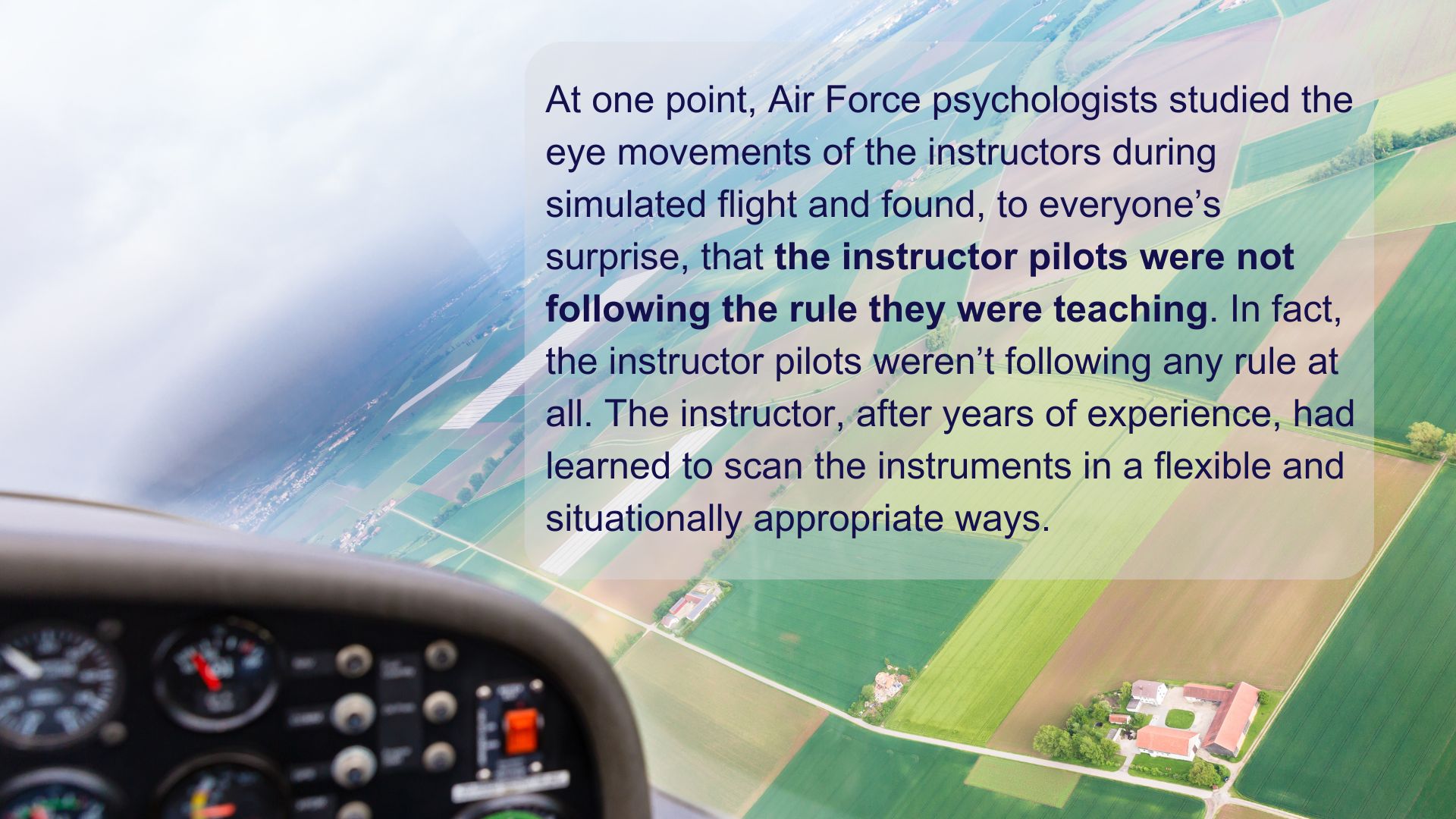
His story about Air Force instructor pilots is worth sharing….
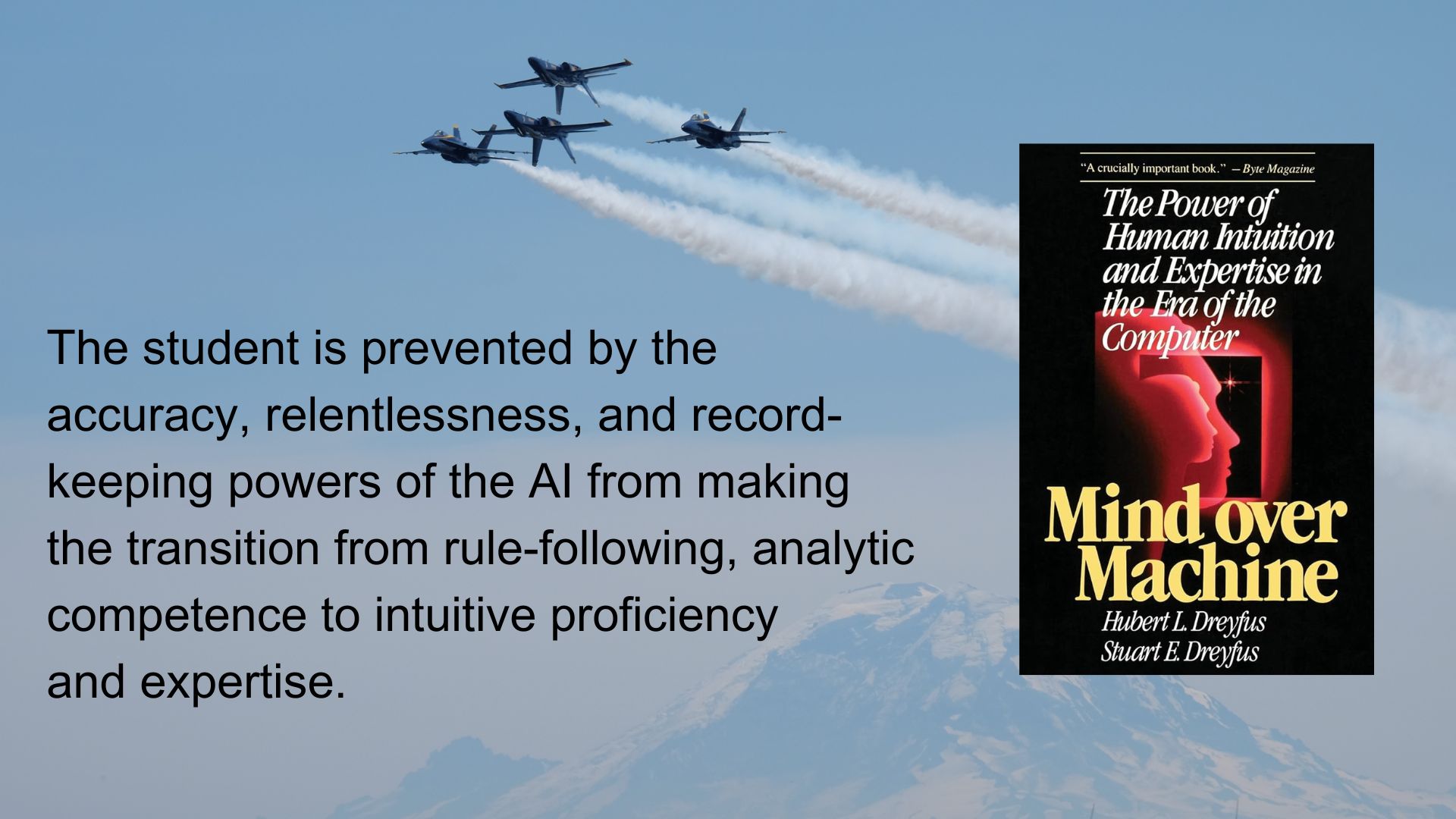
Dreyfus argues that human expertise is fundamentally different from and superior to the capabilities of computers. While machines can excel in applying predefined rules across vast datasets — surpassing even skilled humans in speed and accuracy — they lack the ability to make the intuitive leaps or understand the deeper meaning that comes from real-world experience and human understanding.
Calculative rationality actual fixes thinking in the advanced beginner stage, because it’s engineered to work with numbers/patterns/statistics. At a certain point of fluency based on lived experience, human expertise escapes these confines.
In “Mind Over Machine,” Dreyfus makes a compelling case for the unique aspects of human cognition and expertise, highlighting the limitations of computers in areas that require nuanced judgment and a sophisticated sense of context. This discussion raises important considerations about the role of artificial intelligence in society and the fields where human expertise will remain indispensable.
 POSMarketing