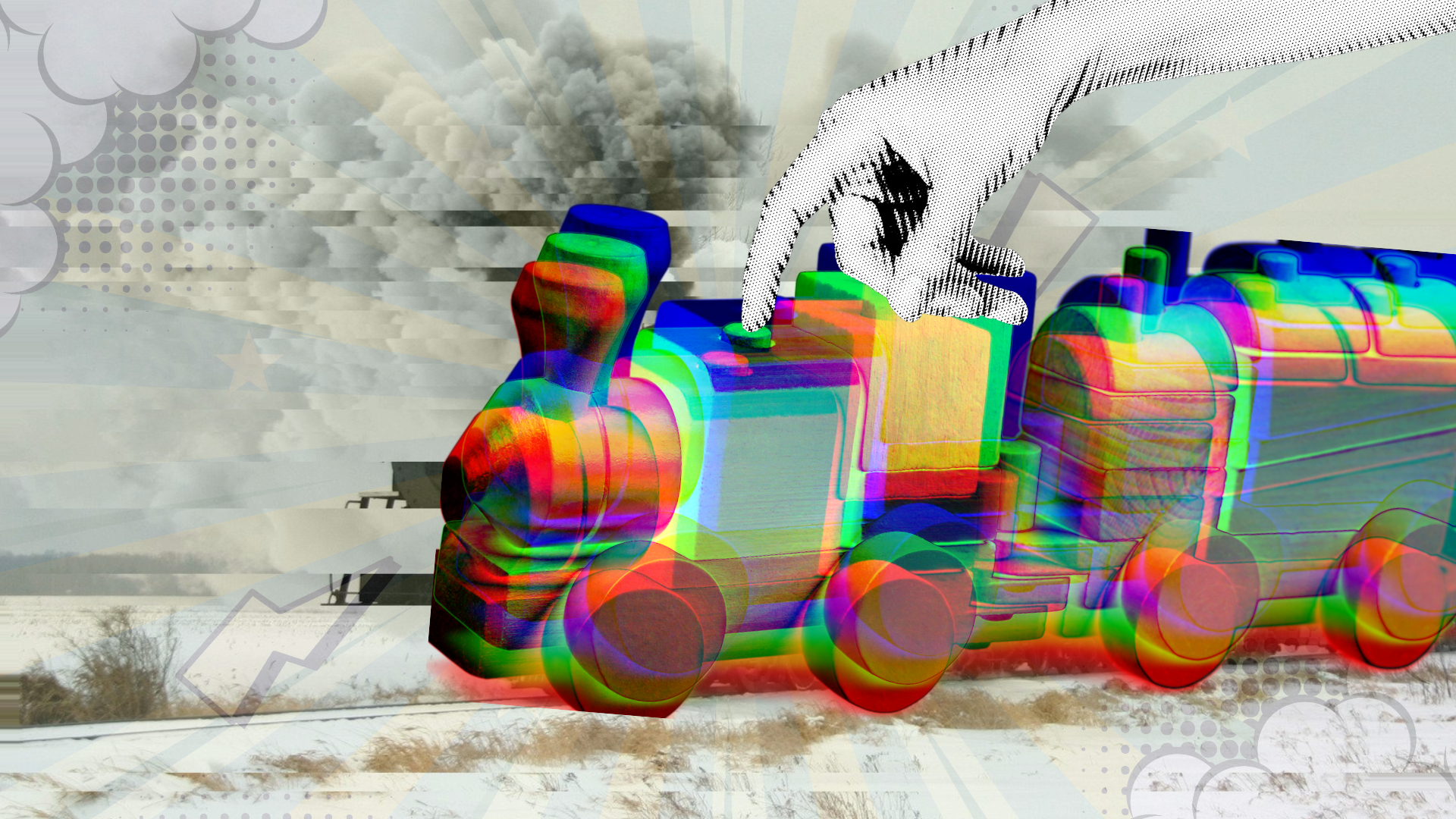
From backyard battlefields to AI-generated worlds, an essay on how toys & tools that promise creative freedom destroy it and dictate how we’re allowed to imagine.
As the connection to headquarters suddenly cuts off, Night Viper realizes the Arctic wastelands are playing havoc with his electronic components. It’s fine, he’s trained without them. Besides, he has bigger problems.
He knows he has only moments to reach a rise out there in the drifts—his only chance to break line of sight and escape the assailants launching missiles from the rear. He fires his jet pack and looks back with a smirk.
The smirk doesn’t last. It collapses into a grimace as the pack sputters and dies in the cold.
He smash-lands far short of his target. The odds that his attackers would hit theirs—and end the mission—just tripled.
At that moment…Mom told me to come inside.
Cinematic Play and the Blurred Boundary
I used to play with GI Joes the way Spielberg cuts a movie.
That exact scenario above unfolded in my front yard with this exact toy.
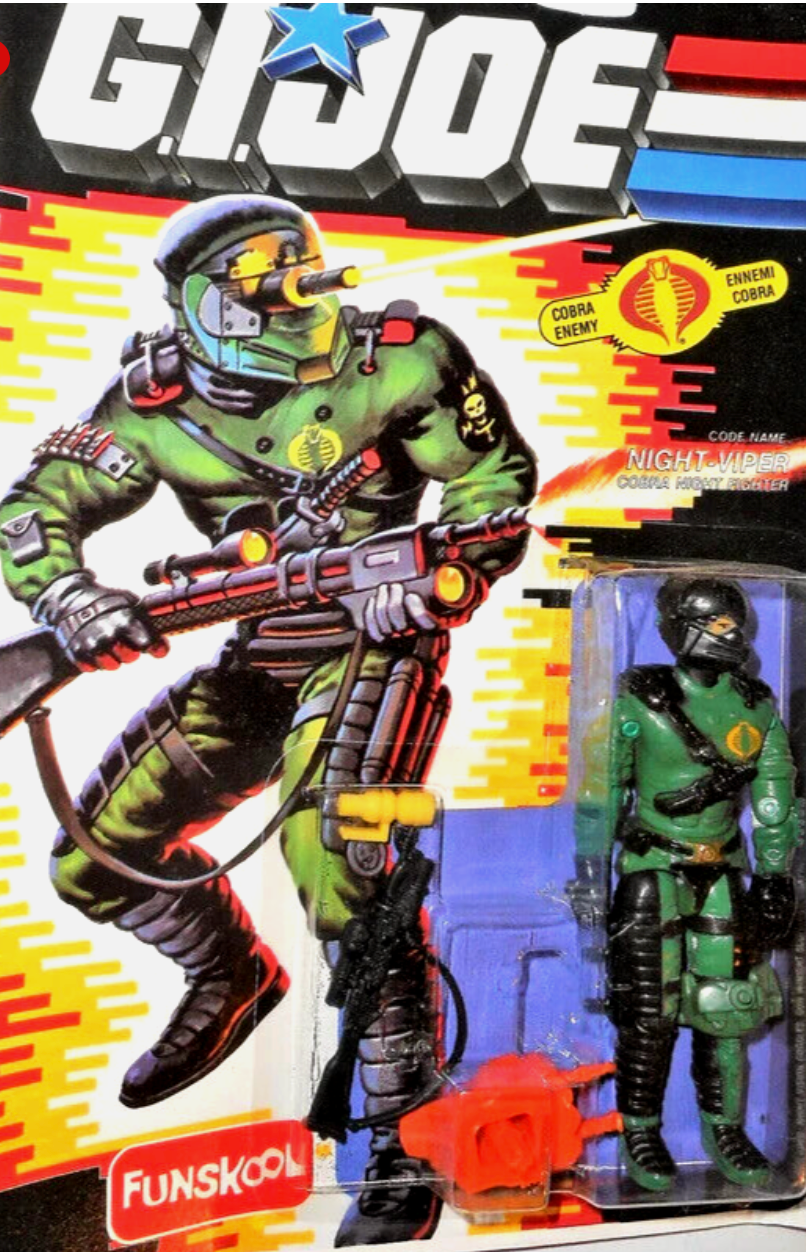
When I was on my hands and knees, staring into a kind of bokeh trance: the four-inch mercenary was sharp and enormous in my imaginary foreground, while the reality of me arranging plastic figures blurred into the background. I wasn’t a nine year old watching the story. I was inside it.
My hands were the same wind under the missile and the slipstream the jet pack was cutting through. My mind was a mash of sound and light—SFX, music beds, internal dialogue, trench grunts, radio chatter. Damage landed in multivariate ways and characters moved freely. Emotions registered, monologues maintained, stakes shifted effortlessly.
The stories themselves were simple, and pointless. I wasn’t interested in campaigns that began formally and ended formally. What mattered was motion. I stacked scenarios sideways and vertically, endlessly. They could go somewhere or nowhere. It didn’t matter. The act of imagining—of sustaining momentum—was the point.
When Toys Started Telling Me How to Play
I’m describing how it felt to play as a kid, because I want to convey how it felt when I began to notice the toys I used my imagination to activate, started to be sold with preloaded imagination activations of their own; battle damage, real projectiles, and SFX.
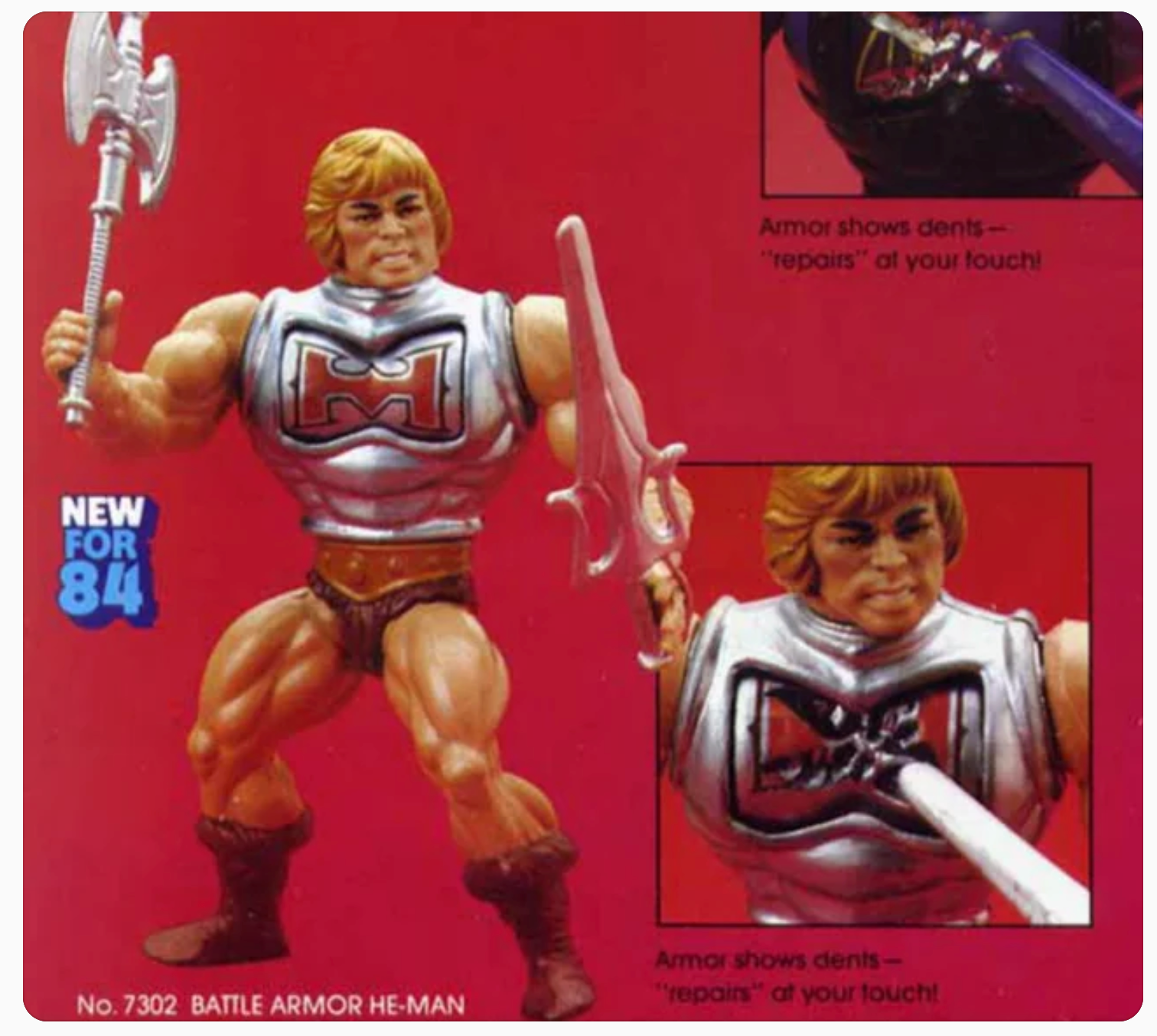
I can’t remember if it was this He-Man battle damage figure that first set me off, but it’s a perfect starting point, because suddenly imagination had a “right” way to operate, a way positioned as better because it was more real. He’s hurt. But hurt by what, I remember thinking? The damage has to match the story. The story’s gotta bend to the scuff. The battle damage-reversal didn’t control the play, but it narrowed it enough to feel restrictive, limiting, and pre-scripted.
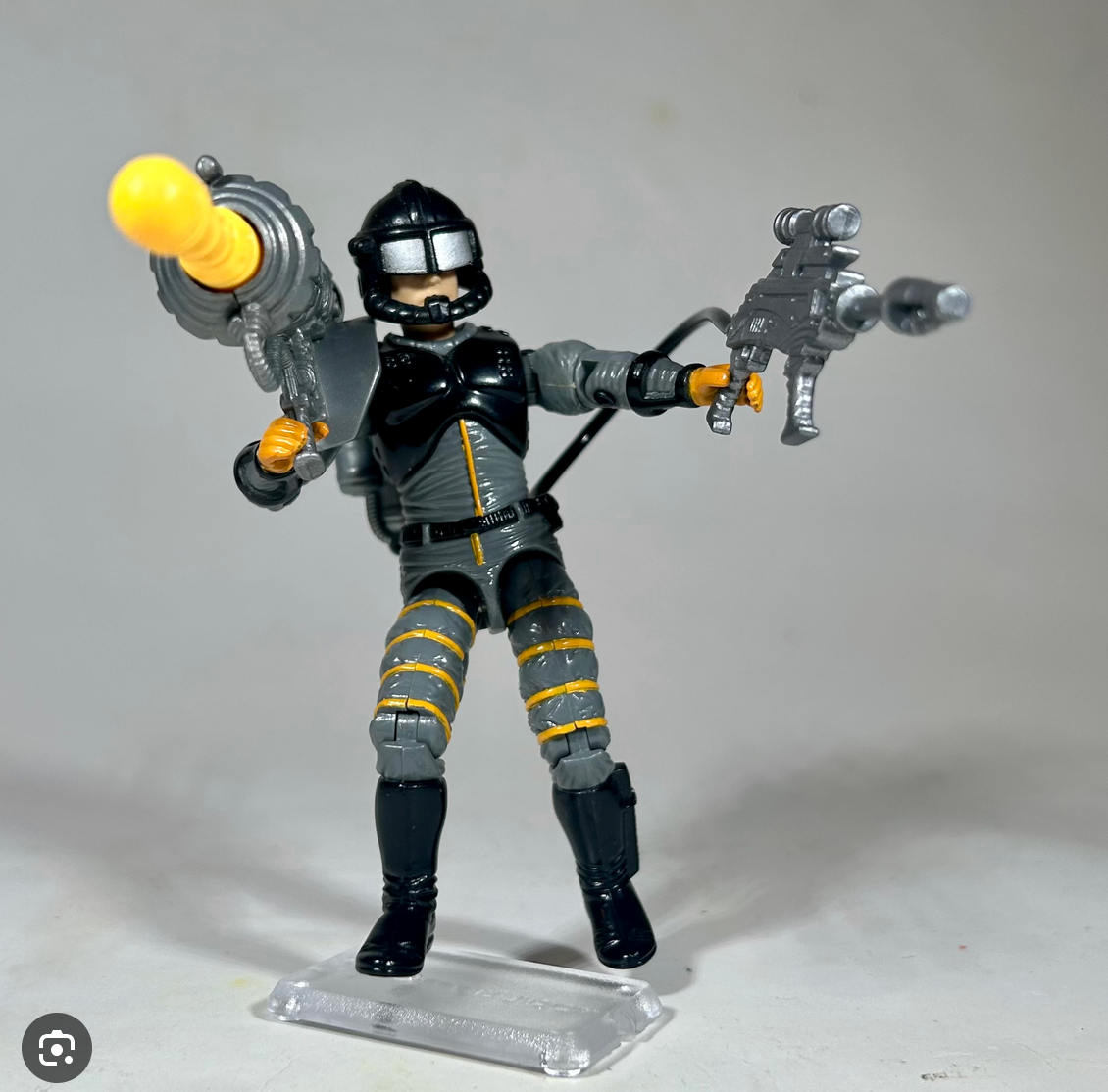
The same thing happened with the first GI Joes that actually fired projectiles. Mildly exciting, until you realize you had to design battles at distances the weak missile could reach. Again, this was supposed to unlock imagination with a preloaded feature. Instead, it fenced the play into the toy’s limitations.
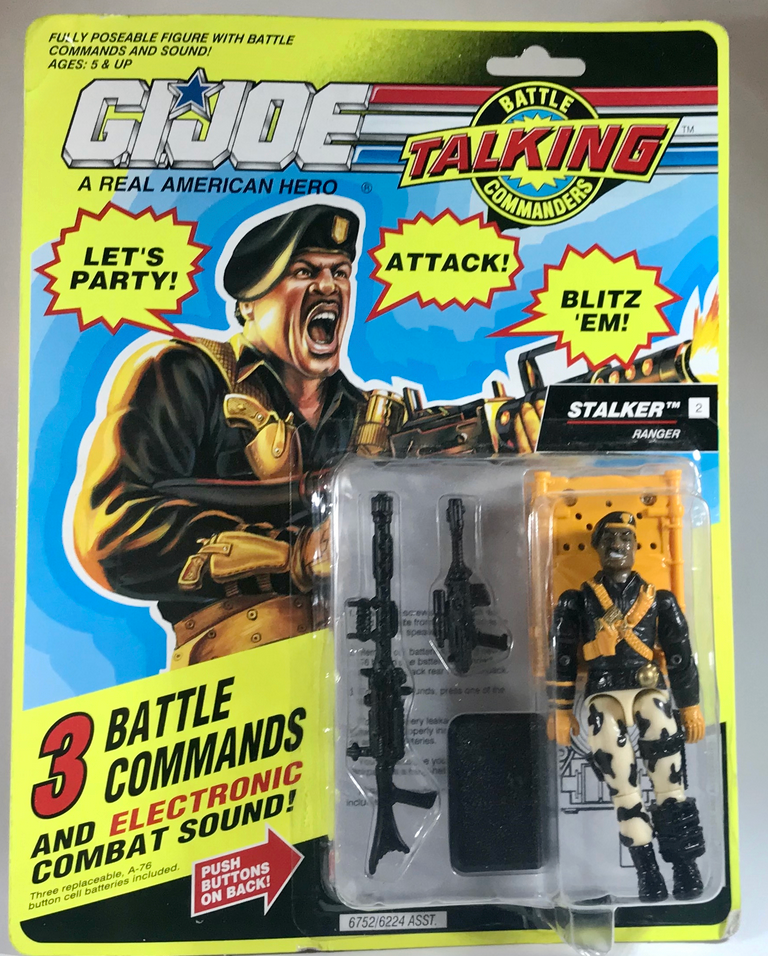
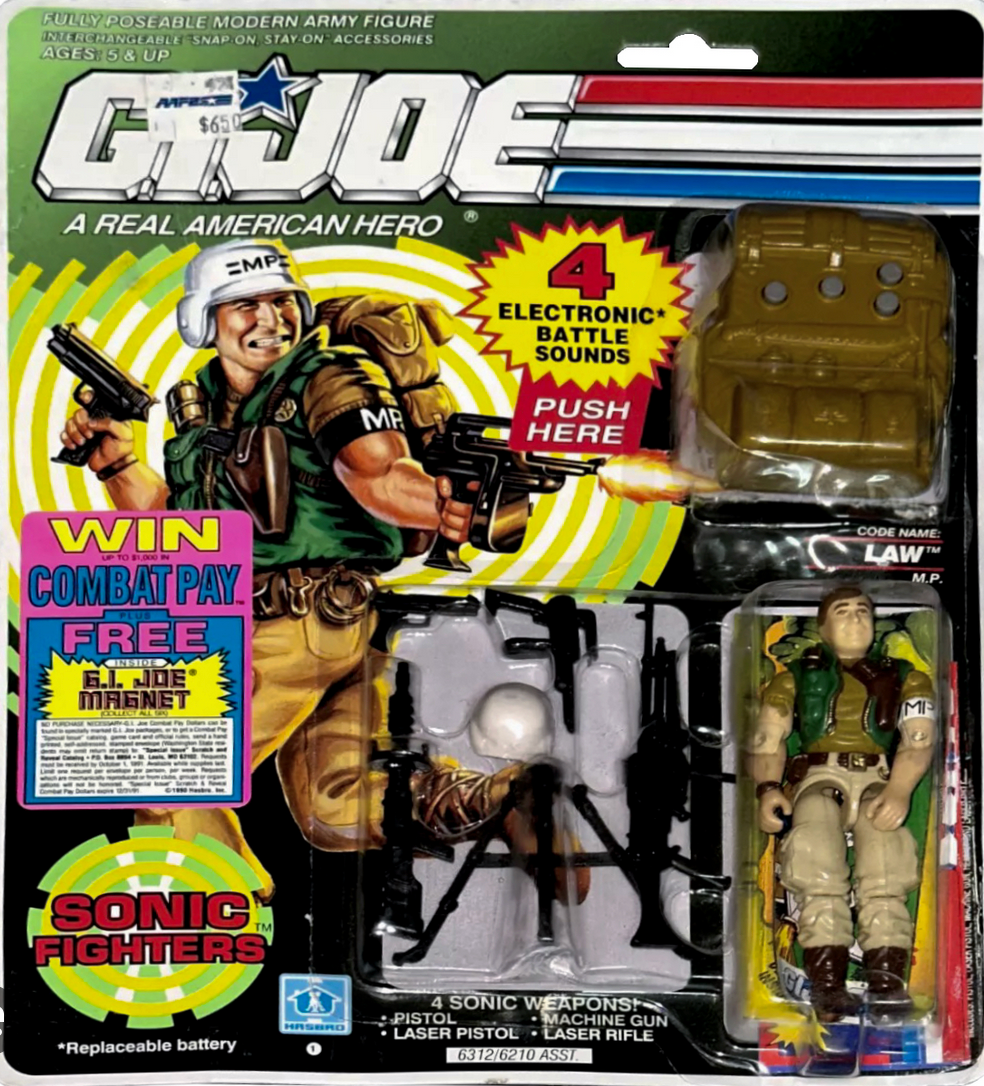
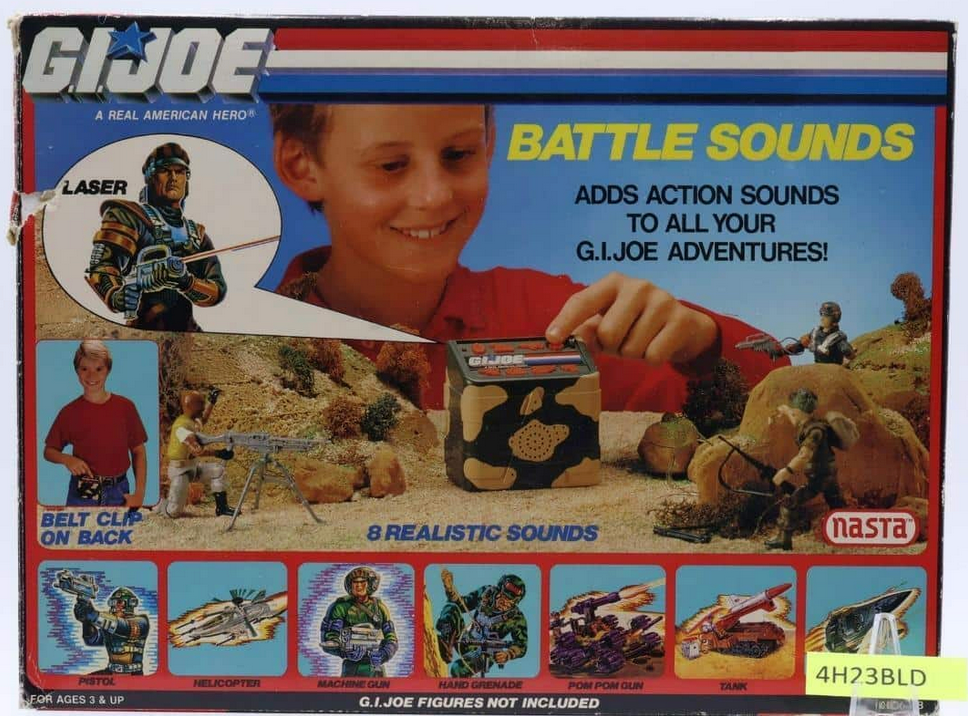
And particularly when the toys started being sold loaded with SFX, I felt the manacles of pre-fabricated imagination being thrown onto me the heaviest.
The battle sounds and catchphrases felt like plasticine prison cells. When playing with these “talking” toys, you had to wait for the perfect moment, or specifically and always artificially, manufacture one, where certain sounds or catchphrases like “let’s party” made sense. The SFX of explosions came from the toy, not from where the missile landed. I remember being beside myself about this (I was a weird kid) aware that us kids were being sold imagination, but all I saw was limitation after limitation.
Royalty-Free Imagination
In reality, the battle scene at the top looked like this….

In my head, it was an arctic wasteland ravaged by war. And in the spirit of “show, don’t tell,” I considered using GenAI to create an image of my imagination, but skipped it—and funnily enough, while searching for “snowy battlefields,” I came across a royalty-free GenAI image below that looked close, clearly fabricated, and dropped the central puzzle piece of this essay right into my lap.
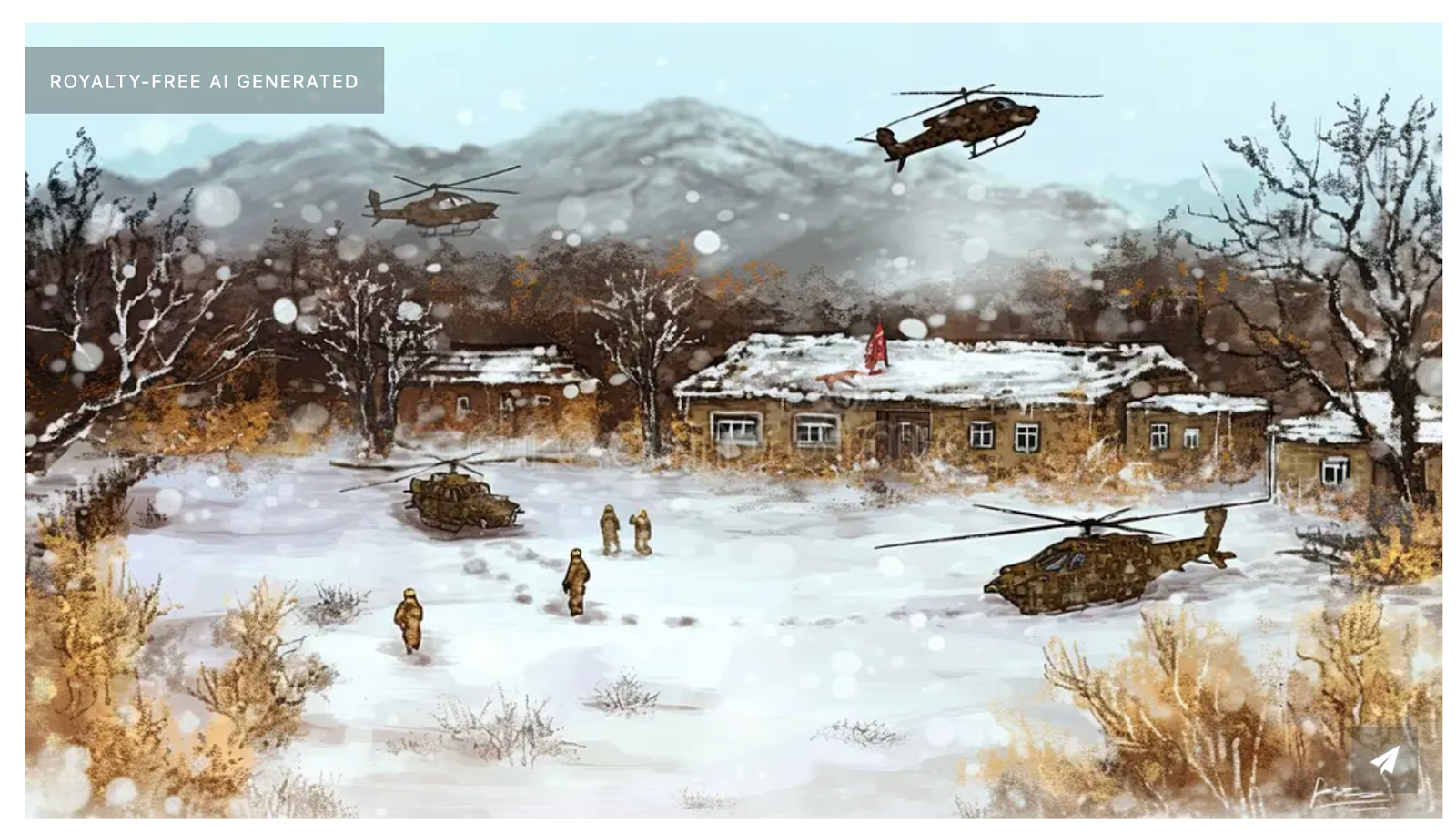
Never mind that “royalty-free AI” is legally incoherent. The phrase gives the game away. It reveals a mindset: extract value without compensating creators—and more insidiously, erase the provenance, labor, and supply chain of imagination itself.
We usually think of AI in terms of replacing individual roles—photographers, illustrators, writers. But GenAI stock imagery makes the deeper shift to production itself obvious.
If the work isn’t yours, harvest it. If you can’t harvest it, fabricate it and usurp the entire supply chain.
Royalty-free AI generated stock image sites don’t just suggest, but directly point to the deeper shift: GenAI companies aren’t here for the content, but already are working to replace the product, producer, and production of imagination entirely.
Playing With Fixed Toys Keeps Imagination Fixed
The Disney–OpenAI deal snapped all of this into focus for me. Here was the newest chapter in the evolution of toys with pre-loaded imagination activations.
Everyone is allowed to play with the toys—but only certain ones, and in certain ways, and only on a certain platform. Characters and players both are trapped inside lore and canon, endlessly recombining what already exists, bouncing self-referentially within a closed system.
In this new sandbox world, players are required, but brand-new characters or games or universes invented off the platform, are not.
It feels like freedom, but isn’t this just more pre-fabrication?
If this technology truly expands imagination, shouldn’t it help us move beyond it rather than deeper inside it? Wouldn’t that be real imagination?
Or are we only allowed to pre-imagine—imagining what’s already been made manageable? Switching out imagination with highly managed imaginings?
Is there a deeper myth hiding in the sandbox?
Pushes button – “Let’s Party!”
The Illusion of Imaginative Freedom
I get it, it feels like GenAI gives you creative wings. But ask yourself: who built the sky you’re flying in?
If your ideas only take shape when they happen in and conform to a tool’s expectations, are they yours? Or are they being shaped in a platform-based feedback loop that edits creative ideas before you get to feel what it’s like to have them?
GenAI might seem to expand imagination, but often it replaces the messy, ambiguous, nonlinear act of imagining with the polished outcome of having imagined.
It’s not expanding your imagination but expanding the efficiency of expressing things that look like imagination.
GenAI is to imagination what pre-loaded activations were to my noisy GI Joes. They are sold to feel like an enhancement to imagination and creativity—until you realize they dictate the scenario, restrict the range of interpretation, and clumsily script what should be spontaneous. Over time, and ultimately and inescapably simply because it’s a closed-system, players are nudged toward predictable play.
The Cost of Effortless Imagination
I didn’t write this because AI is useless—it has real power, especially with clean data sets. I didn’t write it to dog on anyone who loves GenAI; have at it. I wrote it because I recognize a familiar trick: something offering to help, to enhance things we should want enhanced, while quietly shifting the boundary of where effort, uncertainty, and ownership used to live.
Cognitive hijacking doesn’t announce itself. It arrives as convenience, as the latest hotness. And by the time you notice it, you’ve already adjusted. The battle damage was always those same scars, the sounds were always brittle and distant, the scenery was always royalty-free, the play easy, effortless, unowned—and forgettable.
In a closed system optimized to replace offline imagination with online activations, to remove creators from creation, producers from production, and production from supply—generating endless demand from recycled air—we should at least ask where the fresh oxygen will come from, find out how to step off the machine long enough to catch our breath, and get back into our own minds and reclaim the power of imaginary play and creativity.
 POSMarketing