The Choice Factory – Richard Shotton

Marketing and advertising professionals need to stop what they are doing and read this book.

I’m not kidding.

9 out of 10 of the top minds in the field of advertising and marketing have already read Richard Shotton’s “The Choice Factory,” and are now using the insights to catapult their brands from obscurity into revenue-saturated popularity. Do you want to be the one that misses out on this opportunity?

Cognitive Bias and Choice

In the age of infobesity, content shock, and choice paralysis – getting solid advice on any subject can be extremely difficult. Marketers today are obsessed with brand purpose, shiny-automated-dashboards, Big Data & artificial intelligence. Each business hoping to differentiate, to be the first to discover and use “the next big thing in marketing.”

Marketers and advertisers, like everyone picking out their next “self-help” book, are AWASH with options. But, if we reduce the complexity of choice down to a single element – cognitive bias – we can start to appreciate the genius behind Shotton’s book.

The author is careful to point out that there is not a GRAND THEORY of advertising and marketing. People make decisions for a variety of reasons – so why not focus in on that moment of decision; what forces compel us to CHOOSE one thing over another?

Shotton boils consumer behavior down to a collection of 25 cognitive biases that, for this book, makeup the bulk of decision making. Cognitive biases effect the way we make choices, the products we choose to buy, and more importantly, biases are the foundation for our beliefs about the world.

By incorporating real studies from the fields of psychology and sociology, and case studies of brands that have used these biases, or failed to use them, “The Choice Factory” is a useful, inspirational, well-crafted book that every self-respecting marketer and advertiser needs to read.

I’ll briefly share my favorite biases here – but if you want to a piece of this action, GO BUY THE BOOK.

Fundamental Attribution Error

Attributing actions to “fundamental” characteristics, rather than context.

EXAMPLE – Guy cuts you off in traffic, that guy is FOREVER a huge asshole, through and through. His mom was an asshole. I hope his family dies for the sake of the planet.

REALITY – He’s headed to the hospital from a job he just was fired from for excessive absences; his wife is sick with cancer and has hours to live.

This bias is HUGE and behind such hits as road rage, xenophobia, domestic abuse, racism – but also impacts the work being done in advertising meetings around the world.

How can marketing and advertising folk take advantage of this bias?

Consider the context in which someone will see your ad – don’t just focus on the content. Can they see the tiny copy on your billboard as they speed past? Does your display ad campaign take advantage of sites or pages with high dwell time?

Target the context your audience is in – not just the audience.

Distinctiveness

Most brands want to differentiate, they want to be unique – but, these same brands are obsessed with “best practices.” Best Practices is when you look at what everyone else is doing in your vertical, and then act accordingly.

Brands don’t want to take a chance, they want to review the case studies of someone who took a chance – they want to form a design committee – they want it to feel sure in the boardroom; but something that’s safe in the boardroom, is DEAD in the real world.

When it comes to the cognitive bias of “distinction,” Shotton reminds us that there is no “safety-in-numbers” in advertising. To stand out, you really do have to take chances.

SOLUTION – Find the rules, find the best practices and subvert them! –> When the world zigs, zag.

Claimed Data

Claimed data refers to info that has been collected from a survey – it’s what people claim is going on inside their heads. Problem is, most folks are completely unaware of what effects their decisions (hence the book) –

The rational mind thinks it’s the Oval Office, when in reality, it’s Office Depot. When we are asked a question, we answer it like we’re being interviewed for Heaven. We pad our history, forget our shortcomings, and see nothing but sunshine ahead of us.

EXAMPLE –
Don’t ask a guy, “Do you wash your hands before you leave the bathroom?”
Instead, ask – “What percentage of men your age wash their hands before they leave the bathroom?”

SOLUTION – When asking people a question, ask them how they think OTHERS in their own demographic would answer the question. This leads to a stronger truth. When answering a survey question personally, the participant’s reputation is on the line. So they’ll give you the answer society and biases have nudged them towards.

Primacy Effect
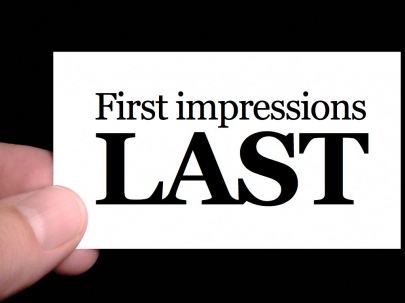
The order in which we receive information, effects how we interpret it.

EXAMPLE – People were given a brief description of someone they had never met, and then asked to provide their thoughts about this person, after the description. They were split into two groups, each given the same description, but the order of adjectives was reversed in one group.

Group A – This person is intelligent, industrious, impulsive, critical, stubborn, envious.
Group B – This person is envious, stubborn, critical, impulsive, industrious, intelligent.

Group A described the person in much more glowing terms than Group B, even though the description given to both groups had been essentially the same.

LESSON –
Pay attention to ad rotation. Be the first ad they see during commercial break.
Pay attention to first impressions and copywriting – start strong!

Wishful Seeing

We see what we want to see.

The hungrier we are, the more everything looks like food.

I like Transformers, so EVERYONE likes Transformers!

People love a zero-carbon, environmentally-conscious, locally sourced brand connected to a strong brand purpose – – –

But in reality – things are much different.

EXAMPLE – After reviewing a list of Forbes Top 50 companies, it may be easy to attribute success for a brand to any number of factors. In his book “Grow,” Jim Stengel attributed brand success to strong brand purpose. However, the data does not support the hypothesis.

Of the 50 brands chosen fro Stengel’s 2011 book, only 9 had stock evaluations that held up over time.

Brand purpose is really just a description – success can never be guaranteed by holding fast to some internal behavior or brand ideal.

Have a look at the definition for three of the brands:

  • Moët & Chandon ‘exists to transform occasions into celebrations’.
  • Mercedes-Benz ‘exists to epitomise a life of achievement’.
  • BlackBerry ‘exists to connect people with one another and the content that is most important in their lives, anytime, anywhere’.

If you switched the brand names above with any competitor, you would be hard pressed to tell which is the “best” –

Why are marketers so keen to adopt a brand purpose? Because it makes us feel better. Shotton believes that helping a company sell products may not be as rewarding – so we say our product saves dolphins and makes tomorrow’s rainbows, today. Feels better, right?

LESSON – Hit the pause button before you go all in on brand purpose. It’s not the secret sauce everyone thinks it is.

I could go on and on about the awesome book – but then I’d be rewriting the book YOU SHOULD BE BUYING RIGHT NOW –>

Hey Whipple, Squeeze This! – Luke Sullivan

Anyone living during the late 60’s to early 80’s will be familiar with commercial superstar, Mr. Whipple – the famed store owner who would advise customers “Don’t Squeeze The Charmin,” and then grab a furtive squeeze after he had run them off. Cheeky bastard!

Mr. Whipple is not a groundbreaking advertising concept.

There is nothing award winning here.

However, Charmin sales SKYROCKETED thanks to this ad campaign, which ran for over 21 years. At the height of the commercials popularity, Mr. Whipple was found to be the most recognizable face in America – beating out President Jimmy Carter.

Award winning copywriter and advertising giant Luke Sullivan’s “Hey Whipple, Squeeze This!” is a deep dive into advertising; What it is, how to create it, what makes it effective, lasting, and how traditional advertising concepts can be applied to the modern/digital age.

In the beginning of the book, Sullivan locks in on the Whipple ad – Is the key to advertising annoying folks into buying things? Find something horrible, grating to put in an ad, capture the attention, and then sell them stuff? For this, we have to go back to the beginning of modern marketing.

Modern Marketing

Sullivan takes us back to post WW2 – the advertising landscape is not cluttered because there are only a few networks. Once TV networks starts to proliferate, brands start pushing out more products to compete – so modern marketing is born.

The goals of modern marketing are product differentiation and unique selling propositions. There are three other choices available to the consumer other than your product. So advertising becomes a chance to claim that top spot. Your ad has to defeat “The Wall” of ads that face consumers. An effective ad slides through the perceptual filter that blocks every other advertisement.

In advertisement, you’re not writing a novel – you’re creating something most people AVOID. Nobody wants to see it. People are indifferent or enraged at advertising. So how do you break through?

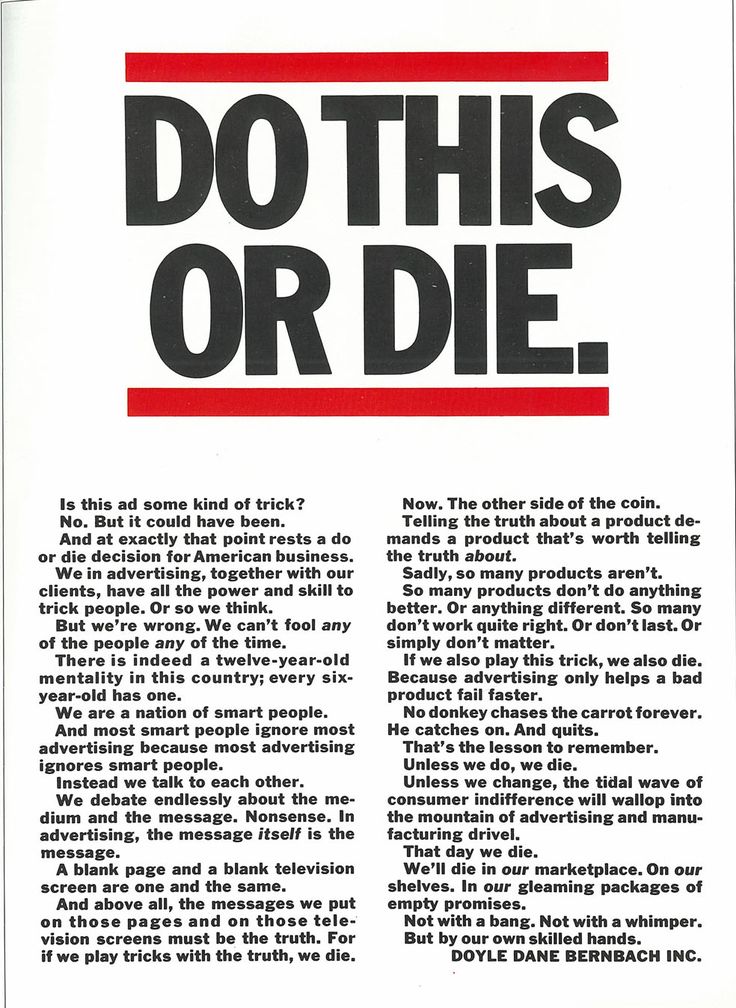
Bill Bernbach states the essential nature of creativity in advertisements very succinctly here

  • “The truth isn’t the truth till people believe you, and they can’t believe you if they don’t know what you’re saying, and they can’t know what you are saying if they don’t listen, they won’t listen unless you’re interesting, and you won’t be interesting unless you say things imaginatively, originally, freshly.”

The brain behind many wildly successful and creative campaigns in the 60s, Bernbach’s classic style is undoubtedly the hero of the book. Sullivan suggests that great ads like Bernbach’s, challenge the audience, assumes they have a brain, and let’s them in on the joke.

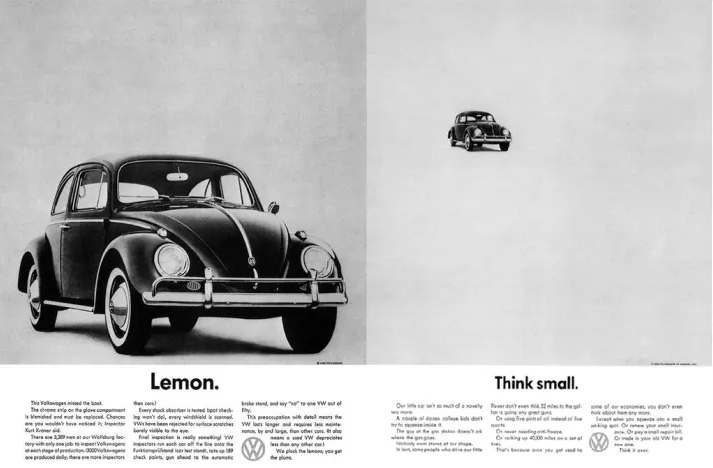
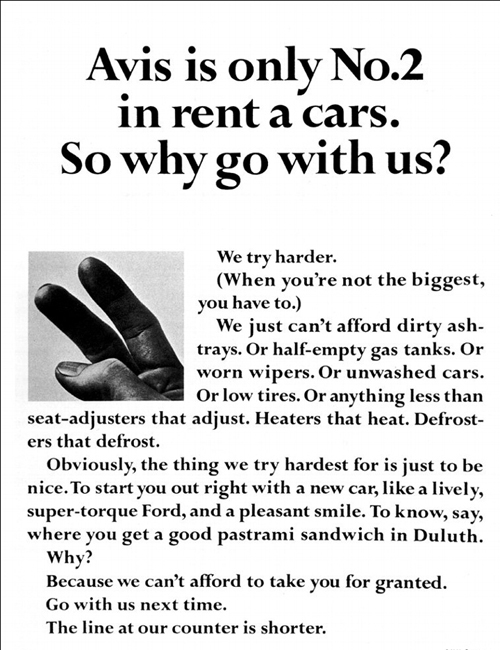
His work with VW and Avis are legendary. Bernbach’s insistence on creating ads that stand out, that embrace the rough edges, that are frank, simple, honest, and impactful, are on display in these ads. It’s not just creativity for it’s own sake, it’s creativity in service of the brand – a fine line that advertising still walks today.

Nuts and Bolts – How To Create Advertisements

The majority of the book is a step-by-step framework on how to conceive and execute and deliver advertising concepts. The first step to creating an ad for a brand, is to DEEPLY understand and research the brand. Tour the factory, interview customers and staff, look at the numbers – when you really get to know a product or service from the tail to the snout, you can create a more impactful ad based on acquired knowledge, not just impressions or preconceptions.

On-Brand?

The balance between what a client wants for an advertisement, and what an advertiser thinks will work, is always shifting. The brand wants safety, security, and sales – the ad agency wants attention, awareness, and acquisition. Bernbach again, says it best; “Dullness won’t sell your product, but neither will irrelevant brilliance.” This balance is the life and death of ads. Mostly the death.

Brand Adjective 

Most brands have ONE word that can focus the ad – Jeep is “tough” – Volvo is “safe” – It’s up to good copywriters to identify that adjective for their brand, and let that inspire the ad. Find your adjective!

Simple = Good

Brevity is the only solution to cut through the clutter of ads. How Draconian and stark can the copy be? One goal – don’t make an ad that adds to the clutter. Good advertising is density of content and elegance of form.  

What’s In It For Me?

No matter how creative your ad is, it still has to answer the one question on everyone’s mind, all the time – “what’s in it for me?” Understanding the context and lives of your target audience can help you make an ad that breaks through the clutter.

Avoid Inauthenticity 

Avoid these things – Puffery, Vanity, Authority, Insincerity, Gimmickry – to create an ad that has rapport. Maybe find a weakness, admit it, share it – this can lend believability to things you say afterward. “Hertz is 2nd best” “It’s ugly, but it’ll get you there” “Tastes horrible; works” 

Brand Context 

Great advertising finds the truth about a brand. Not what the brand thinks about itself, but what the CUSTOMERS think of the brand, how the brand fits into their lives.

The above headline could have easily been brand focused –
“We’re proud of our various floral arrangements – there’s one for every budget!”

But this ad is about the customer, and how the brand fits into their lives.

Go for an absolute

When writing an ad, don’t go for half measures. If you want to say “quicker, faster, and quieter” – SAY – “quickest, fastest, and quietest” – all claims in the middle are forgettable.

Wit Invites Participation

An idea that happens in the mind, stays in the mind. When ads use metaphors or jokes or “wink-wink” moments,  the connection happens inside the target’s head. Once that click happens, a smile in the mind occurs. Can you craft an ad that leaves room for the audience to finalize the connection? This will be effective!

“When baiting a trap with cheese, always leave room for the mouse.”

BUY THIS BOOK

There is so much more to this book, but you should go out and buy it – Sullivan goes on to discuss ways digital advertising is different than traditional, why focus groups are crap, how to work with visuals. Anyone interested in marketing, advertisng, or consumer behavior will love this book. It’s like your uncle is sitting you down and rapping about advertising before you go off for a summer internship.

Advertising can be powerful and can shape communities and societies – for those that want to do good work in the field of advertising, this book is essential.

I’ll close with this inspirational quote – “Instead of coming up with advertising ideas, come up with ideas worth advertising.”

BUY THIS BOOK –> https://www.amazon.com/dp/B01AVKWLCS/ref=dp-kindle-redirect?_encoding=UTF8&btkr=1

GET THE BOOK –> Hey, Whipple, Squeeze This: The Classic Guide to Creating Great Ads

Is Hyper-Personalized Marketing Killing Social Culture?

Imagine living and interacting with technology and advertisements, in a world where EVERYTHING is personalized – it’s all about YOU!

Books, billboards, search engines, display ads, your thermostat, your home computer – all of them are constantly speaking about you, talking to you specifically – everything is about you, your choices, your purchases, your habits – it’s all about YOU!!

Now, imagine living in a world where technology and advertising is impersonal, a world where everything is NOT ABOUT YOU!

All of the content and advertisements you interact with are static – the messages and delivery of marketed communications happen to everyone around you equally at the same time. There is a general absorption level of content across a wide social spectrum. Society interacts with mass media, and that symbiotic relationship inspires both to change and evolve together.

Now – envision the psychological differences between citizens living in the first society, versus citizens living in the second society. . . 

~~~~~~~~~~~~~~~~~~~~~~~~~~~~~~~~~~~~~~~~~~~~~~~~~~~~~~~~~~~~~~~~

Two Schools of Advertising

Of course I am being reductionist here, but I think advertising can be segmented into two schools of thought –

1) –  Hyper-personalized ads – powered by Big Data amassed from customer surveillance –  Ads are able to follow customers wherever they go; on their fridge, in their phones, in their car, on their desktops, on their kid’s faces, on all the billboards they pass.

2) – Mass media – powered by impressions, communicating through shared values on larger scales, interacting with and inspiring popular culture on a societal level. Advertising aims to get groups of people talking to one another about a common, shared experience. The public square – the big billboard – the SuperBowl Commercial – the water cooler.

Modern marketers use a mixture of both of these approaches when it comes to advertising, but more and more our culture and society is embracing the first school – hyper personalized experiences, big data science, surveillance.

Could hyper-personalization and heavy curation of advertising environments to the individual level, endanger our society, our culture, our idealogical mobility?

What happens to the individuals living in a society that depends economically on its citizens living in a hyper-personalized world? Does this reinforce our echo-chambers, our egos, our narcissism?

What are the psychological ramifications of living a commercial existence that is shaped and tailored to fit your every need, understand your desires, predict your behaviors?

As marketers, do we question what kind of society we are creating when we adopt the latest technology, advertising philosophies, or market research capabilities?

Do we recognize the important and powerful effect advertising has on shaping people, on shaping culture? What will we lose when we abandon thinking about advertising, marketing and business development on a social level?

What kind of consumers are we creating?

What world do you want to live in?

Is there a socially responsible way to market products and services, develop sound business strategies, and create valuable, meaningful advertisements – without having to monitor and collect everyone’s search engine history, credit card purchases, FitBit analytics, social media posts/reactions/shares, private messages, emails, voting records, chats, thermostat usage, medical history, media consumption, driving habits and bathroom usage?

What do you think?

POSMarketing Myth – The Democratization of Advertising

When I hear that advertising is being “democratized” by Facebook and Google, I cringe. Marketing and advertising thought leaders talk about it incessantly – Examples of this are here, here, and here.

However, what seems to be a “democracy” of advertising, is in realty a monopolization of advertising, and paired along with it, possibly, the destruction of actual democracy.

~~~~~~~~~~~~~~~~~~~~~~~~~~~~~~~~~~~~~~~~~~~~~~~~~~~~~~~~~~~~~~~~~~

Social media has been around for a while now, and a lot of industries, companies and even countries – have felt the power of social, both negative and positive.

From the revolutions in Egypt to the collapse of the newspaper industry, social media has been purported to be a tool of “democratization,” where the will and voice of the people are being heard. People are now in charge!

The local mom and pop shop can take control of their advertising on Instagram, do their own Google AdWords, and finally have access to their customers through the genius of Facebook. These new found abilities are what is being referred to as the “democratization” of advertising.

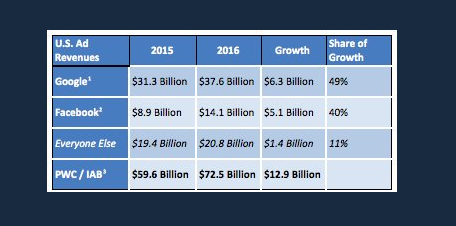
Last year, digital advertising raked in around $72 billion – 89% of that revenue went into just TWO companies – Google and Facebook.
So what was originally seen as a boon to the local advertiser, a means to connect them with their valuable customer, should really be seen as the continued support of just TWO companies. And these two companies have a goal to dominate every transaction on the Internet. So is this democracy in action?

What does the well-meaning marketer have to say to the recent reports that Facebook collected well over $100k in ad revenue from a Russian troll farm, which spewed out profile-targeted disinformation during the 2016 US Presidential Election? They denied this for months – and now, it turns out that they did profit off the propaganda. Not only that, Facebook also assisted the Russian efforts with their always expanding suite of top-shelf marketing technology.

Facebook provides advertising access to any user that creates an advert account. Doesn’t matter who you are, or what your intentions are, as long as the Credit Card runs. They’ve also collected a MASSIVE amount of user generated data, that can be parsed to identify psychographic profiles, which can be used in turn by advertisers, or other nefarious parties, to slowly adjust behaviors and even influence voting outcomes.

This “opinion manipulation” technology was harnessed to subvert campaign finance laws by Cambridge Analytica in such recent hits as Brexit, Trump in US, Marie Le Pen in France, and recently overturned elections in Kenya.


With evidence popping up that shows FB promises an advertising reach to many times more people on the planet than Census data shows exists, are the marketing gurus right to call this the “democratization” effect?

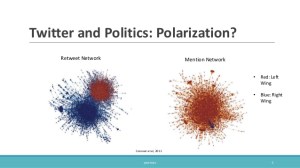
Tools like Google and Twitter actually increase our political divisions, because these sites run on hidden algorithms that select what should be shown to who, and when, and why. And no one knows how the algorithms work. Doesn’t sound democratic.

And lastly – Technology is Not A Great Equalizer!!

Access to all of the tools associated with the “democratization of advertising” are still dependent on economic and technological advantages that are unattainable by a large portion of the Earth’s population. The person/company with the most money, the fastest connectivity to broadband, and the most talented manipulation of big data sets (the lifeblood of social) will win the advertising game on social, every time. For people with no access to the internet, and a throttled utility-based market economy around telecom industry, the big money that lives on FB and Google is out of reach completely for a vast majority of us. This, to me, is the final nail in the coffin for the myth of democratized advertising.

~~~~~~~~~~~~~~~~~~~~~~~~~~~~~~~~~~~~~~~~~~~~~~~~~~~~~~~~~~~~~~~~~~~~

Marketers need to really start engaging on a tactile level with this issue, start discussing the ramifications of these metastasizing monopolies, and stop throwing around the word democracy. The expanding economic in-equality and rise of nationalism and political subterfuge across the world is directly tied to our love of these behemoth companies, and our blind belief that their inherent structures are supported by good causes and people. We need to open our eyes.

To blithely think that the “people” are in charge, as we pad the walled gardens of FB and Google with our advertising money, is stupid. The long-term survivability of civilization is at hand, and while marketers hail the new revolution of people-powered advertising networks – the entire fabric of trust and democracy is being ripped apart, boiled and bleached, and turned into money for two giant companies.

Isn’t it a great time to be a marketer!?!

Move Fast and Break Things – Jonathan Taplin


“Move Fast and Break Things: How Facebook, Google and Amazon Cornered Culture and Undermined Democracy”

The title really says it all. In the last 10 years, there has been a massive redistribution of wealth among giant tech monopolies like Facebook, Google and Amazon. This has poured gasoline on the issue of income inequality – and has stoked the dumpster-fire that is the Presidency of Donald Trump.

Check it –

~~~~~~~~~~~~~~~~~~~~~~~~~~~~~~~~~~~~~~~~~~~~~~~~~~
Google owns 88% of the Search Engine Market
Facebook own 77% of the Mobile Social Media Market
Amazon owns 70% of all E-Book Sales and 67% of Print Book Sales

~~~~~~~~~~~~~~~~~~~~~~~~~~~~~~~~~~~~~~~~~~~~~~
In 2006 the Top 5 Most Valuable Public Companies were
ExxonMobil, General Electric, Microsoft, Citigroup, and BP

In 2016 the Top 5 Most Valuable Public Companies are
Apple, Alphabet (Google), Microsoft, Amazon, Facebook

~~~~~~~~~~~~~~~~~~~~~~~~~~~~~~~~~~~~~~~~~~
Since the giant marketplace launched and began pricing local merchants out of business, Amazon has forced 24,000 bookstores and 3,000 record stores to close. 

Locally sustained culture and much needed jobs are being traded for low prices and convenience.   

~~~~~~~~~~~~~~~~~~~~~~~~~~~~~~~~~~~~~~~~~~
Since lobbying President Bill Clinton for the Internet Tax Freedom Act in 1998, which prevents any government body from imposing internet specific taxes, Jeff Bezos continues to ensure that libertarian, limited-government, tax-free ideology can flourish online.

Google, Facebook and Amazon annually shortchange the US government well over $100billion, thanks to the Internet Tax Freedom Act.

~~~~~~~~~~~~~~~~~~~~~~~~~~~~~~~~~~~~~~~~~~~~~~
In 2003, worried about eroding civil liberties, billionaire PayPal founder and now Top-Trump aide in the White House Peter Thiel starts PALANTIR, a data-mining company. Palantir and Cambridge Analytica work together in 2016 to undermine democratic processes in both UK and USA.

~~~~~~~~~~~~~~~~~~~~~~~~~~~~~~~~~~~~~~~~~~~~~~

To understand how these giant monopolies came to dominate Sillicon Valley and then the world, Taplin takes us back to the birth of the Internet. . . which was originally supposed to be a good idea.

Birth of the Net

For all of the libertarian lipsmacking we hear about the tyrannical oppression from government, the Internet, which has made most libertarian dreams possible, was funded by DARPA in the late 60s; aka, the US GOVERNMENT.

Pro Tip here-> The early Internet was not created by a lone genius, it was carefully researched and funded by the US government, and built by a network of wicked-smart and progressive data scientists.  It was never meant to be an IPO.

By the 70s, there are two factions within this community
– Geeks, and Counter-Cultural Humanists.

Heading into the 80s, with Apple and Steve Jobs on the scene, hackers become corporate consultants. Here, the tech world and the future Internet, meet the free-market ideology of libertarianism.

Peter Thiel

The chess wizard, math prodigy, closeted-gay genius is swept up in self-hating Libertarian ideology in the late 80s. Founds The Stanford Review, a publication which aimed to question the crippling effects of feminism, the tyrannical obsession over political correctness on campus, and fought against a multicultural society, which would subsume the powerful white man’s role. No kidding.

His book “Zero to One” on entrepreneurship, suggested everyone set-up monopolies, huge companies that would dominate the landscape. What could go wrong?

His structure was simple –

1) Build proprietary tech that dominates competition, buy-out competing tech.
2) Build businesses that have “network effects” – millions of people need to connect.
3) Scalable economies that can grow
4) Strong branding and promise

Sound familiar? That’s because it’s the business model for PayPal, Uber, Napster, SnapChat, Facebook, Twitter, Google, Amazon, Apple, Lyft, Tesla, YouTube, Netflix, Adobe, Oracle, and thousands of other tech companies.

30 years ago, being Libertarian was a joke. Now it has become mainstream – it has become Silicon Valley – it has become the Republican Party. This connection is bringing darker ideas with it – anarcho-capitalists, paleo-libertarians, the need for authoritarian control. This is where the undermining democracy part comes through.

The aim of steroidal-libertarians is to destroy democracy, before it destroys us, our individual freedoms. When billionaires like Charles and David Koch start espousing this line of thinking, it sure isn’t to the benefit of the voting public. This quote from David Koch outlines the ideology that helped to secure a Trump presidency last November –

“We need a return to authoritarian rule. Democracy has led to moral decay, family breakdown, divorce, crime – Diversity is forced integration from the government, which brings concomitant social strife and racial tensions. We need a strong man to lead us.”

Yeah – right off a St. Petersburg pier!

Thiel’s first company, PayPal is this Libertarian philosophy made real – The government can’t touch our money.

Jeff Bezos and his tax-doging, workplace safety avoiding, small economy destroying company, AMAZON, is also built on Thiel’s disruptive monopoly model. Amazon captures 51 cents of EVERY dollar spent in America.

Sergy Lyn and Larry Page and their black-hole-like information sucking, democracy disrupting, truth defying, advertising revenue generating behemoth of a company, GOOGLE is also built on this model.

Mark Zuckerberg and his privacy destroying, civilization tampering, manipulating, brain altering, social media company, FACEBOOK, are also built on Thiel’s model.

These guys are the richest people in the WORLD – they are making decisions that effect THE WORLD – and they are at the helms of the largest monopolies the world has ever seen, making the largest profits ever known. They rent out properties on their “land” and operate more and more like feudal lords than techno-future-wizards. These feudal lords establish political power in a web of bilateral individual contracts – these orgs have no conception of legitimate public political authority, nor any place for political society within their profit models.

This will be the coming battle -> A war between those who foresee a democracy that continues to uphold its obligations to its citizens regardless of their net worth, and one in which market imperatives have become so fully assimilated that the only citizens who count are those within a small sector – The definition of the word “plutocracy” is a society ruled or controlled by the small minority of the wealthiest citizens. We are right in the middle of this.

SO, AM I HATING ON LIBERTARIANS?

Yes – and in addition to that, I am questioning the concept that technology and ONE SINGLE PERSON can save the world. Superhero movies are at an all time high in American culture – and why not? We want someone to save us. The real problem is, ALL of these hyper-wealthy wackos think they can save the world.

Zuckerberg is trying to eradicate diseases and promote equality worldwide, while Facebook is supposed to bring us closer together.

Page and Thiel are working on life-extension therapies and transferring human consciousness to a database, as well as establishing “floating cities,” which are supposed to be Libertarian utopias lying outside the jurisdiction of current geopolitical reach, all the while PayPal and Google have made it easier for us to learn and get paid for our gig-economy micro-jobs.

Bezos is pushing back against Trump, funding a political takedown of sorts with his Washington Post by means of “free press,” as well as pushing for the industrialization of space, while we can get cheap eyeliner delivered to our house in hours from Amazon.

Libertarianism only works for a small group of people. For everyone else, we have to care about one another to survive, we have to cooperate. Learning to cooperate and work together is how civilization survived and thrived for thousands of years! If everyone is truly the captain of their destiny, and we have no one to depend on but ourselves, ask this question . . .

If we ALL go out hunting for, who keeps the homefire burning?

In digital economies like Google and YouTube and Facebook – orgs that trade in information – the social and marginal costs for producing and distributing more content is close to zero. Facebook pays NOTHING for the content it hosts. YouTube pays NOTHING and has millions of hours of user-generated video being uploaded everyday. This is what Taplin and other economists refer to as “zero-marginal cost economy.”  The only way to make money is to scrape everyone’s data and sell it to advertisers.

Nowhere does the fixed cost to produce more content like high quality movies, art, music get factored into the equations of Google or Facebook or YouTube. Artists and musicians will not be able to survive, because no one will have the time to keep the homefire burning, there will be no culture to maintain and pass on. Artists living in this world are more concerned with gathering a fleeting slice of a distracted marketshare, than building the foundational masterpieces that future art can build upon.

¯\_(ツ)_/¯ – SO WHAT ARE WE GONNA DO?  

A rejection of “techno-determinism” and “techno-humanism” – a breaking up of monopolies and plutocracy! We have to get a little R&R – Resistance & Renaissance

Taplin’s Solutions?

Content creators need to get PAID – Micropayment ecosystems should be set up and existing ones encouraged, “take down-stay down” laws need to be put in place in US in as strict a fashion as Europe, mandatory “opt-in and opt-out” options to limit tracking and surveillance efforts of big data mines.

Access to Broadband Internet – 
The United States has a chokehold on the Internet – those with higher funds can access higher speeds thanks to monopolization efforts from TeleCom Co’s. In our digital economies, restricted access to the Internet is a form of poverty. Out of the top 50 countries in the world that offer broadband access to their population, the US is 22nd. We are behind Japan, Sweden, South Korea, Norway, Portugal, Finland.

Untether Happiness from Consumption – In his book, “Small is Beautiful: Economics as if People Mattered,” the economist EF Schumacher breaks apart the modern obsession over “happiness,” and asks us to envision a world where people actually give a shit. “The modern Western economist is used to measure the standard of living by the amount of annual consumption, assuming all the time that a man who consumes more is “better off” than consuming less. A Buddhist economist would find this irrational. Since consumption is merely a means to human well-being, the aim should be to obtain the maximum of well-being with the minimum of consumption”

The only barriers to living in this world of less consumption is Google, Amazon, and Facebook’s business models are engineered to continually arouse our desires. We market and create products that are “sticky,” that are basically addicting. So the short answer is – – –

FB, Google, Amazon Need to Change Their Biz Model – To protect our privacy and help thousands of artists create sustainable cultures for the future, the business model needs to change to honor content creators, not a few random billionaires. Facebook is about to make $20billion in annual revenue – and only 15,000 people work for that company. This is clearly adding to income inequality in such a drastic and massive fashion that the time for action and awareness is now.

These companies may seem like benevolent Plutocrats – but the time for plutocracy is over!

GET THE BOOK!! –> http://www.jontaplin.com/the-book/

Marketing to Vulnerable Populations & The POSMarketer


Emotions, Conversions.pngMarketing – it’s everywhere! Advertisements and sales pitches surround us like birdsong in the forest. In general, people have come to ignore ads and some can’t even see them, becoming “ad-blind.”
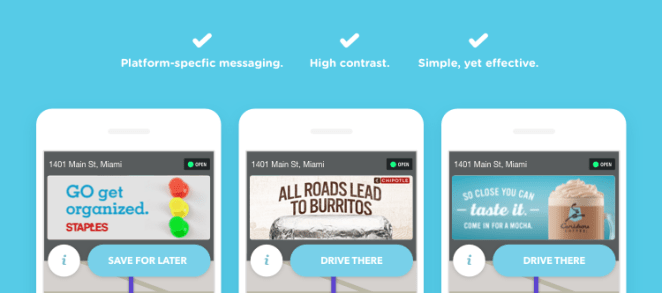
So it’s no surprise that Waze has snappily announced the launch of special geo-targeted ads that will pop up inside it’s mobile-navigation app, as potential customers drive by determined locations. The possibility to convert users of the app is too good to pass up – What could possibly go wrong? marketing, advertising, social media marketing, emotional intelligence, POSMarketing, distracted driving, WAZE

Erika Lehmkhul is a Visual Designer with Waze, and she suggests that the success of an ad on their platform lies in its creativity, and the clarity of its design. Opting for the simplistic look of billboards, Waze suggests to advertisers that they keep it simple – “When you eliminate clutter and distracting elements, your ad can shine.”

What a load of dangerous bullshit.

US traffic deaths are on the rise for the second straight year, and along with high speeds, no seatbelts, and driver impairment, distracted driving is quickly becoming the main reason for accidents and fatalities on the road.

“It’s not just talking on the phone that’s a problem today,” said Jonathan Adkins, executive director of the Governors Highway Safety Association. “You now have all these other apps that people can use on their phones.” 

  • Surely, Waze knows that in a growing number of states, its illegal to use a handheld GPS device in a car.
  • Surely, they must also be aware that every year, about 421,000 people are injured in crashes that have involved a driver who was distracted, and the alarming increase in distracted driving fatalities in 2017 alone.
  • Surely, Waze is using it’s influence as one of the most downloaded navigation apps in a grand attempt to address the dangerous vulnerabilities of cellphone addiction, which is at epidemic levels amongst all drivers.
  • Surely they know that pop-up ads on a navigation app would be distracting. And surely they know that we are all vulnerable to the random notifications we get from our phones. And they have to know that distractions in a car usually end like this. . .

(Photo by Steve Nehf/The Denver Post)

Marketers traditionally take pause when advertising to kids, the elderly, or anyone not able to cognitively understand the underlying purpose of an ad. These populations are considered to be “vulnerable.” The audience behind the wheel of a car is certainly not able to cognitively engage with advertisements, and they should be classified as a vulnerable population.

According to “Marketing Ethics,” by George Brenkert, “Marketing directed towards vulnerable populations should be aimed at lessening or removing the vulnerabilities, not self-profits.”   

Waze has yet to address its role in distracted driving and the accidents, near-misses and fatalities associated with this epidemic. Neither Waze, nor its parent company Google, have any initiatives or safety campaigns to educate the public on distracted driving or cellphone addiction. And, with a recent partnership with Spotify, which allows use of both the Waze and Spotify apps AT THE SAME TIME WHILE DRIVING, Waze demonstrates that generating ad-revenue from its 50 million-deep user-base is the only topic they consider valuable. And why not, that’s how you make money!

But imagine what they could do if they launched a nationwide campaign to end distracted driving, if they developed proprietary safety features that made using the app less dangerous, launched events to educate new drivers on the dangers of distraction, provided online resources on safety behind the wheel and partnered with National Highway Traffic Safety to engineer distraction proof roadways and intersections in towns across America. If they did that, what’s the worse that could happen?

Bottom line – Waze pushing distracting ads to cellphones inside a moving car is a blatant disregard for safety, its unethical, its a manipulative marketing move to grab cash out of eyeballs that might soon fly through a windshield, and its a classic example of some POSMarketing.

For more insights on ethics, marketing, and POS – Follow me on twitter – @POSMarketer 


Emotions, Conversions, and the POSMarketer

marketing, advertising, social media marketing, emotional intelligence, POSMarketing Emotional Intelligence, the latest buzzword to fly through marketing’s living room, has all the promising language of a meaningful progress in the march towards moneymaking – and none of the ethical foresight, or foresmell, to realize the manipulative sh*tstorm it unleashes on the world.

The marketer-drones swarmed towards “emotional intelligence” during Advertising Week Europe at the beginning of April, and why not? Who wouldn’t want guaranteed conversions based on an unparalleled understanding of the hidden realms of customer intent? Who wouldn’t want to know how to use emotional channels to drive “user engagement,” sell more products, create desire for services, or to enhance a site’s “stickiness/addictiveness?”

Sensum’s CEO Gawain Morrison believes emotions drive every decision. He believes that brands are headed towards forging relationships with their consumers vs. simply selling a product. Sensum is an “emotions-based software company” that has founded it’s success with huge brands across the world, by measuring, reporting and driving ad campaigns all based on emotional intelligence.
marketing, advertising, social media marketing, emotional intelligence, POSMarketing
Sensum believes that the core of a relationship between a brand and a customer is centered around emotion, so to understand the reasons behind purchase behavior, loyalty and even enjoyment with a brand, that business has to understand it’s consumers on an emotional level.

Imagine a world where immersive and responsive advertisements read your facial features and adapt to your apparent emotional state. Imagine a totally immersive horror movie attuned to your fears, drawing on an experimental emotional response database. Sensum has already been working on these concepts, and their work unlocks deep, impactful marketing insights and applications.

However, any marketing effort that’s based on triggering and gaining response on emotional levels, should be carefully monitored for any ethically questionable use outside of the marketplace. I wonder if Sensum is worried about this…

“The changing shape of the media landscape, from audience participation to the blurring of media lines and boundaries, offers up a wild range of opportunities to people and companies able to experiment in this space.”  – SENSUM640px-Paris_Tuileries_Garden_Facepalm_statueGiven the current state of media manipulation and mistrust, the proliferation of fake news, digital ad-fraud, the government-sanctioned sell-off of private user data by Internet Providers, and the hyper-targeted ability to covertly mine emotional data from social media to use in selective ad campaigns that can influence society and even swing election results – the above quote is a slap in the ethical testicles.
On a personal level – emotional intelligence is an important concept to cultivate. Building a comprehension of emotional signals & responses, and then using this to strengthen connections with another person seems psychologically-sound, empathetic, humane, real. However, we should be clear on one thing. When emotional manipulation is used on a personal level, against someone’s best interests or wishes, it can have extremely negative effects on a relationship and can damage trust irrevocably. Furthermore, emotional manipulation is not only deplorable, it is essentially against Article 22, 26, & 28 of the 1948 Universal Declaration of Human Rights.

marketing, advertising, social media marketing, emotional intelligence, POSMarketing

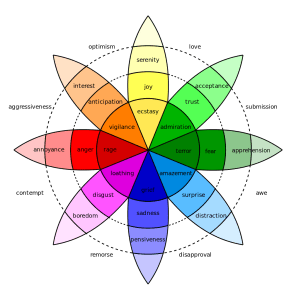
Our Emotional Wheel of Sales Opportunities

So when a business chooses to collect emotional intelligence from a chosen group (usually covertly), and then analyzes this for patterns, and engineers information and ad campaigns designed to subconsciously effect and slightly nudge someone’s cognitive ability to make decisions in one direction or the other – how is this not viewed as emotional manipulation?  How does the normal marketer, escape the feelings of being a POSMarketer?

I’m not here to throw sweaters on all the strippers inside the nightclubs of the free-marketplace, I’m just here to ask questions –

Can we learn about our customers, but ethically pursue research that isn’t covert and is understood clearly by the participants? Should we pursue ad campaigns that seek to remove emotional vulnerabilities, rather than prey on them? And can the value we provide to our customers or target audience be so abundantly clear, that we pull them in, rather than push ads out?

I’ll close out with some choice words from Tamsin Shaw, in her NYTimes review of a behavioral science book, “The Undoing Project”  – 

We are living in an age in which the behavioral sciences have become inescapable. The findings of social psychology and behavioral economics are being employed to determine the news we read, the products we buy, the cultural and intellectual spheres we inhabit, and the human networks, online and in real life, of which we are a part. Aspects of human societies that were formerly guided by habit and tradition, or spontaneity and whim, are now increasingly the intended or unintended consequences of decisions made on the basis of scientific theories of the human mind and human well-being.

The behavioral techniques that are being employed by governments and private corporations do not appeal to our reason; they do not seek to persuade us consciously with information and argument. Rather, these techniques change behavior by appealing to our nonrational motivations, our emotional triggers and unconscious biases. If psychologists could possess a systematic understanding of these nonrational motivations they would have the power to influence the smallest aspects of our lives and the largest aspects of our societies.

So what kind of marketer are you? An ethical marketer ready to take action on behalf of protecting our marketplace eco-systems – or are you a POS?

Advertising/Marketing Industries Have Civic Responsibility To Fight Fake News

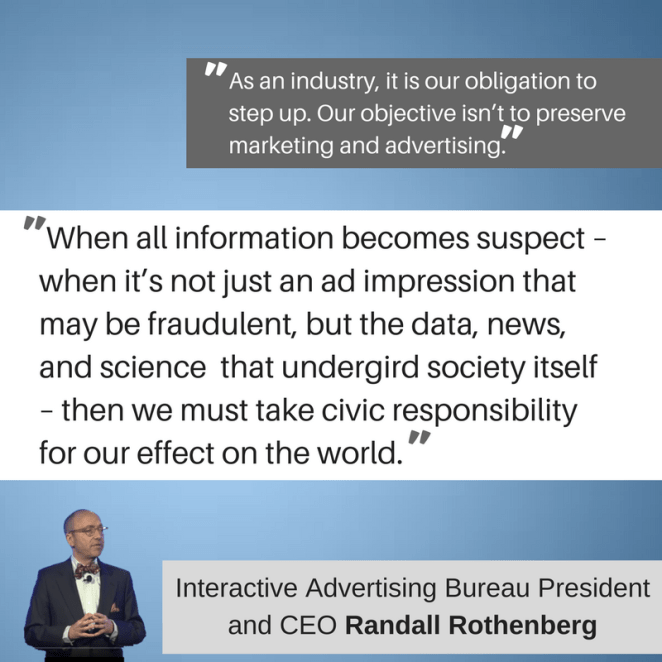
When Interactive Advertising Bureau President & CEO Randall Rothenberg called for an industry-wide commitment to fight “Fake News” at an Annual Leadership Meeting in Hollywood, Florida in January of this year, the response from the audience was mixed.

randall rothenberg marketing blog ad-fraud googleRandall Rothenberg went on in his truly inspiring speech, to elaborate the important role advertisers and marketers now find themselves playing. He outlined the myriad ways algorithms, big-data, and the eco-systems that prop up digital advertising, are ruining the exchange relationships of information online. And he suggests to his audience, CMOS and ad agencies representing some of the top companies in the world, that they need to help bring the change, or suffer the consequences of an eroding trust in the digital landscape.

Looking back now, Rothenberg’s speech takes on a Nostradamic hue of prophecy.

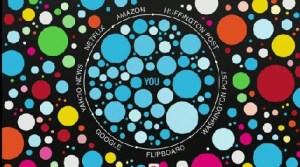
Marketers and advertisers have unwittingly taken public discourse and the connected community of the Internet into a navel-gazing, filter-bubble filled, truth-destroying, civilization-shaking, death spiral. And to pull out of it, we have to realize our place in the cockpit, and understand how we got here.

Entertain me – what’s the worst that could happen?

A group of our marketing and advertising colleagues working with the Data and Marketing Association literally stood up and cheered as they were on hand to witness Congress, then the Senate, then the President, peel back Obama-era protections/regulations, allowing ISPs to access and distribute consumer data, browsing history, in-app messages, and emails, to third-party companies for profit, all without consumer consent?

Getty Images marketing social media

The interested parties have struck a deal – people love relevant ads!

When the vote passed the Senate, on March 23, 2017, we heard this from Emmett O’Keefe, SVP of Advocacy at the Data and Marketing Association:

“Today’s vote in the Senate and expected approval in the House signal that our nation’s top policymakers recognize that our current system of responsible data use works.”

The trust was apparently so overflowing, and the data of the marketplace was handled so responsibly, that the same day, these US companies followed the lead of brands in the UK, and pulled entirely out of Google & Youtube digital display advertising agreements, resulting in a loss of hundreds of millions of dollars for the digital ad giant….

  • AT&T
  • Beam Suntory Inc.
  • Dish Network
  • Enterprise
  • FX Networks
  • General Motors
  • GSK
  • Johnson & Johnson
  • Nestle
  • PepisCo
  • Starbucks
  • Verizon
  • Walmart

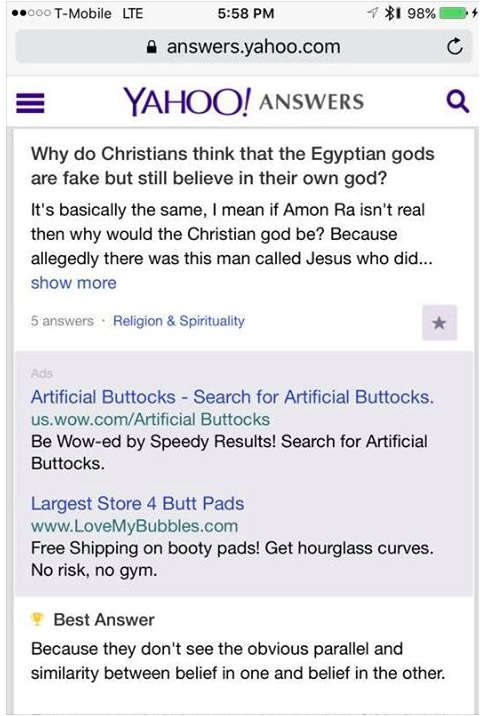
These companies, “unknowingly,” were buying programmatic ad-placements that were being paired up with hateful content on Google & YouTube – a Snickers pop-up under an ISIS beheading, or Nazi propaganda brought to you by Mercedes. Truth be told, digital ads have always been placed wherever they can be, and who cares where they go cos they are cheap as dirt! You got the impressions/clicks/views – digital advertising, accomplished. So we spend a few bucks on digital display ads – What’s the worst that could happen?


One of the Managing Directors at Edelman PR, Gavin Coombes, has a quote that sets us up perfectly for the next slippery slope we need to slide down – – –

“As Internet-based communication has become used more often and by more people, we have found ourselves in the paradoxical circumstance of more information arguably leading to less understanding. The “echo chamber” – identified in the latest Edelman Trust Barometer as a major factor in feeding fear and distrust of institutions – is a phenomenon that reached a tipping point in 2016 and with potentially epochal implications. And, seemingly, without warning.”

Edelman Trust Barometer marketing blog, content marketing, advertising, digital marketing, social media marketing

Coombes goes on to explain that social media operates more like tabloid media, vs traditional mass media – using content that entertains or connects emotionally, rather than content that empirically informs. Users prefer, and come to rely on, a steady diet of things that are happy, sad, funny or violent. This diet is typically filled with people like them and based on info they provide freely. So your social media stream is hand-selected by algorithms owned and operated by the social media ecosystems – always designed to keep the most engaging content in front of you, forever regenerating, endlessly attached to advertising revenue, open to marketers of all stripes.

In 2014, it was revealed that Facebook was able to manipulate users emotions depending on what posts a tailored algorithm allowed onto their “Wall.” Positive posts on a user’s wall were shown to illicit more positive posts in return, conversely, exposure to negativity promoted the sharing of negative material . Facebook performed it’s experiment without any user consent, and since the Terms and Conditions covered the unfettered access to user data, it was all above-the-board. Google and Yahoo both follow this same protocol – provide a seemingly “free” product, observe usage, get as much data as possible, get advertising content, and tweak the delivery to get the “relevant” info in front of the right people. 

The reaction to Facebook’s experiment from the marketing and advertising community was shock and hidden joy. Here they had proof of a proper approach to gaming Facebook – emotions spread, and targeted, relevant emotions triggered at the right time can cause action. Proof that information, if properly placed at the right time, could affect change. Facebook’s algorithms keep it’s growing 1.7 billion user base glued to the platform – showing them whatever keeps them engaged, and not too pissed off – and all the while, user data is shared with anyone willing to pay for it.

So what? Marketers and advertisers get to sell soap to people they know like soap. We might use emotional triggers to get people to take action, but it’s with babies and puppies. It’s all good – What could possibly go wrong?

For those unfamiliar with the rising prominence of the newest and least experienced player to step on the field of international diplomacy on behalf of the United States, Jared Kushner – or how the former real-estate mogul turned dad-in-law-Trump’s campaign around by scaling existing marketing technology and “expertly” manipulated the filter-bubbles and emotional triggers of social and search….

For those unfamiliar with the technology he purchased through Cambridge Analytica, and how that company can provide it’s clients, through their OCEAN targeting, info on users political affiliation, race, gender, neuroticism, conscientiousness, openness and other psychological/emotional triggers……

For those unfamiliar with Cambridge Analytica’s parent company, SCL Group, which, since 1993, has made its name providing “psychological operations” for political campaigns around the world, marketing its services to militaries and state security agencies, providing impeccable, highly- targeted, and politically-weaponized disinformation campaigns to such countries as Pakistan, and Great Britain….

For those unaware of the role of mega-hedge-fund-lord Robert Mercer in funding Breitbart, Brexit, his huge investment in Cambridge Analytica both in the UK and US, his not-so-shadow-funding of pro-Trump media blitzes through the new non-profit media company “Making America Great Again,” and his insane amount of influence in the de-globalizing, anti-intellectual, climate-denying, xenophobic, media-exploding, war-mongering shit show we are currently living through…….

You should look into this stuff. What’s the worst that could happen?

This quote from Professor Jonathan Rust, director at Cambridge University’s Psychometric Centre, can help fit the final piece of our puzzle –

“The danger of not having regulation around the sort of data you can get from Facebook and elsewhere is clear. With this, a computer can actually do psychology, it can predict and potentially control human behaviour. It’s what the scientologists try to do but much more powerful. It’s how you brainwash someone. It’s incredibly dangerous.

“It’s no exaggeration to say that minds can be changed. Behaviour can be predicted and controlled. I find it incredibly scary. I really do. Because nobody has really followed through on the possible consequences of all this. People don’t know it’s happening to them. Their attitudes are being changed behind their backs.”

So what should/can marketers and advertisers do about this?

Looking at the above information, the marketer and the advertiser can see several opportunities. Opportunities for more user-generated data, enhanced abilities to track and deliver personalized ads on behalf of brands, nuanced insight into consumer behavior, ways to sneak our messages through emotional pathways, unlimited access to centralized audiences, and access to an ever-expanding marketplace.

Or are the opportunities aligned with a larger civic duty, not just towards our profit margins, but to our society, our fellow humans?

  • Could advertising, done the right way, save the world?
  • Can we open the conversation with our digital marketing companies about ways we can fight ad-fraud together?
  • Can we hold our marketing and advertising associations accountable for their Code of Ethics, and be active, ethical allies for conscientious consumers?
  • Can we work to protect the marketplaces and technology that enable ethically and mutually agreed-upon exchange relationships from “bad actors” or manipulative entities?
  • Can we not sell everyone’s private data up the damned river, just so we can send them “better ads?”

Whatever your stance on ethics and morality and marketplace logic and free-will, we have to realize that while we’ve been engineering the latest and greatest ways to sell stuff in our marketplaces, we’ve also greased the tracks for a whole host of nefarious players to enter into these spaces, use our marketing technology of demand-engineering, targeted behavior modification, and etc., and these sinister forces are inflicting serious harm to the information eco-systems so necessary to our livelihoods and the continuation of modern civilization.

I’ll leave you with a final quote from Rothenberg, and it’s a perfect ending for this rant of an article, because it’s how he ended his speech, mic drop style.

“. . . now I am asking you to reach higher, and deeper into your own better nature. The values we hold dear – diversity, freedom of speech and religion, freedom of enterprise – are under assault, and digital marketing, advertising, media, and technology companies bear some measure of responsibility. The route from self-interested “standards” to fraudulent ads to blind-eyed negligence to the financing of criminal activities to support for hatred is clear, and it is direct.

What we say here – and what we do here – makes a difference. Please leave this conference with this understanding: You have the power to move fast and fix things. You have the ability to repair our credibility. You have the power to rebuild the trust. Thank you.”

So are you a marketer that is willing to stand up and make the world a better, more trusting place? If you rise to the occasion and exhibit the best of what humanity has to offer, at least in a marketer, what’s the worst that could happen?


The Spectroscopy of Content

WARNING – Huge Marketing Metaphor Ahead.

The Spectroscopy of Content is an attempt to find the connective and underlying structures that all marketed messages share. Whether it’s account based marketing, content marketing, mass market advertising, native, guerrilla, paid, earned, owned, taglines, slogans, calls-to-action; marketing is about humans communicating with other humans.

The Spectroscopy of Content provides an understanding of human behavior, it’s shared triggers and environments, and uses this information, preemptively, to increase the relevancy and effectiveness of the marketing we choose to foist upon the world.

"How far that little candle throws his beams! 
So shines a good deed in a weary world."
      
        -William Shakespeare - The Mechant of Venice

First – let’s cover what spectroscopy is;

Spectroscopy is a scientific measurement technique. It measures light that is emitted, absorbed, or scattered by materials and can be used to study, identify and quantify those materials. One thing that you need to remember is that “light” is a lot more than just the colored visible light that we can see. – NASA

This is interesting for two reasons –

  1. What we see as plain, white, visible light, actually contains all the colors of the rainbow, plus a collection of wavelengths that we can’t even sense as humans.
  2. Spectroscopy breaks up a complex, noisy signal, such as light, into discrete, constituent parts, provides a glimpse of once imperceptible structures, and brings meaningful data points out of the chaos.

So far, so good. Now, let’s bring this back to marketing. Below, “Content” refers to any marketed message, in any marketing vertical.

Content starts as this solid concept, a beam of light, ready to illuminate the minds of our target audience. The beam is the message, and the message is the beam. Strong calls to action. Tracking is set up. We’ll know what success means and we’ll be able to point to business goals that Content will help to achieve. We fire the solid beam of light into the blackness of Deep Space/The Internet/America’s Living Room.

Now, let’s briefly return to the science of light.

Light is perceived by it’s reflection off of surfaces, and two different reflections are possible – Diffuse and Specular.

The light rays that allow us to see non-luminous objects such as our hands, the floor and the people around us, are rays that have traveled from a light source and then have reflected off of an object towards our eyes. There are two types of reflection: specular and diffuse. Specular reflection sends discreet beams in specific directions. Diffuse reflection sends many different beams in several directions.

So what about our Content? Once our beam of light is perceived by our audience, will they, via the specular reflection principle, be able to understand specific messages or triggers embedded in the beam? Or will the light spread out into a million different meanings, fade into the background – a diffuse reflection of our loaded beam?

Well, didn’t we think about the audience and the affect our content would have on their Mind Prisms? Did we think to analyze our content’s Impact Spectrum?

We require a few more metaphors.

Just as prisms help to break apart light, the interpretation of your content happens in the audience Mind Prism. The Mind Prism is the only medium through which your lighted message is decoded and understood.

Content is not what you think it is – it’s what your audience thinks it is.

Content is not the beam of light you send, it’s the beam of light that is received. And, further complicating things, each Mind Prism is unique and it’s absorption can change with it’s environment – and no two will absorb information the same way.

So in The Spectroscopy of Content, we’re seeking to consciously pre-fabricate the beam of light, knowing what spectral lines need to be absorbed by the audience, amplifying the strength of those wavelengths, and thoughtfully anticipating the myriad ways our Content may be interpreted, or misinterpreted, by the Mind Prism.

Once the light is considered through the Mind Prism, the Impact Spectrum should be analyzed and considered. To explain this last piece – we return to the light. . .

The spectrum from distant stars contain the signatures of the elements that compose the star. Spectral absorption lines in the wavelength of visible light, correspond with elements, present in the stars chemical makeup. There is a Hydrogen Line, a Sodium Line, Magnesium, etc.

In The Spectroscopy of Content, the “absorption lines” reflect the ideas or concepts that are anticipated to hit the intended Impact Spectrum – and we have several different Spectra of Understanding. Below are three versions I’ve created specifically for this piece – but there is room for thousands more!

Are we soliciting buyer behavior, are we making someone mad, are we talking about cultural values? Is this a curveball with a mysterious trajectory, a fast pitch in an elevator, or a beachball in a stadium? Does this message leave enough room for the recipient’s ego? Does the Content talk about personal things, or relevant ideas in society? Will this make them think of Church, School, the bedroom, the barber shop?

Before we launch any Content, we have to ensure that it’s light will reflect into at least one Impact Spectra, if not multiple. And although it is true that each Mind Prismis unique, certain concepts like the ones briefly covered in the above examples, work on more basic levels. Humans are unique, but human behaviors and reactions tend not to be.

In closing – The Spectroscopy of Content aims to understand the ways information impacts people on this basic level, and use this information to fortify and empower the messages we send in the future. Whether we’re analyzing various Mind Prisms, or their associated Impact Spectrum, one this remains true throughout this “new” marketing metaphor. . . Our success depends not on how much we put ourselves into our marketing, but by how strongly our marketing considers our audience.

Please let me know if you have any questions or would like to learn more about The Spectroscopy of Content.