
If children raised by peers struggle to mature, what happens when entire societies do the same? This essay explores how a modern culture driven by trends, feeds, and lateral validation, may be arrested in an underdeveloped loop of perpetual adolescence. Is there an adult in the house?
There’s a lot of anxiety and fear in the laypeople and unaccountable fuzziness in leadership lately. It feels like the buck won’t stop. It feels like the adults aren’t in the room.
In a sea of ceaseless change, a lot of companies have stopped planning altogether, cancelling forecasts, freezing into a crouching stance, anchoring close to shore. It feels like the maps are no good, the compasses shot, the blind rowing the blind. It feels like lemmings at a cliff-side casino might be in charge. It feels like we’ve been waiting for “the adults” to enter the room for decades.
But as a 44 year old father of four, salt and pepper in the beard, I’m compelled to wonder; am I one of the adults I’ve been waiting for? Not only am I asking if I’m the man in the mirror, I’m wondering…
Clearly, for my roles and responsibilities as a taxpaying citizen that seeks to increase shareholder value, but most importantly for my kids, I am that guy.
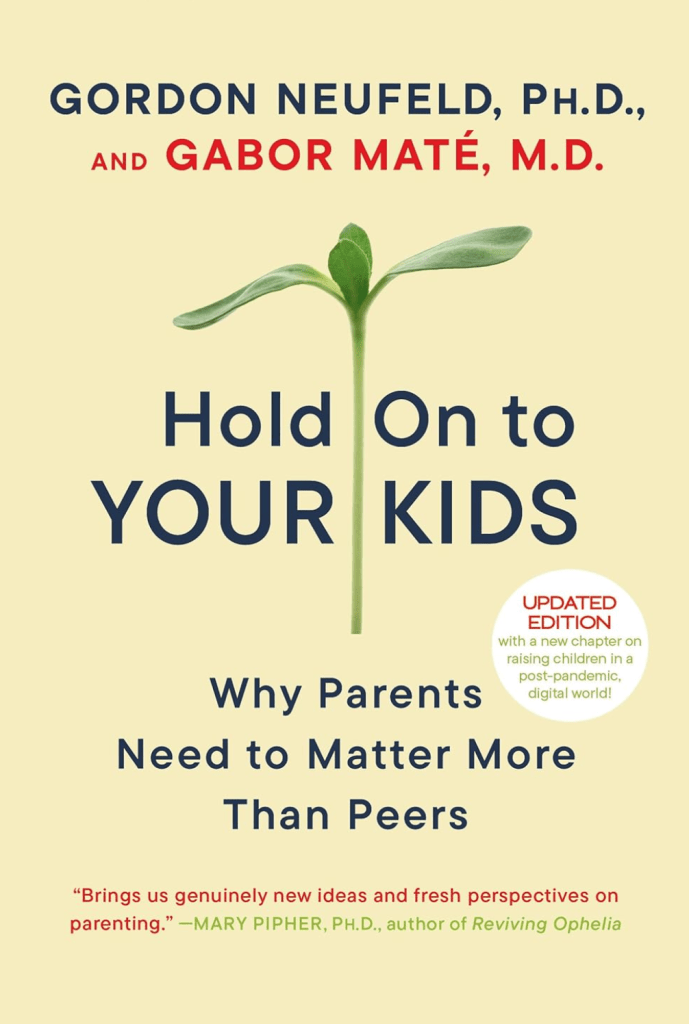
So I read books about parenting, and the most recent, “Hold Onto Your Kids” by Neufeld & Mate, sparked a connection with the “adult in the room” problem. Read this description, and tell me if a bell doesn’t start ringing;
“Children take their lead from their friends: Being “cool” matters more than anything else. Shaping values, identity, and codes of behavior, peer groups are often far more influential than parents. But this situation is far from natural, and it can be dangerous—it undermines family cohesion, interferes with healthy development, and fosters a hostile youth culture. Children end up becoming conformist, anxious, and alienated.”
If you switch out the parent/child/family phrasing here with society/citizen/democracy or business/employee/bureaucracy, a Freudian slip of inquiry unveils; might the problems in the adult world be linked to upbringing? Unresolved attachments with parental and nurturing forces?

If the adults of our generation aren’t showing up in the present rooms of today, what might that signify about the historical development and rearing of our youngest citizens? Who was tending to that? Did they make sure to turn the kids into functioning adults?
Did we remember to mature and age ourselves properly? How do we check?
There’s a particular concept from the parenting research in “Hold Onto Your Kids” that may help color-in the uncertainty, imbalance, lack of adults-in-rooms we feel; peer orientation.
What is Peer Orientation?
The authors Neufeld, a psychologist, and Mate, a researcher working with addiction and rehab, took their combined expertise from working in correctional settings with the violent extremes of peer oriented youth – those in gangs, the foster system, or endlessly in and out of treatment facilities – and applied it to understanding parenting, kids, and how culture is formed.
One of the themes of the book is maturation, what it means to break through adolescence into mature adulthood.
Adults don’t come out of the ground like orcs, catalyze at a specific age, or become actualized after a set of experiences. An “adult in the room” is forged from an attachment in pre-adolescent childhood to reliable post-adolescent/mature adults and institutions grounded in a shared semblance of social fabric.
Kids securely attached to this fabric, raised by and anchored to family, culture, and traditions, end up much more well-adjusted, flexible, and resilient. Able to resist social pressures and keep a sense of themselves in a crowd, these “lil adults in the room” are capable of facing and overcoming futility and finding their own way through chaos with confidence.
Kids who experience a prolonged detachment from this fabric are vulnerable, get lost and end up guided, misshapen, and parented by their inexperienced, immature, and equally clueless peers. The results of being raised centrally through peer orientation are disastrous. It’s essentially Lord of The Flies territory, the Land of Toys in Pinocchio, or the Lost Boys in Neverland. Juvenile prison is a good example – if being around peers was beneficial, these facilities should be model citizen factories.
Key Point: Peer orientation doesn’t produce independence, maturity or freedom, but imprisons behaviors, establishes a lasting immaturity and produces a profound dependence on equals. It’s frightfully mid. You’ve seen it.

The richest man-child in the room, photographed here at an ad industry trade event, telling the crowd of grown folks to “go f**k themselves”
On The Perils of Peers and Culture
It’s an odd paradox for this American parent, once an American child, to reflect on the negativity of peer orientation, when I (an intellectual/hippie jazz musician/kid-at-heart) have been seemingly counter-culturally programmed to think the opposite.
In the book, the authors rhetorically ask why one doesn’t see many third generation hippies, but does see continuity in more traditional environments? There’s no Moonbeam Peterson III.
If your orientation is entirely oppositional, defined by resisting or rejecting what came before, you risk leaving nothing behind. Counterculture has an important role, but if it becomes the only posture, it struggles to produce anything durable. Transmission of culture requires continuity. This isn’t to say tradition is always right, but it tends to produce structures that get handed down.
If everything is framed as something to dismantle, there’s nothing left to pass on.
(For more on counterculture and stagnation and what to do about it, buy “Chairman of The Bored” by Eaon Pritchard, which dives smack into this.)
The plot of any coming of age movie in my pop culture past was usually something rhyming with “I don’t want to be like my parents” or a rejection of traditions. Screw you dad! Don’t trust anyone over thirty. Nickelodeon told us; Kids rule! Try to tell the lead singer of “Rage Against The Machine” what to do!
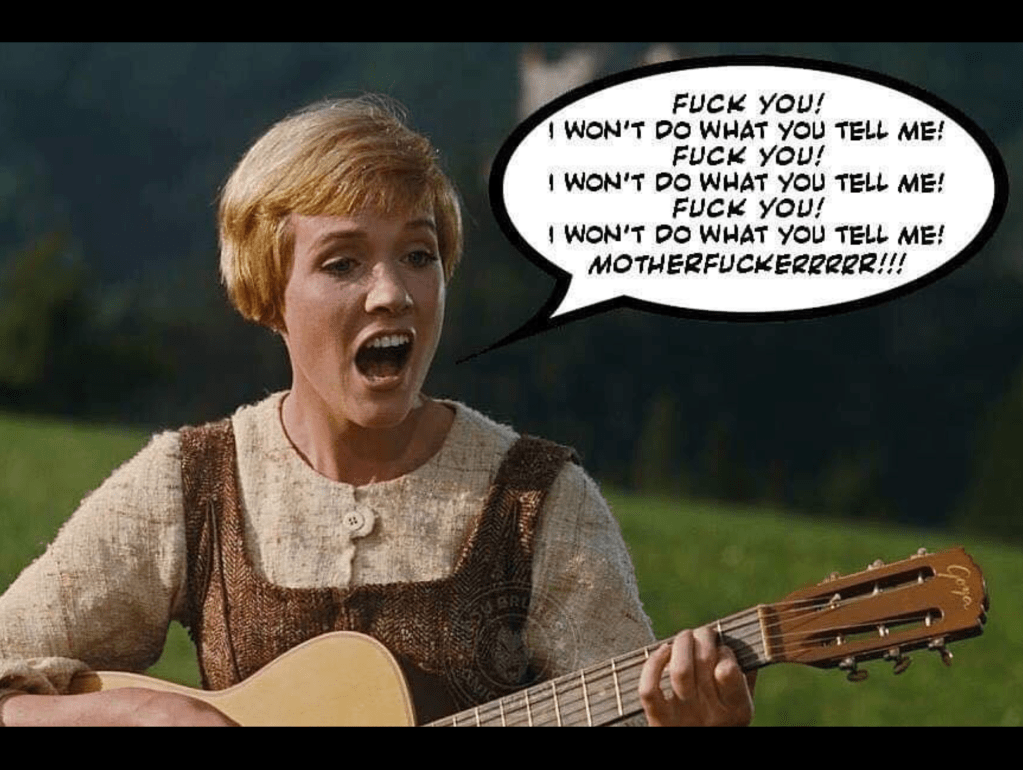
This makes sense in America with our well-marketed rebellious, defiant DNA, but in the book it’s shown to be anathema in almost every other civilized society with meaningful attachments between kids and adults to identity and culture.
A simple observation at social functions in mainstream America – we have separate lanes for kids and adults, tables, experiences – there is very little intergenerational mingling encouraged.
The book highlights examples from cultures across the world and throughout history showing that when generations intermingle and children and adults interact, these moments serve as orientation opportunities, mechanisms that attune maturation and, in turn, refine and evolve culture.
In places where intergenerational life is still intact, culture is shaped vertically. People spend time with those older than them, and over time they absorb ways of thinking, behaving, and judging that come from experience. There is a sense that some things are passed down, not just discovered in the present.
Where in our online life, does this kind of intergenerational commingling happen? It doesn’t, because peer orientation went digital with social, algos, and P2P.
When Peers Became Files
In the U.S. where peer relationships have a larger role, intergenerational structures have weakened. At the same time, the underlying technology of culture changed.
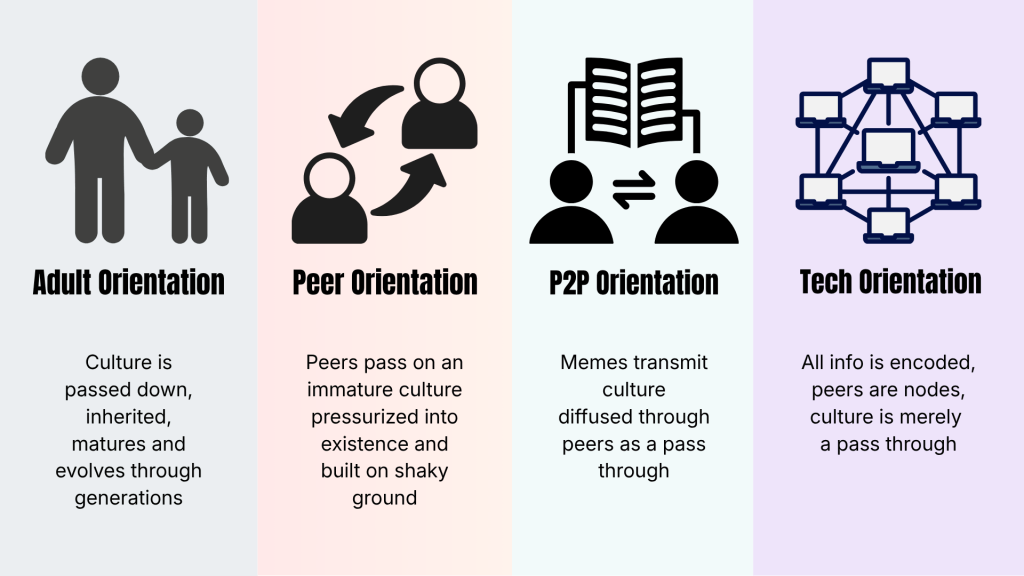
Peer-to-peer file sharing removed many of the intermediaries that once filtered and contextualized cultural material. Music, film, and media became directly exchangeable between individuals, without much sense of origin or hierarchy. What mattered was access and circulation, lineage or context became an artifact to dismiss.
That same pattern extended into communication. Messaging and social platforms made peer interaction constant and primary. Cultural exposure became something shaped by horizontal networks rather than vertical transmission. This set the stage for memes as the main vehicle for evolution.
As peer orientation moved into digital systems, it also became more detached from place, age, and experience. The result was a targeted yet flatter cultural environment, where fewer signals point to what is more mature, established, or enduring, and more attention is given to what is current and widely shared.
As systems evolve into peer-based networks, identity formation follows suit, and like Neufeld & Mate have shown, when you’re orienting development to peers, you’re never anchoring to anything more mature than you.
With peers being switched out for files, feeds, models, trends, and AI, the peer group has been replaced by aggregated outputs.
The Adults Are Here; But I Fear We’re All Peers, My Dear
Take a look at this nGram (mentions of terms in printed books) view of these terms; “culture,identity,authority,values,duty,custom,obedience,self,care”
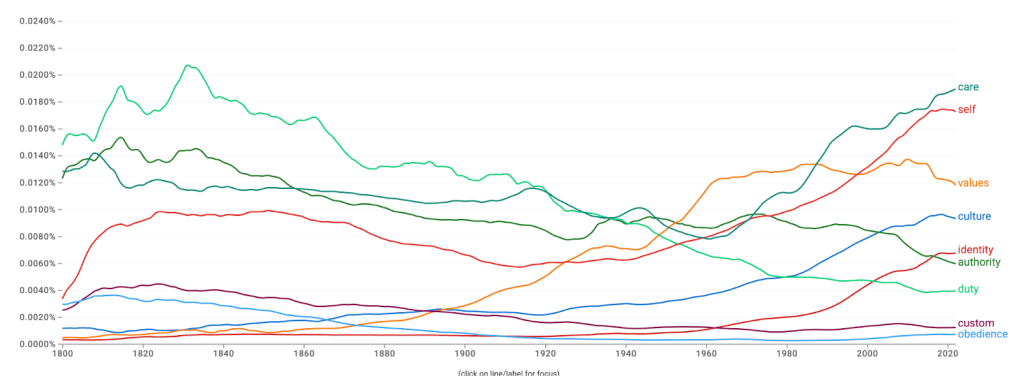
The historic traditional view, pre-1950s is generally – duty above all, then authority, care, then self. After 1960s, you see the rise of identity, culture, values, with care and self above all. Duty is in the dumps.
The declining words are about constraint and inheritance
The rising words are about self and relation to others
Painted with a broadbrush, these data points suggest that the books on the shelves for the adults in the modern room are all about self-care values in culture as attached to their identity.
We are generations into a heat-seeking lock on peer-orientation as the main source of fuel for the global engine of culture/society. As our legacy institutions and cultural heritages are under attack, very few are looking to history or elders, or even their own judgment. Decisions feel less like willful choices and more like emergent emanations from the hive mind.
We’ve moved, one meme at a time, from a world traditionally oriented upward, to one oriented sideways, and increasingly, to machines trained on sideways data.
When everyone looks sideways, no one grows up. If there’s no one above us, and nothing before us, what exactly are we becoming? If everything we know comes from peers, and now from machines trained on peers, where would something truly new, or truly wise, even come from?
How To Steer Clear of The Peer; Want Better
“Where’d you get your information from, huh?
You think that you can front when revelation comes?”
– Beastie Boys, “Check Your Head”
For me, peer orientation opened up my eyes to a ton of behaviors and bullshit I’ve experienced and continue to see, things I evaded as a kid and teen and man, where I wondered looking at all these mediocre mFers; “is this how we’re behaving/dressing/acting/leading now?”
Though I’ve been pressured by peers and caved, I’ve never felt strongly oriented to them, and this is because of my strong attachment to my wonderful parents, but also mentors.
I can’t deny that, thanks to a lifetime pursuit of music, I’ve had strong mentors and adult orientation in my life. Not to name-drop, but Wynton Marsalis, Ron Miles, Big Daddy Kane, Shami and Rudy Royston, Jerry Bergonzi, Cindy Blackman, the legions of teachers, instructors, adjudicators, award panels – I’ve been taught and tutored by mature forces, all anchored to the legacy of music and performance.
I’ve also adopted a similar stance with marketing, choosing to learn from the mature voices in the room, diving into history books, and seeking out the established legacy truths, the heritages we might forget, the traditions we might need to build off, not blow up.
Whether mentors or peers provide guidance, the real choice is whether to adopt it, adapt it, or reject it—and even rejection is a form of response.
The key is not the advice itself, but how it clarifies what you actually want.
It’s hard to accept that a lot of what we think we want, or desire, could be based on peer orientation, not our personal preferences.
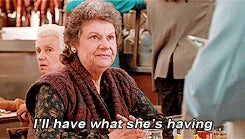
“I’ll have what she’s having” is an admission that, at the core, to want what others have is to want to be them. Maybe, if we get what she’s having, we can be what she’s being.
It’s a paradox mirage though; only through realizing how much peer orientation our wanting might contain, can we gain the agency to want what we truly need, despite what others have or seem to want.
The Difference Inquiries in Peers vs. Adults
If you’ve come this far and you’re still wondering about your orientation, think about the differences between these questions and wonder how you’d behave in the room if they came up? It might be that we’re in the room already…
Orientation
- Peer: What is everyone else doing?
- Adult: What is right, given the situation?
Validation
- Peer: Will this be accepted?
- Adult: Can this be justified?
Time Horizon
- Peer: What works right now?
- Adult: What holds up over time?
Decision-Making
- Peer: What’s the consensus?
- Adult: What’s the decision?
Responsibility
- Peer: Who else is involved?
- Adult: What is my responsibility here?
Risk
- Peer: What won’t get me in trouble?
- Adult: Where does the buck stop?
Identity
- Peer: How do I fit in?
- Adult: Who am I becoming?
Knowledge
- Peer: What’s being said about this?
- Adult: What do I actually know about this?
Authority
- Peer: Who’s popular or influential here?
- Adult: Who is accountable here?
Conflict
- Peer: How do I avoid friction?
- Adult: What needs to be confronted?
Culture
- Peer: What’s trending?
- Adult: What’s worth preserving or building?
Learning
- Peer: What can I pick up quickly?
- Adult: What do I need to understand deeply?
Judgment
- Peer: What seems reasonable?
- Adult: What can I stand behind?
Future
- Peer: What’s next?
- Adult: What does this become?
 POSMarketing