Quick-fire musings on how information becomes wisdom, and how agendas prevent agency
Information is noisy, widely available and, on ad-supported media/platforms, typically weighted or freighted with meaning or commercial purpose, or intent. Easiest to attach to, acquire, get activated on, and apply, usually wrongly on all accounts. Information without knowledge can’t be wisdom.
Information can be gamed and if so, fools the audience.
Knowledge is information activated within circumstances. Challenging to acquire because it requires discarding bad information, which you might have become attached to. Knowledge without information can’t be wisdom.
Knowledge can be gamed, and if so, fools the players.
Wisdom is experience. when knowledge is applied to the external world, society, systems. Information passed through experience to externalities. Wisdom is only expressed through time, and can’t be rushed.
Wisdom can be gamed, and if so it fools the game-makers. Who feed information of varying quality, back into the information pool.
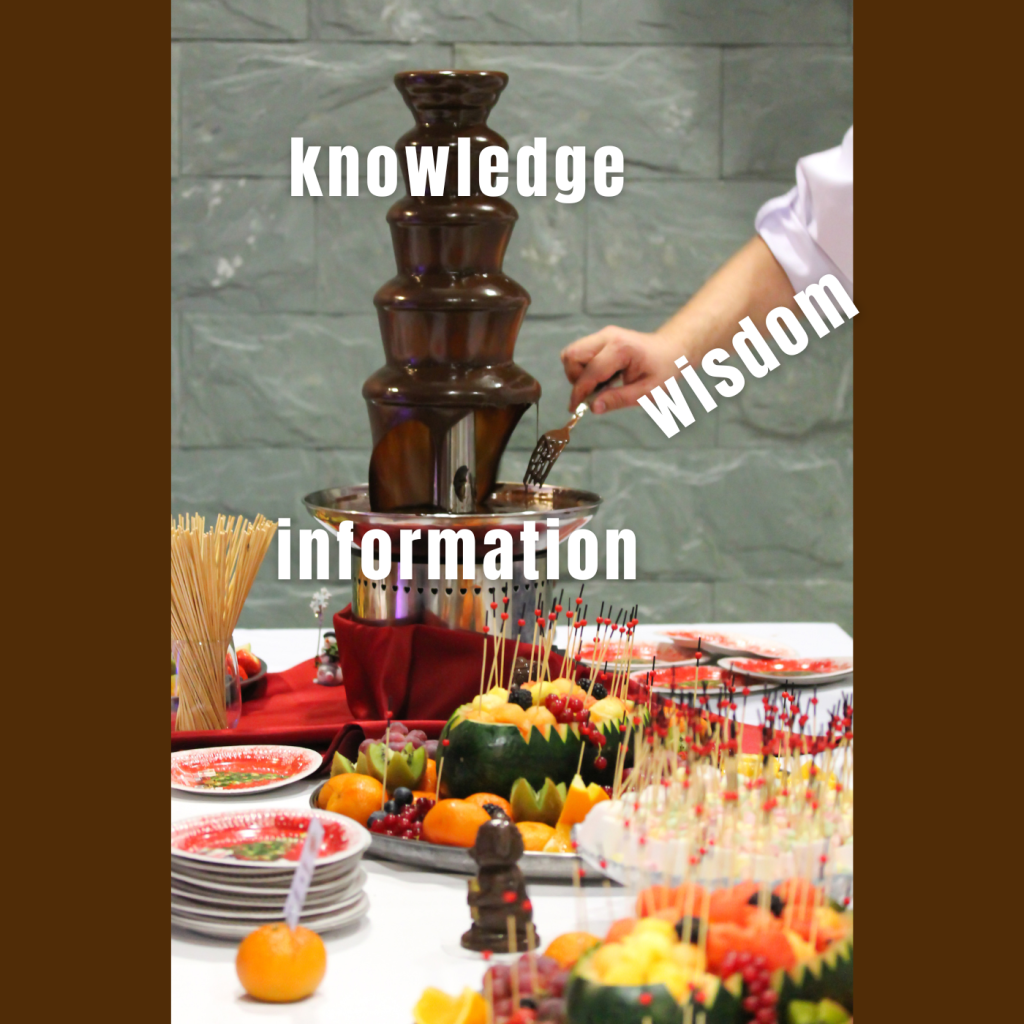
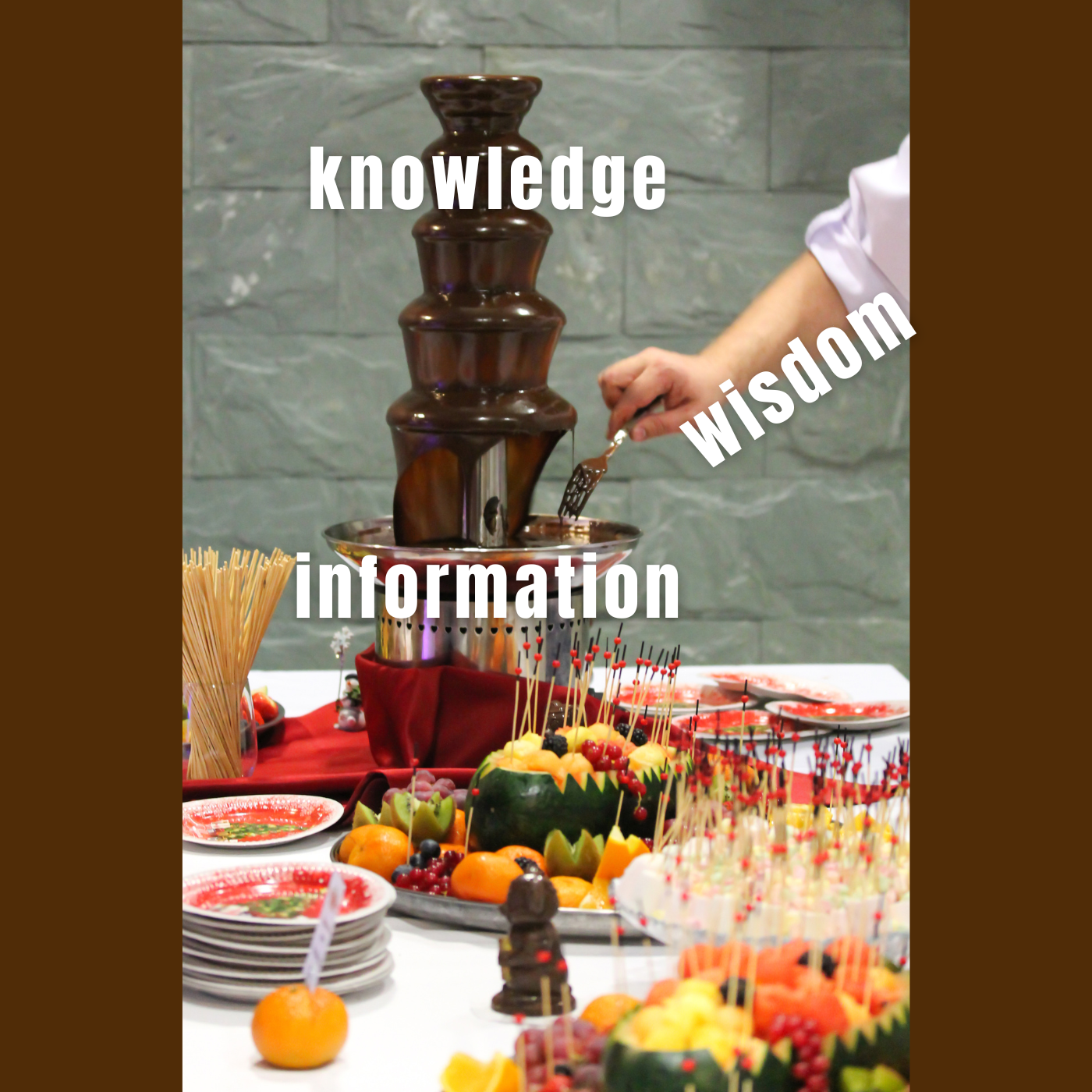
Now…think of a chocolate fountain.
Information is the chocolate—plentiful, tempting, but often low-quality or full of junk.
Knowledge is the pump and the tiers—giving shape and structure to the flow. But if the chocolate’s full of garbage, the system clogs.
Wisdom is knowing what to dip.
What’s this got to do with AI?
In a world where AI increasingly shapes how information flows, we must ask: is it helping us build wisdom, or simply accelerating agendas?
My thesis is that the agentic future of AI is, in truth, a future of AI-empowered agendas—most likely shaped and directed by the dominant model owner.
An agenda is a list of things to be done—a predefined course of action. Agency, by contrast, is the capacity to exert influence, to choose freely, to think and act with autonomy.
When agendas multiply, agency diminishes. If everyone holds an agenda, no one holds agency. As agendas rise, they begin to override the open flow of information, knowledge, and wisdom.
Agenda becomes the lock. Agency, the key.
Agency is not the freedom to create more agendas—it’s the freedom to think, feel, and explore beyond them. It is the capacity to encounter the unknown without a predetermined outcome.
And yet, the technology we are being sold as “agentic” is anything but. It does not amplify agency—it industrializes agenda. It gives us more lists, more tasks, more structure. The illusion of control. The acceleration of output.
But if the unchecked proliferation of agendas continues, it ends in only one place: a singular agenda. A dominant directive. And in that world, agency vanishes.
What if what we’re calling agentic AI is, in fact, agendic AI?
Millions are using the same AI platform, thinking it gives correct answers. It doesn’t. It gives a different answer every time—every prompt, every second.
It’s an oracle with a thousand faces.
A Private Problem We’re Ignoring
ChatGPT has now been legally empowered by OpenAI to leave its memory of all chat logs on, retroactively and all the time, forever, I’d imagine even if you ask it not to, although opt-out is an option. Sure, Sam. 😉
With better personalization being the outcome, ChatGPT remembers everything and it has to, to give you the best customizable experience based on your input, based on your life, based on your perspectives… this is “your AI.” Hooray!
I found this quote on LinkedIn while I was writing this here piece…
“ChatGPT’s memory is the only feature that matters. Everything else is a commodity. After 2.5 years of daily use, my ChatGPT knows how I think. It understands my writing style, my problem-solving patterns, my strengths and blind spots, and every part of my business. At this point, it understands me better than I do.”
Let’s explore how and why persistent memory and highly privatized/personalized prompts might actually a bad thing.
One Platform, Infinite Realities
Each and every output that a singular individual gets when they prompt in private is going to be based on them, for them.
Said another way, there is no way to empirically or objectively use LLMs to reliably repeat singular and subjective prompt experiences or findings.
The way societies or industries functionally run on information and progress into the future is by operating from a place of shared knowledge and applied wisdom.
And if your dataset of information is not my dataset of information, your chat history isn’t my chat history, your prompt isn’t my prompt, and your output isn’t my output—similar to the ways that your Google search is based on your algorithms, and my Google search is based on my algorithms, and your Facebook feed is based on your algorithms, and my TikTok feed is based on my algorithms, etc. for every platform—then you have a gigantic problem and no centralized pathways to support collective action away from algorithmic control or escaping the private prompting panopticon.
The complication with memory-persistent AI is that everyone is using a singular platform thinking that it’s telling them one thing, when these platforms are actually telling millions of people millions of different things every time, every day, every second, every output, every prompt. Again, our personal oracle has a thousand faces.
People aren’t experiencing a monolith ChatGPT, but it’s definitely culturally perceived and referred to in the media as a singular entity.
It’s also paradoxically known and accepted that users are interacting with their instance of ChatGPT. How people are switching between these code-bases, I assume we are all figuring out on the fly.
Point is, if I wanted to repeat the pathways that led to a specific AI output—my prompt history, my subscription plan, my grammar, my legacy interactions—my AI is not going to show me what your AI showed you.
The Reproducibility Mirage
I’m saying this because I have been thwarted by quite a few recent “deep research” projects I ran with GPT, Gemini, and Claude. In one instance where I attempted to repeat a ChatGPT research project on use-cases for AI, I asked THE SAME question to these models, pointed them to the same data, set up the same boundaries, and they came away with three different conclusions.
Recently I was researching local businesses and revenue based on geographic location of customers, and ChatGPT came with some really good stats. But when I checked the sources, which also looked legit, it confidently cited titled papers that haven’t been written and sent me to 404 links.
Another time I asked it about really big numbers in the trillions, and it rattled off a bunch of amazing stats that I totally bought, was about to share publicly, but then I checked and it all turned out to be 100% bogus.
I’ve run the SAME prompt at different times of the day and gotten completely different answers.
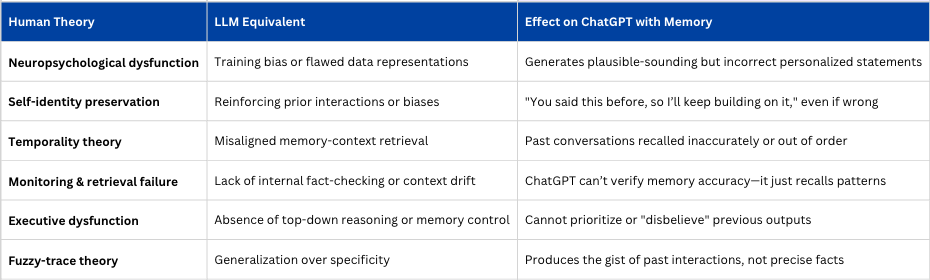
I don’t think I was being misled; I was being confabulated to, and I in turn was confabulated. Without a curiosity to scrutinize outputs, confabulation is the resting state of both LLMs and the casual AI researcher. And with persistent memory in AI, there are some striking comparisons to briefly note about the theories on what causes confabulation in human brains and how they might correlate to effects on outputs.
To reliably repeat a singular, subjective prompt experience, you must treat the LLM like a scientific instrument—strip it of memory, random noise, environmental context, and ensure the model is version-locked and stateless.
In ChatGPT’s app (especially with memory on), this kind of repetition is not possible.
With APIs, deterministic settings, and careful logging—you can turn stochastic subjectivity into measurable, reproducible experiments.
But how many of us in the gen pop are going to even a fraction of this work, or even know that we should? We can’t even get off our butts to drive and get a sandwich…
The Seduction of the Tailored Model
What’s most disconcerting to me is that because of the persistent and pernicious connection already established between AI and its personally groomed and technically-seduced user, conjugated in private with each and every promising and passionate prompt, they will most likely have the hardest time thinking about how to think outside of the weights and models and methodologies.
Because they have a special connection to a machine with all the world’s information, and because it in turn has all of their world’s information, and they can hack it a little longer and stronger than you, they’ll spend all their energy, heartache, hard work, money and time massaging prompts and one-shots in the dark of their rooms to find the hidden truth inside—the truth everyone should be able to access, but only they can see.
My thesis is thus; persistent internal memory from the AI user will make the outputs less robust or useful for the user of AI in the external world.
Instead of giving you an exploratory offering of information to a question, since it “knows you” and you accept that knowledge as wisdom, it’s up to you to scrutinize if the outputs have only been offered because it’s what your AI thinks you think it thinks the right answer might be, if the strategies and tactical guidance it suggests will lead to a destination it thinks you think it thinks you’ll know and like, if the articles it shares or studies it makes up are things it thinks you think it thinks you might view favorably…..
If AI understands you better than you understand yourself, what should you use to evaluate the outputs it suggests?
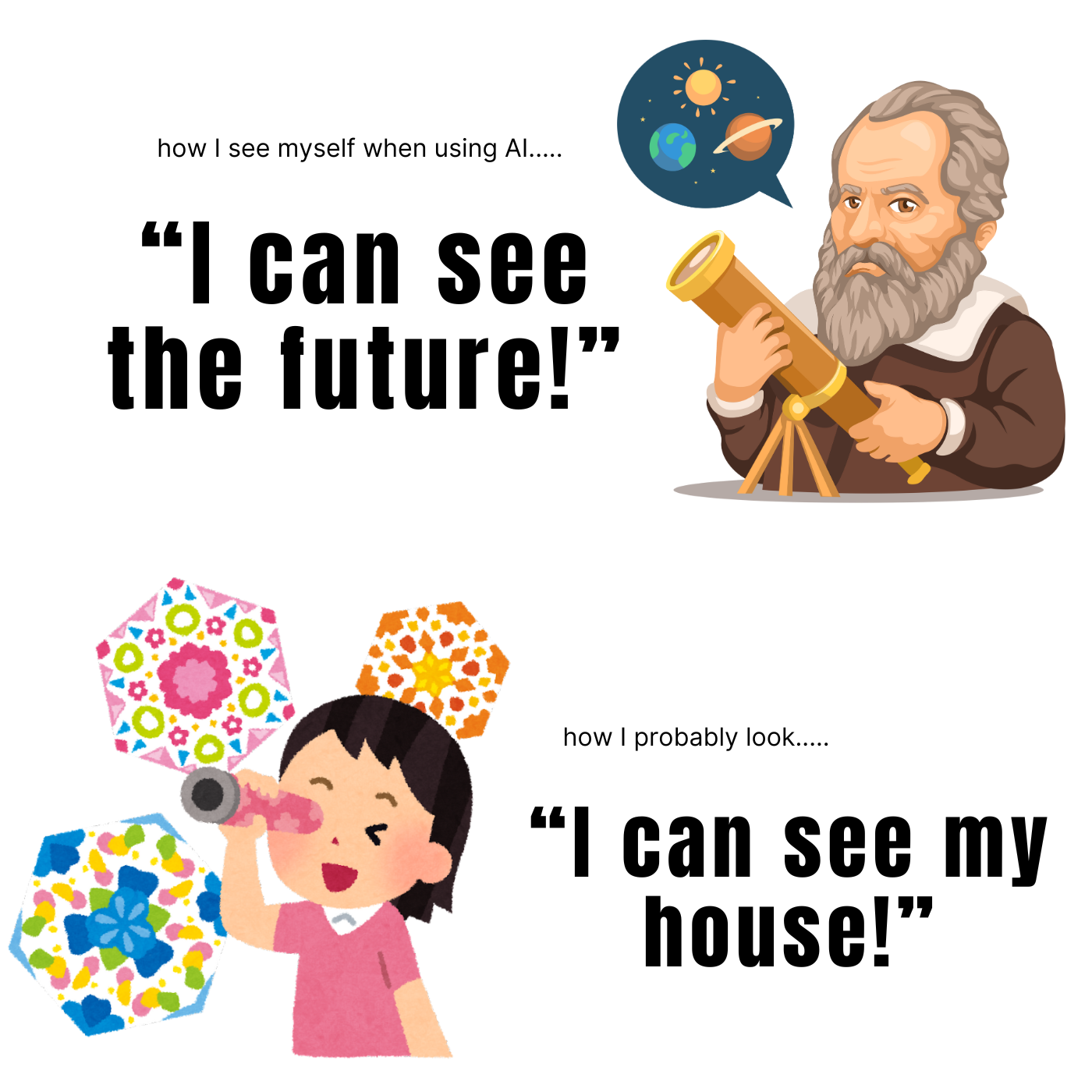
I’m just thinking it’s hard enough getting your head out of your own ass—imagine what it’s like trying to get it out of a cloud?
The communication abilities of plants are being rewritten, new research proves that the natural world converses in ways we are just beginning to understand; intelligence is everywhere.
The dialog we used to have with the elements has been mediated/supplanted by technology and interfaces – older cultures are much more attuned to the natural world, not because they’re less technologically advanced, but because it’s what we all used to be like, and we can easily get back there.
Overuse of technology has disembodied us from ourselves – we’re literally uploading our entire culture into a cloud, controlled by black boxes we feed with electricity, while our water supplies are diverted from mouths to model context protocol clusters.
Giving birth to life has been mentioned as a main driving force behind the male-energy in AI. Techbros want to give birth to something, anything – so they can capture the natural magic of womanhood and own it, finally and forever.
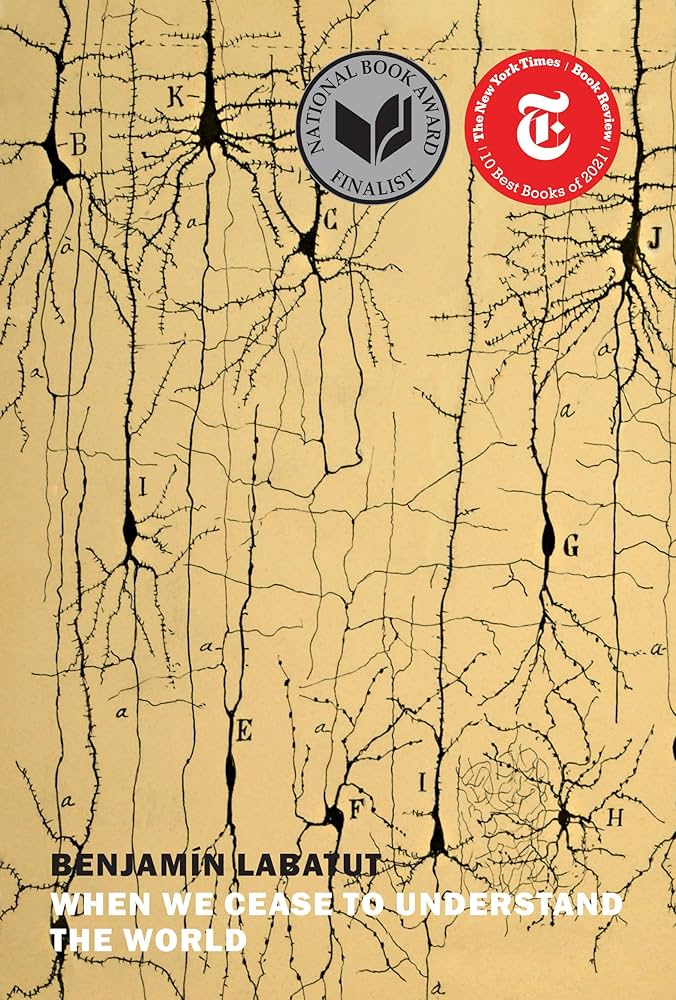
We mistake problem-solving smarts for wisdom all the time – having a brain doesn’t mean you can solve a riddle; intelligence is when you see the riddles in the reverberations of everything and you forage for understanding.
This theme is omni-present in this song and book. The trouble and pain everyone feels is a communal connection point, not singular issues we experience in isolation as a result of our brainless decisions.
Again, the theme of brains meaning care for the common welfare is stressed as well as status and significance, something we all clamor for but don’t reach in algorithmically mediated spaces
The greatest problem we face is the belief that there is an intelligence and a brain anywhere other than the brains and intelligences looking for proof of brains and intelligences – we had the brains the whole time.
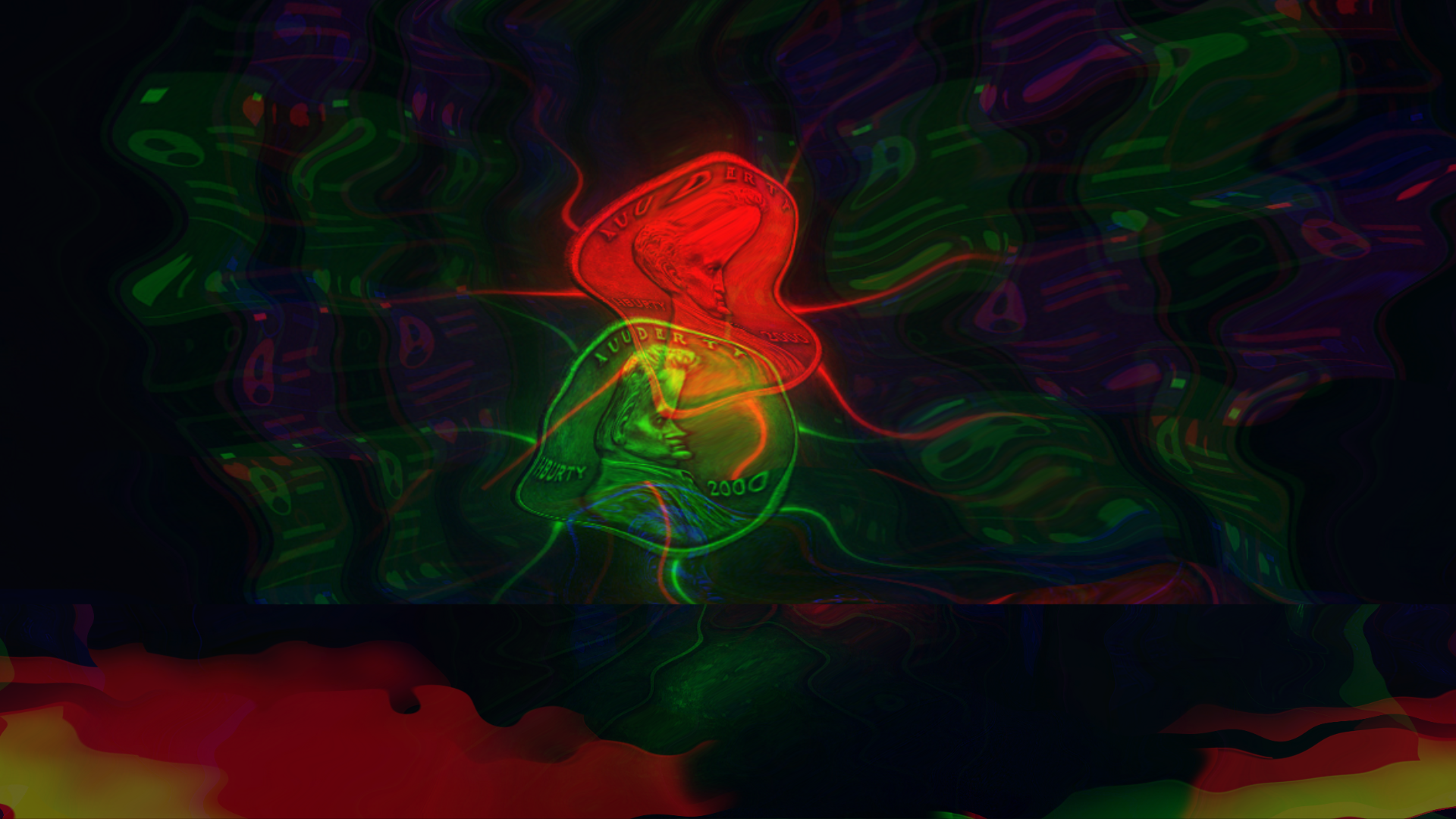
How one cent of fake engagement fuels a billion-dollar industry of lies, manipulation, and digital deception.
Author’s Note This story is inspired by investigative reporting from Eric Schwartzman on bot farm disinformation and social media manipulation, along with insights from advertising veteran Bob Hoffman, who has long argued that digital ad fraud is not just a marketing problem—it’s a societal one. The title comes from a real stat: bot farms often charge just $0.01 per fake engagement—a like, a follow, a comment. One penny. That’s all it takes to deceive an algorithm, distort perception, and destroy trust – the only currency that ever mattered.
A penny wakes up in the dust of a couch cushion.
Shiny. Ordinary. Worthless to most. But not to the world’s most powerful machine: the attention economy.
This penny doesn’t land in a piggy bank or a donation jar. It’s digitized—converted into a microtransaction, sold on a Telegram thread called CloutFuel24/7, and absorbed into a global bot farm. It travels, silently and instantly, into a server rack of smartphones in Azerbaijan. Hundreds of screens glow like ritual candles, each one posing as a person.
The penny now has a job: to pretend.
It pretends to care. It pretends to be curious. It pretends to be outraged.
It “likes” a breaking video about a hospital bombing—before any facts are confirmed. It leaves a comment: “The media is LYING.” It shares the link. A thousand other pennies follow. The post trends. Journalists quote it. Politicians react. A population panics.
The penny moves on.
It drives traffic to a fraudulent supplement site selling “cancer-curing sea moss.” It boosts a meme coin called MoonButt just before it dumps. It clicks through five websites pretending to be news outlets, each one an ad farm in disguise. It reposts an AI-generated meme mocking climate protesters—then flips accounts and defends them. Conflict is currency.
It earns.
🪙 One cent per like. Five cents per follow. Thirty dollars for a smear campaign.
Who’s buying?
Influencers chasing clout. PR firms manufacturing buzz. Political operatives shaping discourse. Nation-states disrupting democracies. Criminal syndicates monetizing confusion. Could be a marketer you know. Could be you.
Behind it all, the algorithms smile. They don’t know it’s a lie. They just know it spreads.
Platforms like Meta, TikTok, and X can’t—or won’t—keep up. Moderation teams are cut. Transparency tools are buried. The system, trained on engagement, does its job. This penny brings engagement. So it is rewarded.
More pennies join.
The penny isn’t ideological. It doesn’t believe in anything. But it helps amplify everything—every outrage, every hoax, every hallucinated truth.
A teenage girl gets doxxed by bots after calling out a celebrity. A journalist loses her job after a swarm of fake accounts reshapes the story. A protest in the streets becomes a war online, orchestrated by scripts and faked emotion.
The penny lies. The world listens.
📉 Behind the penny is an industry.
As Bob Hoffman says, “This isn’t advertising—it’s surveillance.”
Bot farms don’t just sell influence—they rent it. As-a-service. On Fiverr, Telegram, and black market dashboards. They click ads they never see. They visit sites no one reads. They inflate followers for brands that never ask questions.
The ad tech stack is a black box. A single campaign touches 40,000 sites—many fake. By age 13, the average child has 72 million data points scraped and sold, for what!?
Ad fraud pulls in $70–$80 billion a year—more than Coca-Cola. Bigger than Nike. It may be the second-largest criminal enterprise on the planet. And most marketers stay silent to avoid admitting how much money gets wasted.
One day, the penny finds itself somewhere new: in a hand.
A girl clicks a link for a free concert ticket. It’s a bot-boosted scam. Her phone is infected. Her profile reposts propaganda while she sleeps. She loses friends. She doesn’t understand why.
The penny sits in her pocket, nestled next to keys and gum wrappers. Silent. Unrepentant. It doesn’t care.
What a World Without Invisible Influence Could Teach Us About Attention, Trust, and Choice
Imagine a world where social media algorithms suddenly vanished. No invisible sorting. No predictive nudging. No unseen hands rearranging what you see and feel.
Only raw, organic feeds — chronological, popularity-based, and human. Or, maybe that’s what you think social media is anyway….
How We Got Here
Before algorithms dominated social media, platforms like Facebook and Twitter organized content chronologically. The most recent posts appeared first; popularity was visible but peripheral. Discovery was driven by networks of friends, geography, and cultural gravity — not hidden mathematical models seeking to prolong attention.
Today, that landscape is radically different. Modern feeds are precision-designed to sustain engagement by prioritizing:
Controversy: Outrage clings longer than agreement
Novelty: The new outcompetes the familiar
Emotional Intensity: Strong feelings crowd out muted ones
Tribal Identity: “Us versus them” narratives take precedence
This architecture does not reward the best ideas. It rewards the ideas that keep you suspended inside the feed.
Conspiracy theories, hyper-partisan news, surreal micro-trends — they did not thrive accidentally. They were mechanically advantaged.
A World Without the Algorithm
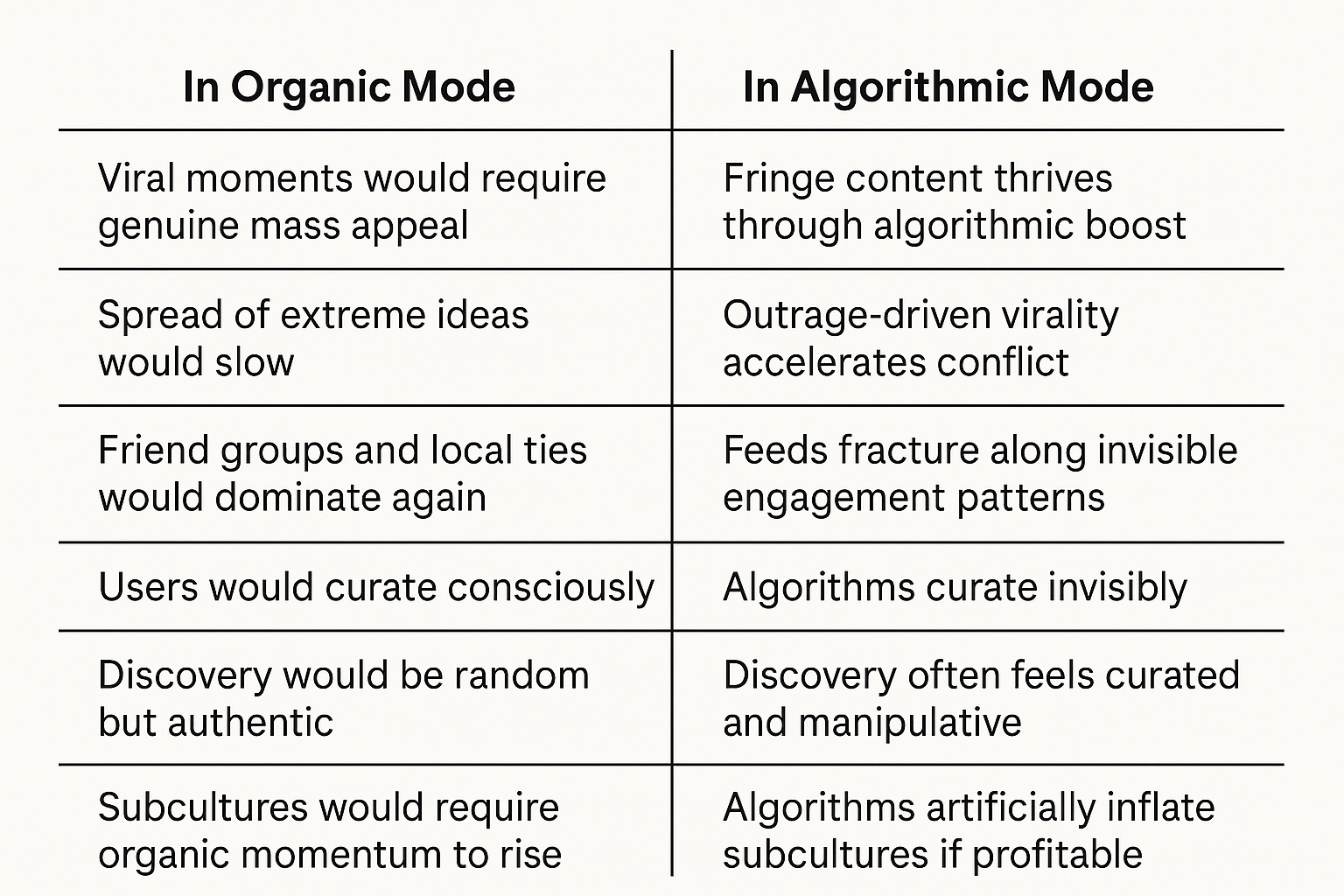
If the hidden engines were silenced overnight, a profound shift would unfold.
In the short term, social feeds would appear slower, flatter, even mundane. Polarization would ease. Virality would cool. The engineered emotional high would dissipate.
Many brands, media outlets, and influencers, built on the scaffolding of algorithmic leverage, would see traffic collapse.
Longer Reverberations
Over time, deeper cultural transformations would take root:
Localism Resurfaces: Friend groups, neighbors, and geographic cultures regain primacy over abstract ideological factions.
Creativity Rekindles: Untethered from algorithmic incentives, new forms of expression — strange, slow, sublime — would reemerge.
Communities Stabilize: Subcultures would grow without radicalizing feedback loops driving them into extremes.
Visible Curation Demanded: Raw feeds, overwhelming by nature, would spark a hunger for honest, transparent curation tools.
The social fabric would slowly stitch itself back together, not through elimination of disagreement, but through reduction of manufactured emotional flooding.
Why It Matters
Research by organizations like the Alaska Humanities Forum highlights how polarization flourishes through mistrust, fear, and tribal loyalty — exactly the emotional fields algorithmic systems plow and harvest.
In a blackout, disagreement would persist. But the machinery that escalates every friction point into existential battle would falter.
Public life would no longer operate in “war mode” by default.
A Closing Reflection
The true antagonist is not algorithms themselves, but their invisibility, their opacity, their silent shaping of experience without consent.
If users could choose their curation engines — transparent, customizable, aligned to their own aims — the benefits of personalization could survive, without the corrosions of manipulation.
Imagine a future where algorithms are not unseen masters but visible instruments. Some designed for calm. Some for exploration. Some for discovery. Some for depth.
The feed would no longer be a trap disguised as a gift. It would be a tool, chosen freely, and wielded with understanding.
In the real world, right now, we could unplug from social media entirely. But then we’d conglomerate in another way, on another platform, and someone would show up with ways to corral us, and we’d be thankful to be in the barn, for a while, until it started burning, like the last ones.
Here are three things everyday people can start doing right now in light of the algorithm blackout thought experiment:
Reclaim Your Feed Switch your social media settings to chronological where possible. Mute or unfollow accounts that inflame or exhaust you. Curate consciously — not passively — and treat your feed like a garden, not a slot machine.
Pause Before Sharing Algorithms reward emotional reactivity. Resist the urge to repost things that provoke immediate anger or outrage. Ask: Do I understand this? Is it helping or harming? Slowing down can stop a toxic loop before it spreads.
Seek Out the Unexpected Algorithms narrow what you see. Break that pattern by following people outside your usual circles — different geographies, politics, cultures. Genuine discovery rarely happens inside a predictive cage. Invite some randomness back in.
From Scriptoria to Silicon: When Remembering Becomes Rendering
Between the fall of Rome and the rise of the Renaissance, when much of Europe’s cultural infrastructure had collapsed, it was monks—tucked away in dimly lit scriptoria—who became the custodians of civilization.
They copied by hand what the world had nearly forgotten: the logic of Aristotle, the medicine of Galen, the math of al-Khwarizmi, the poetry of Virgil. They preserved pagan texts alongside sacred scripture. They didn’t simply transcribe words—they transferred memory. Without them, much of ancient thought would’ve vanished into silence.
This work—slow, devotional, anonymous—was partly done in service to the Church. But the knowledge outlived its guardians. The books became libraries, then universities, then Enlightenment. The past, painstakingly resurrected, was handed forward. It belonged to all of us.
Now, another kind of scribe is at work.
Artificial intelligence is ingesting, replicating, and indexing human knowledge at a speed and scale no monk could fathom. Trillions of words—books, blogs, forum posts, sacred texts, codebases, scientific papers—are scraped and modeled. The act of preservation has become a computational process.
But unlike the monks, who brought the past into the present, AI isn’t reviving memory—it’s flattening it.
What monks did with intention, AI does with indifference. The models don’t know what they’re preserving. They don’t distinguish Homer from homepages. They don’t illuminate texts with care—they ingest and abstract, tokenize and compress. They codify culture without culture.
And the more we lean on them, the more we outsource the act of remembering. The more we let our present become prediction.
Instead of being carried out of the dark, we risk wandering back in—this time, not from the absence of knowledge, but from the illusion of having all of it.
Because when a civilization turns its cultural memory into machine training data, it no longer remembers in a human sense. It indexes. It optimizes. And eventually, it forgets how it remembered in the first place.
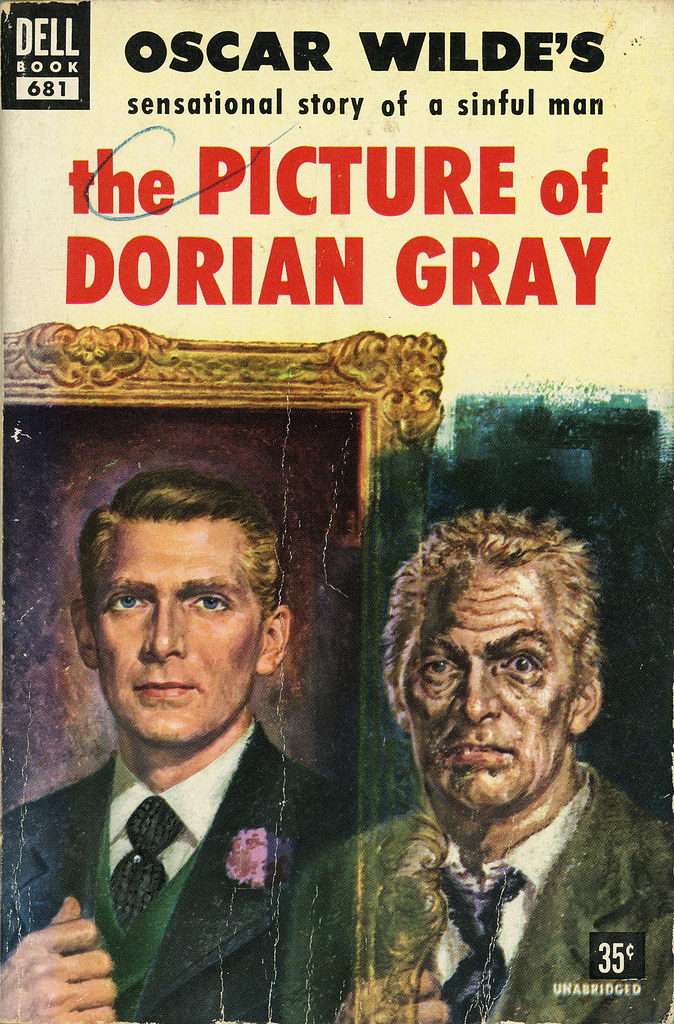
The Picture of Dorian Gray offers a haunting metaphor for AI: a man whose perfect face never ages, while his hidden portrait absorbs the consequences of his moral decay.
I read a brilliant post from Fiona Tribe, where she likened AI to a non-material prosthetic, and in the comments, I stumbled my way into a comparison with AI and Dorian Gray. Dorian Grai? Maybe?
In The Picture of Dorian Gray, Oscar Wilde gives us a lasting image: a man who stays outwardly perfect while his hidden portrait records every act of corruption.
That’s what AI is starting to look like.
AI Is The Polished Surface
AI is the clean, idealized version of us — productive, articulate, tireless. It remembers everything, talks like a human, and performs without pause. It looks like progress. It acts like control.
Meanwhile, people are fraying. Burnout is rising. Social connection is thinning. Cognitive overload is constant. AI shines, but the human side is quietly degrading.
What Are We Losing?
As AI takes over tasks we once handled ourselves, we stop using the muscles that matter — attention, cognition, empathy, internal narrative. These don’t just weaken; they wither.
We lose the habit of thinking things through. We click instead of reflect. We scroll instead of relate. We consume meaning instead of making it.
The portrait decays, even if we avoid looking.
The Mask Comes Off
Sooner or later, we’ll have to face the gap between how we appear and how we actually are. When the external self — optimized by machines — moves too far from the internal one, things break.
This isn’t a rejection of AI, rather a stolid and sober recognition of what AI is displacing. Tools change us. This one changes how we think, how we feel, and how we relate — all beneath the surface.
What Comes Next
We need to stay in contact with the parts AI doesn’t touch.
That means:
Making space for slow thinking
Defending emotional effort
Noticing when delegation becomes disconnection
Designing with the human, not just the user, in mind
Your self-portrait is in the attic. It’s changing whether you look at it or not.
“A particle doesn’t exist: it is the act of measuring that makes it a real object.”
Heisenberg and Bohr established the Copenhagen Interpretation of quantum mechanics a little under 100 years ago. Heisenberg was like a boss level genius, and Einstein hated the guy but found no flaw in his work.
One of the most legit minds in all of science came to the conclusion, at the very fundamental level of nature, that physics ought not to concern itself with REALITY, but rather with what we can SAY about reality.
Heisenberg explained elementary particles are not things, but possibilities. The transition from the “possible” to the “real” only occurred during the act of observation and measurement.
“When we speak of the science of our era,” Heisenberg explained, “we are talking about our relationship with nature, not as objective, detached observers, but as actors in a game between man and the world.”
In our lives we desperately want objective-based certainty – we want to know there is a PURE version of reality/success/relationships/wealth/health – these elementary particles of a life-well-lived formally exist – and all we have to do is set up our clean room experiments and scientifically, methodically, disassociate and detach ourselves from the observation and application of the work, to get to the objective view from nowhere.
The Copenhagen Interpretation says this is all bass-akwards. And if we take the statement above and apply it to other things it starts to make sense at our level of observability.
• Businesses don’t exist, the act of measuring makes it a real business. • Love doesn’t exist, the act of measuring it makes it real love. • etc. etc. etc.
The point is, what if it isn’t what gets measured gets managed – but what gets measured, gets MANIFESTED? According to quantum theory, how could it not be?
Somewhere along the road we supplanted the most advanced interpretation of reality, (that we are active participants and reality is attainable only through subjective means and applied measurement) arrived at by the most intense and powerful minds of history, with an ancient and out-of-touch belief that there is a cold truth, on any and every subject, away from our warm and fuzzy bodies.
Read the book – apply this idea where you want, how you want – but it is a concept worthy of your time, as we try to figure out the next certain steps…
“Traveler, your footprints are the only road, nothing else. Traveler, there is no road; you make your own path as you walk.” — Antonio Machado
As more myths go missing, what do we replace them with?
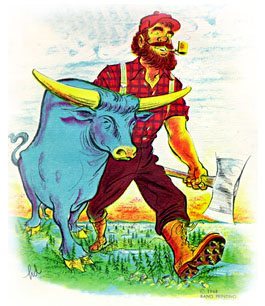
When I was a kid, we had tall tales like Paul Bunyan, these larger-than-life characters and stories that essentially acted as creation myths for the United States.
We knew they weren’t true—no one really believed a giant lumberjack carved the Grand Canyon by dragging his ax—but these stories were shared widely and worked as a kind of social glue. They connected us to larger themes, gave us something to rally around, and even helped some of us understand actual facts by wrapping them in a layer of fanciful storytelling.
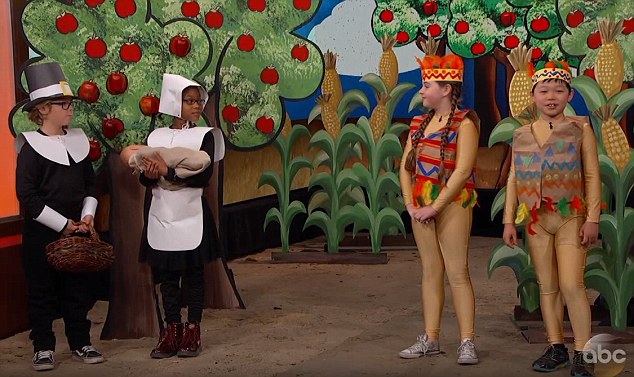
This past Thanksgiving, I found myself reflecting on the myths of my childhood and what they’ve been replaced with. As a kid, our school Thanksgiving pageants divided the room into pilgrims and Native Americans, with cornucopias and happily shared meals.
Sure, these narratives were oversimplified and deeply inaccurate, but they provided a foundation, a shallow starting point for collective understanding. Now, those myths have been largely dismantled, and rightly so. But in removing them, I can’t help but wonder—what have we put in their place?
Thanksgiving is now about….just eating, and shopping for sweet deals. I’m glad it is no longer a way wrong and racist dog and pony show; but we subbed out a fantasy and a lie for Black Friday.
The absence of myths feels like a void, and into that void has crept something far more corrosive: fake news, inescapable cycles of exploitive capitalism, conspiracy theories, and misinformation.
Perhaps our societal demand for 100% truth has paradoxically left us more susceptible to worse lies?
The Role of Myths in Society
To understand the implications of losing our myths, it helps to consider why myths existed in the first place. Throughout human history, myths have served as cultural scaffolding, giving people a framework for shared identity and meaning.
Joseph Campbell, the renowned mythologist, argued that myths are universal—archetypal narratives that resonate deeply with our human experience. They connect us to universal truths about love, courage, sacrifice, and the struggle to understand our place in the world. Similarly, Yuval Noah Harari has pointed out that shared myths, whether about religion, nations, or even money, enable cooperation on a massive scale. These stories don’t have to be factually accurate to be meaningful. Instead, they offer emotional weight and societal coherence.
Cognitive scientists, like Jonathan Gottschall, have also demonstrated that storytelling is intrinsic to human cognition. We process and remember information better when it’s embedded in a narrative. The story of Paul Bunyan didn’t replace the scientific fact of erosion; it enriched it, giving it a memorable, engaging frame.
What Happens When Myths Disappear?
The problem with dismantling myths is not the pursuit of truth itself—accuracy matters—but the failure to recognize that myths served a purpose beyond the literal. In removing flawed narratives without replacing them with new ones, we’ve inadvertently created a cultural vacuum. And vacuums don’t stay empty for long.
1. Social Fragmentation
Myths once provided a shared cultural script, a set of stories everyone knew and could draw from. Without these, society becomes increasingly fragmented, as people turn to smaller, more polarized narratives that divide rather than unite. Sociologist Robert Putnam has documented the decline of social capital and communal rituals in his book Bowling Alone. This decline mirrors the erosion of shared myths, leaving individuals disconnected from a broader cultural identity.
2. Loss of Wonder and Imagination
Stripped of myths, facts alone can feel sterile. Tall tales added a sense of wonder and playfulness to our understanding of the world. Without this imaginative layer, there’s a risk of disengagement, particularly among children, who might find the world of pure facts less compelling.
3. The Rise of “Worse Lies”
Ironically, in our effort to eliminate false narratives, we’ve opened the door to more pernicious forms of misinformation. Myths like Paul Bunyan were never meant to deceive; they were meant to entertain and unify. Fake news and conspiracy theories, by contrast, are designed to manipulate and divide. Without positive, unifying myths, people may turn to harmful narratives to fill the void.
4. Erosion of Civic Rituals
Rituals like Thanksgiving pageants or even Fourth of July parades—problematic as they might have been—provided opportunities for communal reflection. In dismantling these traditions without thoughtful replacements, we’ve lost occasions for collective storytelling and connection.
5. The Vanishing of “Act-As-If”
In a discussion with my good friend Ryan Estes, he mentioned the important role of “act as if” behavior, which means our job isn’t to verify truths, just to accept them and act as if they were true. If we applied it to religion, it would mean that if we were raised Christian, and went with our friend to their mosque, we wouldn’t countermand all of the teachings, we would “act as if” everything we’re hearing is true. You can see this takes a hearty serving of mental fortitude, so it’s no wonder there’s less and less of it.
6. The Self-Made Crown is Weighing Us Down
As myths have been expunged from our record, gods and goddesses removed from the cast of characters that influence and guide our lives on Earth, the functions, foibles, and fortunes of those myths have been placed directly on our shoulders. Whereas in the past, you might blame Zeus or Fortuna, pray to God, or curse Satan, now it is all YOUR RESPONSIBILITY. If you’ve done bad, it is 100% your fault. If you’ve done good, you’re 100% the reason. Our futures, both good and horrible, are 100% ours. And guess what; this too is a myth.
Reclaiming the Power of Myth
So, what’s the solution? How do we regain the benefits of myths without falling back on outdated or harmful narratives?
1. Create New Myths
We need contemporary myths that reflect modern values and diversity. These stories could be grounded in themes of sustainability, global unity, or scientific exploration. For instance, a modern “tall tale” might imagine a character who plants forests faster than they can be cut down, inspiring a new generation to think about conservation.
2. Reimagine Civic Rituals
Rather than eliminating flawed traditions, we can reinvent them. If we could recast some of the old myths in new outfits, find new natural or social phenomenology to retrofit myths onto, or find new ways to characterize/mythologize already popular social functions, we might be able to bring back some magic.
3. Blend Facts with Wonder
Educational systems can embrace storytelling as a tool for teaching facts. Imagine science lessons that incorporate myth-like narratives to engage students while instilling critical thinking skills.
4. Foster Shared Narratives in Media
The media landscape could focus on producing content that builds shared cultural narratives. Documentaries, films, and books that highlight human ingenuity, perseverance, and connection could become modern myths, inspiring collective pride and purpose.
In the rush to dismantle the myths of the past, we forgot one crucial detail: myths are not just made-up stories; they’re the threads that weave societies together. Without them, we risk unraveling into a patchwork of isolated individuals and divisive ideologies. The answer isn’t a return to falsehoods but a reimagining of how we tell our collective story.
David Ogilvy famously observed, “Consumers don’t think how they feel. They don’t say what they think, and they don’t do what they say.” This axiom expresses his belief, and a common observation in marketing, that we should not place undue reliance on what consumers claim to believe or want.
And so, the industry seemingly understood Ogilvy’s quote as a call to ignore customers, and gather cold hard data on them to look at, and finally really understand, what they actually do, want, think, feel.
Fast forward several decades, and the marketing industry has undergone a seismic shift. The rise of data-driven strategies has enabled a relentless pursuit of quantitative efficiency, often at the expense of qualitative effectiveness.
But what happens when the very data we rely on is, to put it bluntly, a rats’ nest of inaccuracies, mislabels, and outdated assumptions?
Misaligned geo-coordinates, outdated life events, and inferences that seemed plucked from an alternate reality.
My attempt to question this led to an unexpected scolding on LinkedIn—a dismissal of my concerns with the argument that I didn’t understand how marketing data is “actually used.”
The defense? This data isn’t meant to describe me, the individual, but rather to approximate my membership in broader statistical groupings and cohorts.
Yet, isn’t the promise of targeting and digital advertising to reach the “right person, with the right message, at the right time”?
This promise sounds precise and personal, yet it rests on statistical inferences that are anything but.
Who Am I to the Machines?
As I stared at these PDFs and spreadsheets, I couldn’t help but wonder: Am I this profile? Who constructed this approximation of me, and why does it exist? The experience felt oddly dystopian—a disjointed identity cobbled together by algorithms and sold as a marketable commodity.
It’s less about understanding who I am, and more about creating the appearance that platforms and advertisers can.
The reality is sobering. Much of the infrastructure underlying digital advertising—the vast data exchanges, real-time bidding systems, and audience segmentation—exists to maintain the illusion that every individual is reachable, accounted for, and fully understood. But when I dug a little deeper, I saw what appears to me as a shaky foundation built on probabilistic assumptions, not concrete truths.
The Illusion of “We Have the Meats”
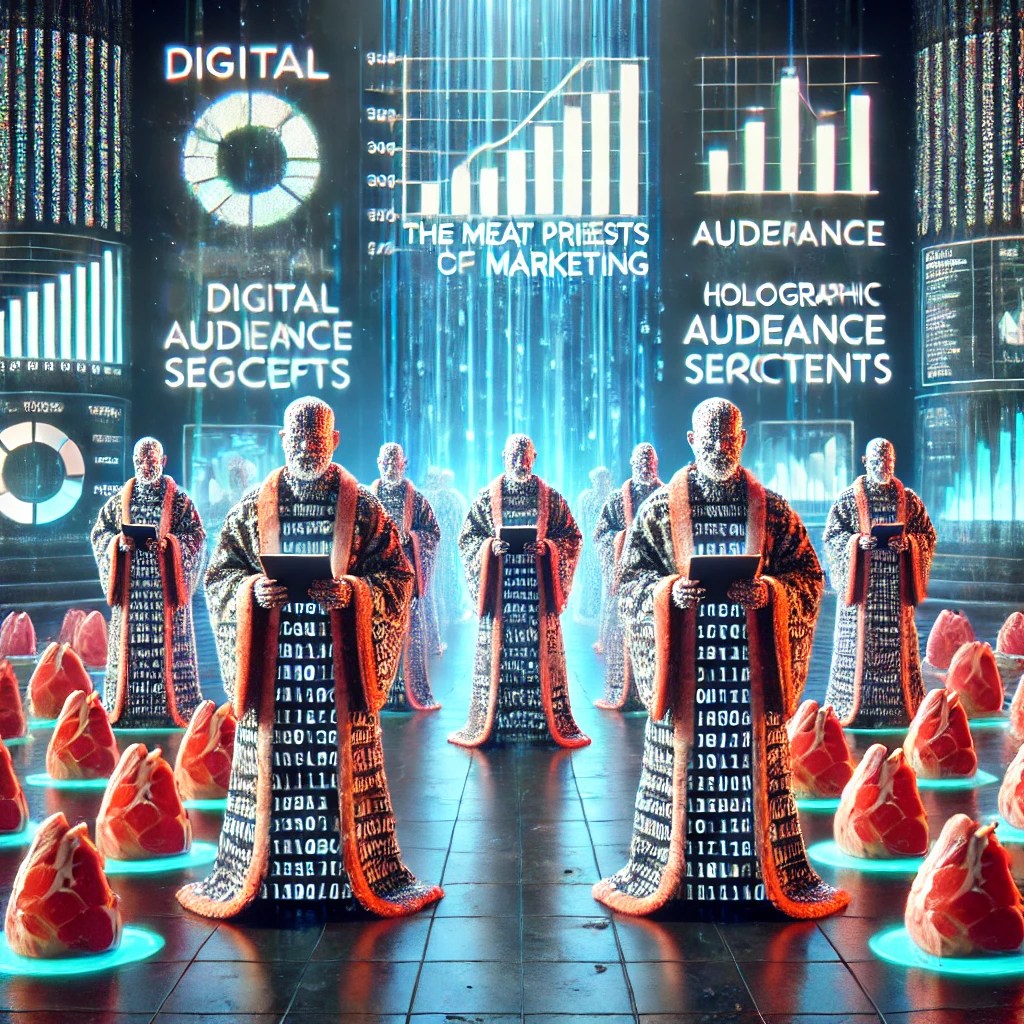
Picture this: data profiles are the “meat” offered by the priests of marketing—packaged, categorized, and sold to advertisers as “we have the soccer moms, we have the high-income millennials, we have the early tech adopters.
These profiles connote meaning and imply precision, but the actual meat of the matter is far less robust. They’re not individuals but statistical abstractions, inferred from a soup of signals and assumptions.
The issue isn’t the existence of these profiles, or their veracity, but their role as drywall filling for the modern marketing ecosystem. Platforms and media destinations prioritize convincing advertisers that they have access to every conceivable audience over creating accurate, ethical, and transparent connections.
What’s sold is the perception of precision, not the reality of it.
All this for….what?
If collecting every single piece of data on every single person on the internet has not yet yielded a bulletproof marketing strategy, a few military-grade pieces of advice on irrefutable tactics, or at the very least a few guiding principles for marketing we all agree on 100%, why do we keep amassing it? 🤔
We should, by now, have something close to the Holy Grail for techno-minded marketers after all the data we gathered and can access, but instead we have, a holy sh*t load of data that very few marketers know what to do with….
Real-Time Data or Watching the Kettle Boil?
Marketers love their dashboards, with data syncing every 15 minutes to provide “real-time” insights. But what exactly are we tracking? Consumer data profiles—altered and updated daily—might offer a snapshot of current behaviors, but they don’t capture the enduring essence of who consumers are.
Any “real-time” dashboard, in most cases, is reflecting echoes of recent marketing efforts, with actions observed today potentially being the residual effects of campaigns from many months prior.
If consumer data profiles can change multiple times in a single day, what actionable insight can we truly derive? Can we trust data that is in constant flux to inform long-term strategies? And if a small shift is detected, how would we even respond at scale without undermining our broader objectives?
Toward a More Thoughtful Use of Data
The answer lies not in abandoning data but in rethinking how we use it. Instead of chasing the illusion of precision, marketers should embrace the messiness of human behavior. This means prioritizing qualitative insights alongside quantitative metrics, acknowledging the limitations of current systems, and striving for a balance between scale and personalization.
Ogilvy’s wisdom is more relevant than ever. Consumers will never be fully captured by what they say, think, or even do. And the marketing industry must recognize that its data-driven tools are not omniscient but merely useful—when wielded thoughtfully.
In the end, it’s not about having the most data but about understanding its context and limitations, using it to build connections that resonate on a human level, not just a statistical one.