Two distinct categories, one distinct answer. In the airport, it seems that business and personal are segmented worlds. We’ve heard the following quote often enough to know it’s true.
“It’s not personal, it’s business.”
The line between the realms of business and the realm of the personal is firm and unwavering. There is calculated business behavior, and then there is chaotic human behavior, and never the twain shall meet.
“It’s not work if you love it.”
This is where I get confused.
It seems that if professional decisions need to be made, business factors weigh heavier. But if professional motivation is a goal, the personal and business realms are passionately intertwined?
You’re supposed to put your heart into your work, yeah?
You should love and be proud of what you do for money, right?
This purposeful & paradoxical confusion between “business vs personal” is especially dangerous territory for marketers & advertisers.
How do marketers and their investors properly temper & balance their personal feelings, when arousing personal feelings in an audience to gain business benefits is the goal of advertising?
When the impersonal calculus behind business decisions meets the personal realm of the creative act of marketing or advertising, what are the people caught in the middle supposed to feel? How are they supposed to act and not take things too personal?
Content Custodians
Marketers start off seemingly cordoned from the business realms.
Custodians of Content.
Wandering the halls of your company’s assets, sweeping the files, checking for typos, cleaning up links, adjusting a footer, the pixelation of graphics, the tone/phrasing/shaping/size/hue/saturation, removing all the scuff marks from the floors of your content, wondering how to improve the shine of, and gain proper recognition for, the institution.
And so, when shareholders dog your idea, trash your ad concept, change the copy at the last minute, remain unconcerned with all of your input – how does a marketer not take this shit personally, especially when I’ve been up late at night polishing the trophy case and told to throw my heart into my work? You see how this could fuck with people?
How do you separate your marketing’s performance from your performance?
An idea marketers can use from the world of jazz & creative performance art, is that you don’t lose yourself in the song, you lose yourself in the craft.
When I am playing jazz on a stage, I focus on song form, meter, key centers, & then the existing interplay between the musicians. Where are we? What’s going on? How can I fit in? What can I accentuate? What’s required right now?
We play the song all the way through, together as a band – we all individually add our parts and try to bring relevant and appropriate amounts of funkiness – and then we move on to the next song.
I don’t judge myself by the song, I judge myself by the unique interplay onstage during the song and the successful contributions I made therein.
If ice-cold execution of the band writ large, or your own perfect personal performance, or other people’s adoring reactions are the main focus, your focus is off and you’ve stopped doing your best work.
Your work is the delivery of the craft, not the product.
As marketers I believe we personally develop through the creative endeavors we embark on behalf of paying clients, not because of them.
The goal is to continually build your personal skill set regardless of the professional outcome. Because people will boo, they will applaud, they will cry, they will love you, they will hate you, you’ll sell millions, you may lose that much – and you have to be able to professionally handle all these various reactions, without taking things personal.
So how does this connect with the “business vs personal” myth?
“Business vs Personal” needs Disruption
The lie that there’s a difference between business and personal, when only people do business with one another, is a mental barrier worth overcoming.
Business is interpersonal, so the idea that there’s some separate world of behavior and norms actually creates the euphemisms & distrust of the business world, concurrently making meaningful relationships & personal contributions nearly impossible within it’s ecosystems.
The marketer considering the “business vs personal” dynamic, tasked with performing on the public stage on behalf of the brand, is therefore hindered on several fronts. Do they bring their personality to the marketing? Do they do what’s required, or what they think is right? Do they deliver something they are 100% proud of, or do they deliver whatever % required to get the check cashed?
There may be no clear answer, but I think if we dropped the pretense that there is a difference between the way we’re supposed to feel/act/behave in business and personal relationships, and embraced a few truths from the world of jazz & creative performance, we’d better understand dynamics that transcend economic logic and incorporate cultural and anthropological contexts, providing a much more useful and holistic perspective on business & marketing.
Then again, all this jazz is just my opinion….don’t take it personally.
“Time and budget are tight for this project. You’re creative, you’ll think of something. What we’re looking for Jake, is ‘cheap genius.'” – My Life
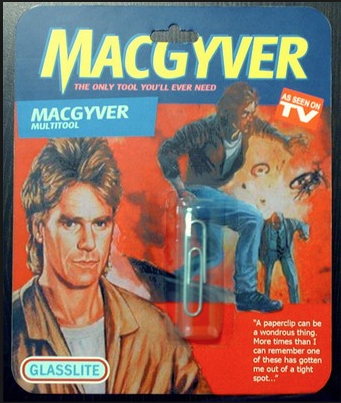
As a creative person, my ability to think fast and make connections has helped advance my career, propelled me from gig to gig. Along the way I’ve been haunted by the spectre of MacGyver, the resource-strapped (read; alluringly cheap) genius of 90s American TV, because I think he personifies a few things wrong with marketing and business.
Why?
Think about this…
Of the first companies that appeared on the Fortune 500 in 1955, only 53 held a place on the list in 2018 (-89.3% success rate)
A business culture obsessed with risk and cost management, rife with rampant short-termism and shortening CMO lifecycles
The ‘gig’ economy filled with entrepreneurial DIY-life-coaches-gurus-hackers
The belief that the next big platform or IPO or genius idea will come like it always does, from a random, scrappy teenager’s garage;
and MacGyver….
Mix it all together and it’s plain to see, the belief that MacGyver-like-business-saving genius is cheap, widely available, and flourishes during to-the-wire timelines, is a bad brew for marketing and business to be sipping on.
I’ll first explain who MacGyver is, unpack what I’m calling The Cheap Genius Theory, and then we’ll explore ways to define and disrupt this damaging trend.
Who is MacGyver?
A bent paper clip can defuse a ballistic missile. A potato and some cigarettes are all you need to thwart a high-tech prison’s security system. Chewing gum alone can defeat an entire militia.
These aren’t just thought-exercises, these seemingly implausible scenarios all played out during the 80-90’s TV action/drama MacGyver.
There are MacGyver fansites dedicated to celebrating the genius of MacGyver, featuring full breakdowns of all the problems he’s applied his time-strapped, cost-effective, MacGyver-ness to, in all seven seasons on CBS from 85′ – 92′.
While MacGyver seems to portray creativity very favorably, it’s my belief that MacGyver perfectly personifies the perceptual problems around what creativity and “cheap genius” is, where it comes from, what resources it needs, what it’s worth, and how creative ideas can be best applied in business and life.
The Cheap Genius Theory (CGT) explains why business leaders approaches problem solving, creativity, advertising, and marketing the way they do – which is hoping MacGyver shows up, or worse, thinking they’ll pull a MacGyver and cut the right wire once the countdown on the bomb begins.
There are five concepts that add up to The Cheap Genius Theory….
HUMANS ARE CHEAP
Although a premium option exists for almost every good or service, (the best house/car/President, the best advice, the best hummus!) humans will almost always choose the least-crappy, less-likely-to-fail option. Not the worst, but the least worst.
It’s called ‘satisficing’ and it’s an irrefutable part of human behavior, it’s based on strong empirical data, and it’s the best explanation around for why people make decisions that don’t make sense in the long run.
Sure we could defuse the bomb a traditional way, but let’s try this paperclip first.
GIVEN RESOURCES, “EVERYONE IS CREATIVE”
With so many brainstorms and Post-It Notes and examples of startups with humble-and-hooded-sweatshirted beginnings, genius ideas spawned from simple creative thinking are seemingly everywhere.
That creativity is widely available changes the way creativity is incentivized or incorporated into strategic thinking.
If we solved the last emergent problem cheaply, in a tight timeline, with a potato, then why budget in experts, time, or resources this bomb around?
If MacGyver can’t disarm the bomb in time, after this next brainstorm, I bet Glen from Accounting might be able to pull it off.
CREATIVITY LOVES SPONTANEITY
The myth that creativity is bolt out of the blue stuff and must always arise spontaneously is pernicious outside of the creative community.
There’s a belief out there, no thanks to MacGyver and college term paper deadlines, that creativity is best catalyzed by time and resource constraints, and it’s usually only when your cognition is pushed to the wire do the explosively successful results take place.
Nope.
The true skill to develop in creativity is not time-constrained improv, but strengthening the mental muscles that connect threads between disparate channels of thought.
The results of creativity may be experienced and sharpened most thrillingly at the drop of a hat, but the skill that connects creative conclusions takes a long time to strengthen for ideation at a rapid pace to take place.
So in training for creativity it isn’t about developing quicker reaction times, but rather increasing mental flexibility in making farflung connections between wide swaths of human experience, accrued knowledge, cultural/social consciousness, and expressing it all through the chosen medium.
Just because someone HAS defused a bomb with a shoe in under 30 seconds, doesn’t mean that’s the most effective way to train for defusing a bomb.
CREATIVITY ISN’T ACTION OR OUTPUT – ITS CONNECTION
Creativity is an observation made in the minds of those that connect a creative action to genius, not in the action itself.
Creativity is judged not by the act, but by the audience, the norms it upsets, the expectations it disrupts – cheap genius is only good when someone is there to see it as genius, otherwise it’s just cheap.
Or worse.
CGT enthusiasts wrongly think the purpose of creativity is to solely manifest actionable ideas, missing the point that the true measure of a creative idea is the interpretation and accepting ingestion of it by the target audience, not just in the idea itself.
REAL CREATIVITY IS SOMETHING WE’VE NEVER SEEN BEFORE
Creativity is not a groundbreaking shattering of molds, but the art of combining recognizable molds in unexpected ways.
Something that had never been seen or experienced before would not strike a familiar chord in our souls, and so, it would just seem chaotic or out-there. You’ve heard Coltrane’s SunShip, you know what I’m talking about. If you’re not down, it’s a tough hang.
The Cheap Genius Theory highlights the skillful usage of a paper clip to defuse a missile, overshadowing the true skill/ability in need of nurturing praise in creativity, which is a deep understanding of pre-existing concepts, in this case metallurgy and electricity, and how to quickly combine and apply them in novel ways/situations.
Ingenuity and spontaneous invention is only possible on the shoulders, brains, backs, thoughts, legends, laws, and expectation of the rules that have come before.
You can only cleverly manipulate the law of gravity once you understand the underlying concepts and expectations, concepts that Newton teased around hundreds of years before your trick of cheap ingenuity came to be.
You can defuse the bomb with gum and its wrapper because you know about microchips, friction, the chemical properties of saliva, and the electrical conductivity of metallic substances. Without Galvani, Lavoisier, Curie, Jack Kilby, Wrigley, the ancient Aztecs that found chicle – all of that cheap genius wouldn’t be accessible.
Why this is bad, and what to do about it
Since creative thought is widely available, potentially cheap, and the product of chaotic spontaneity, businesses don’t plan, budget, or schedule for it, let alone reserve creativity a seat at the strategic table.
That’s bad.
Along with cheapening the importance of creativity and devaluing it’s place in business development plans, The Cheap Genius Theory’s most destructive influence is on strategy.
As disruption threatens every established business model, stakeholders across the world run their businesses knowing that companies don’t last as long as they used to.
But rather than strategically approaching changes to their business model, or solving business problems with creativity in the front end, CEOs are relying on MacGyver’s to save the business as is, they’re cutting costs where they can, and focusing their marketing campaigns on higher conversions with shorter observational windows.
Whether it’s Byron Sharp, Binet & Field, Mark Ritson, Rory Sutherland, or any of the other great minds in marketing today, the smartest people in the room agree, there is a rampant disease of short-termism with drastic side-effects on strategic, creative, long-term thinking in businesses today.
I think there needs to be a perceptual shift in the way we view creativity, and it starts by admitting the truth of The Cheap Genius Theory, and realizing our business development strategies are not strategies at all, but rather a string of implausible MacGyver-like fixes.
We have to admit CGT throws off our sense of how creative thought is best curated, generated, and applied to researching business problems. And we have to change the way we apply creative thinking to the research and diagnosis of solutions that aim to fix the business problems our companies face over time in a competitive marketplace.
Oh, hi marketing.
And then, once we understand creativity, I think we need to dial it up!
Creativity is far-and-away always voted as the most important factor in effective marketing and advertising. But because of The Cheap Genius Theory, creativity is paradoxically the first thing everyone relies on to solve a marketing issue, but the last thing anyone plans on paying for.
Rather than relying on more MacGyvers to show up, I’d like to see creativity given it’s proper respect, timeframe, and proving grounds to demonstrate it’s ability to guide business development strategy. Businesses should curate a place of deep thought and research, develop the atmosphere of a mental gym that strengthens the connective and creative muscles in your team to saturate themselves in your most pressing problems to come up with slow-cooked, ingeniously-marinated marketing solutions that fall off the bone. (…who’s hungry?)
Without exercising both the fast and slow twitch muscles of creativity, research and execution, the impact of continual cheap genius fixes, no matter how ingenious, will yield ever-diminishing returns.
No one is arguing that resourceful creativity isn’t important to business development, but rather than utilizing creativity to strategically adapt our business models and marketing plans, we’re praising/seeking/utilizing versions of ‘genius’ that imprison us, and keep us mucking about with the same type of short-term fixes and cost-effective disarming methods, for a bomb that’s killed 89% of the last MacGyver-dependent businesses.
Here’s to all my cheap geniuses and business owners the world over;
In marketing and advertising the main question for business owners is always – will any of this stuff lead to sales or grow the brand?
It’s a fantastically mysterious question that still stalks the woodlands of business development today.
Many report that advertising is working really well, while at the same time, even more report that they’ve wasted thousands of dollars on ad campaigns that never moved the needle.
Meanwhile, the world’s biggest brands still run too-huge campaigns, and run the same ad campaigns and brand assets for decades, and invest in new mediums with seeming success; why would they continue to advertise and invest in marketing, if it doesn’t work?
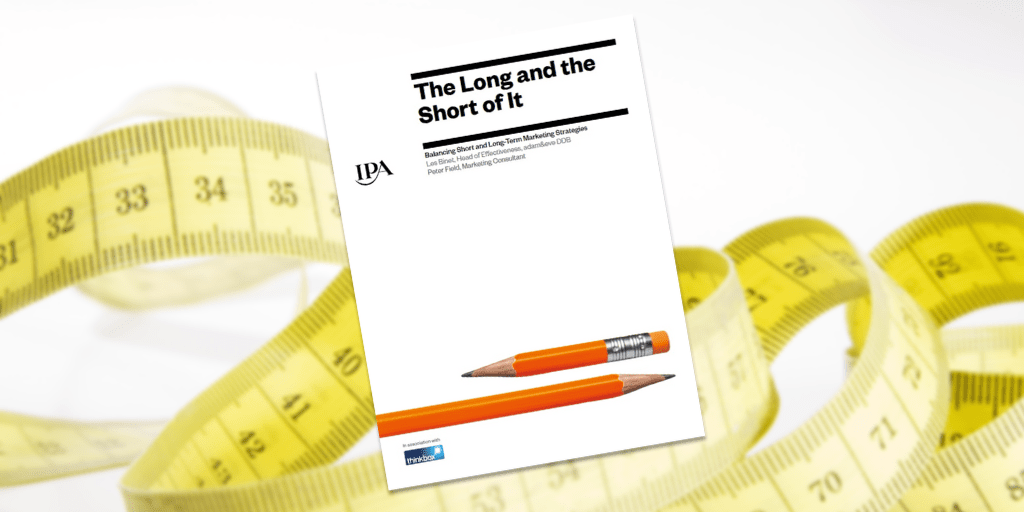
And so we arrive at our departure point for this book report, Les Binet & Peter Field’s
“The Long and Short Of It; Building Short & Long-Term Marketing Strategies”
Published in 2013 by the IPA, The Long and Short Of It takes research and analysis of 996 marketing case studies from over 700 brands in 83 different categories, and looks at actual business outcomes based on short-term and long-term performance metrics, all pointing to one conclusion – brands that balance and harmonize short term sales activation with long term brand growth are better positioned for marketplace dominance.
The report is cut into three sections that demonstrate how balancing the long and short term in three key areas; Strategy, Channels, and Metrics, is essential to creating lasting brands and maximizing profits. I’ll provide a brief overview and thoughts on these sections, but really – you need to go pick this report up.
Balancing the Strategy
The most striking and simple conclusion that best encapsulates the whole vibe of this report is this short sentence – “Short-term metrics will not create long term brands.”
“The way in which long-term effects sales is different than short. Although long-term brand branding produces some short-term sales activation, short-term sales will never produce long-term success. Long-term growth is not a compounding collection of small, short-term effects.”
Sales increasing is obviously the main lifesource metric for marketing departments. But as you can see in the graph above, without a strong Brand Building aspect to your marketing strategy, overtime, Sales Activation campaigns will have a limited impact on Sales Uplift.
Binet & Field have also discovered that other measurements (Profit, Market Share, Penetration, Loyalty, Price Sensitivity) can be deeply influenced and impacted by strong Brand Building campaigns that are paired with a Sales Activation component.
Based on their data, Binet & Field believe that a marketing strategy that mixes 60% Brand & 40% Sales is a good place to start from.
This is not an either-or scenario, and this ‘balance’ is not a hard and fast rule.
Depending on competition and other factors, the blend may have to be aggressive on sales to quench overhead demands, but then again the brands that are favoring short over long have to realize at some point, that ain’t gonna get you to where you need to go.
Direct Response or Sales Activation advertising, no matter how great, will not build brand salience in the minds of consumers.
So what type of marketing activity qualifies as short-term Sales Activation or long-term Brand Building?
The main point of this section is to outline the differences between short and long, and how the true path forward is creating more marketing strategies and campaigns that consider a healthy balance between Sales Activation and Brand Building.
Balancing the Channels
Now that we appreciate the necessity of a marketing strategy that balances Sales and Brand; what do we do with all this?
The authors have given us a quick guide on choosing distribution channels for the messaging, based on the objective.
Activation Channels – Online, Search, Classifieds, Direct Marketing
Once again, these are not prescriptive, just suggestions from people who have been providing the best research and analytical thought in advertising since 1917.
Formed from a well-balanced marketing strategy, the most successful advertising campaigns in the study mix the distinct advantages of each of Brand and Activation channels to reach their audience for the greatest impact.
The example provided in the study of a McDonald’s ad campaign in the UK is a great example of blending the short term and long term metrics and tactics;
This was a massively successful campaign because it blends Sales Activation and Brand Growth.
McDonald’s is focused on Sales by enticing customers to visit the store with a giveaway, (not a price reduction which is harmful) and to try new recipes for sandwiches.
And on the Brand Growth front, McDonald’s chose to focus the media buys on highlighting its ethical sourcing of it’s ingredients, and the dependability of its classic menu options.
This campaign works because it’s focused on broader and bigger effects, and thusly, aimed at a larger addressable audience. You’re not just speaking to loyalists in advertising, you’re trying to get everyone in the category to notice you.
Indeed, this is a massively important finding from this report; sales activation activities like advertising campaigns SHOULD NOT be targeted solely to existing customers. To grow your brand and find new customers, you have to target all buyers in the category with your messaging.
So the real genius is creating campaigns that speak to both existing customers and long-term prospects that may not be familiar with your brand.
The effectiveness of broad-reaching campaigns aimed at both new & existing customers is dramatically greater than those targeting either type of customer alone.
Balancing the Metrics
So the win-win situation according to this report are strategies that balance long and short term, but how does one measure long term performance metrics?
Binet & Field do not disappoint in this department. Along with Share Of Voice (market share plus industry benchmarks) and other insightful measurements like Price Elasticity (the ability to raise prices without losing customers) there are several ways to measure marketing performance other than just straight Sales and Profit.
And even more, there are the ways these metrics can play out over time, and how effective they can be in growing a brand. This scorecard for short term and long term effectiveness from the report has a collection of various data points that can guide strategy and planning and business development initiatives.
In Conclusion
Get the report. Dig into marketing strategies and ad campaigns that build brands AND activate sales, and know that this isn’t a one-size-fits-all world. Marketers need to build interesting brands with creative and awesome ads based on an awesomer understanding of the business problems we need to solve.
As marketers focus on making money, there should be a momentary pause to realize that we can and do make so much more than money.
So let’s make marketing strategies that kick ass, get noticed, and achieve business goals and build legacy brands. If not now, when?
Once in a while, you read a book that forces you to question your existence.
Well, for anyone who has struggled marketing or advertising a company/product/service, the overflowing bounty of brilliant, evidence-based marketing essays in “Eat Your Greens” by APG London, edited by Wiemer Snijders, is such a book.
First, let’s talk about the problems marketing & advertising are facing….
Marketing and advertising are trapped in a paradox. Wanting to outpace competitors while growing a brand, but needing to keep the lights on, companies typically divert marketing resources away from long-term strategies, in favor of short-term results.
Also, from tactics to communication channels to tech-laden dashboards, there seems to be a million ways to employ, and seemingly measure, marketing & advertising for companies these days.
So, unattached to any actual strategy, complication, quick-hits, and ceaseless action are the guiding forces in advertising & marketing today.
“Eat Your Greens” explains that the quest for short-term gains through tactics, knee-caps any potential to grow and establish a brand. While smaller advertising campaigns create spikes in revenue, indeed they appear successful at the moment, brand building marketing activities, which can ensure the long term sales growth of the company, are completely ignored.
This ‘short-termism,’ which happens to be rampant across all industries, has been studied at length by the foremost minds in marketing. In their book “The Long & Short of It,” Binet & Field illustrate this concept, very simply, in the graph below…
So what’s the answer?
How do we get back to building brands through marketing? How do we get off our addiction to sugary short-termism? The answer is; EAT YOUR GREENS!
With the caveat that all essays in the book needed to be supported by evidence, editor Wiemer Snijders has cobbled together an amazing and inspirational chorus of voices, all dedicated to bringing healthful, brand-growing marketing advice to an industry that’s made itself sick from chasing clicks.
I’ll briefly share a few of my favorite moments from the book below, but suffice it to say, if you’ve been feeling like your marketing and advertising need to make a change, go on a diet, work out, get stronger – you owe it to yourself to “Eat Your Greens”
Ultra-Light Buyers
This concept blew my wig off, right at the beginning of the book.
According to research from Australia’s Ehrenberg-Bass Institute for Marketing Science, of the thousands of variables that might affect buyer behavior, the two most importantfactors are 1) market penetration, and 2) average purchase frequency.
You might think that the key to owning a market on behalf of a brand is to focus on the heavy users, the loyalists, the fanatics. That must be the way to penetrate the market; get folks to buy in bulk, walk out with carts FULL of your stuff.
But, the real relationship between market penetration and heavy/light buyers, paints a far more interesting picture.
The above graphic depicts the purchase frequency of Dove Soap over a period of 1-5 years. The shaded “0” on the far-left states the number of people who buy soap, knew about the brand, but did not purchase Dove.
Next to that, we see that 87% of all Dove buyers only bought 1 bar of soap within that 1-5 year period.
That 20+ on the right, the “brand loyalist,” accounts for an extremely small percentage of overall buyers of Dove brand soap.
So, Dove continues to grow it’s brand through advertising, not to secure the fanatics, but to nudge as many category buyers into an Ultra-Light purchase relationship as possible.
People don’t trust a brand because a few people buy a bunch of their stuff – it’s because a steady stream of people buy it once in a while.
This finding is interesting to me, because it’s directly at odds with the “sticky” marketing mentality of apps and attention brokerages online, where creating addicts and fanatics is the main goal. That should raise a few flags….
Want to discover more?
I could tell you about Mark Ritson’s chapter laying into marketing conferences, Tess Alps advice on marketing in a “post-truth” world, or Faris Yakov’s inspirational side-by-side comparison of advertising and art.
I could walk you through Kate Richardson’s masterful destruction of “brand purpose.”
We could both laugh until the tears came, at my witty retelling of Ryan Wallman’s dress-down of the latest marketing fads and trends.
But really – if you are in marketing or advertising or run a business — you absolutely have to read this book. It’s the inspiring, healthful, beneficial, no bullshit marketing & advertising advice you’ve been looking for.
I’ll end with a quote from Wiemer Snijders that to me, best sums up the mission for marketers walking away from this book….
“If you’re a great brand, attracting the majority of buyers into your customer base requires a creative, single-minded approach to the task of maintaining your rightful place in their minds and on the shelf.”
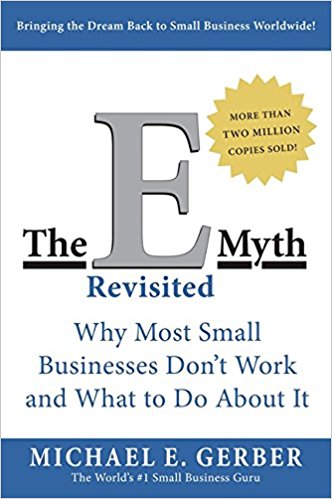
The E-Myth Revisited by Michael Gerber is a book that cannot be oversold on it’s benefits to anyone running, or thinking of running, a business. While American business culture is awash with gurupreneurs advocating for people to launch their own companies at hyperspeed, Gerber takes an honest, methodical, and forthright approach to advising business owners in E-Myth – most businesses fail because they end up subsuming their owners, rather than serving them.
“I think that maybe inside any business, there is someone slowly going crazy.” – Joseph Heller
What’s the E-Myth?
The E-myth is that small businesses are chiefly started by entrepreneurs risking capital to make profit. That’s simply not true. Most businesses are founded by experts of technical skills, not experts of running businesses. This is what Gerber calls The Fatal Assumption – if you understand the technical work of a business, you understand a business that does that technical work.
The Fatal Assumption is the root cause of why most businesses fail.
The technical work of a business and a business that does that technical work are two totally different things! But the technician who starts a business fails to see this. Seized by a temporary bout of entrepreneurial blindness, the technician launches a business that is integrally dependent upon them.
The tragedy deepens as the technician realizes the business that was supposed to free them from the limitations of working for others has enslaved them.
They end up working in the business, and never ON the business.
Suddenly the job they knew how to do so well becomes one job they know how to do, plus a dozen others they don’t know how to do at all. The work that was once so special, is now just another task to get through so the overwhelmed business owner can handle the rest of the headaches. It’s an endless cycle that usually ends businesses.
Gerber believes that the key to overturning the Fatal Assumption and the E-Myth is to recognize the differing personality types within every business owner.
The Three Personalities in Every Business Owner
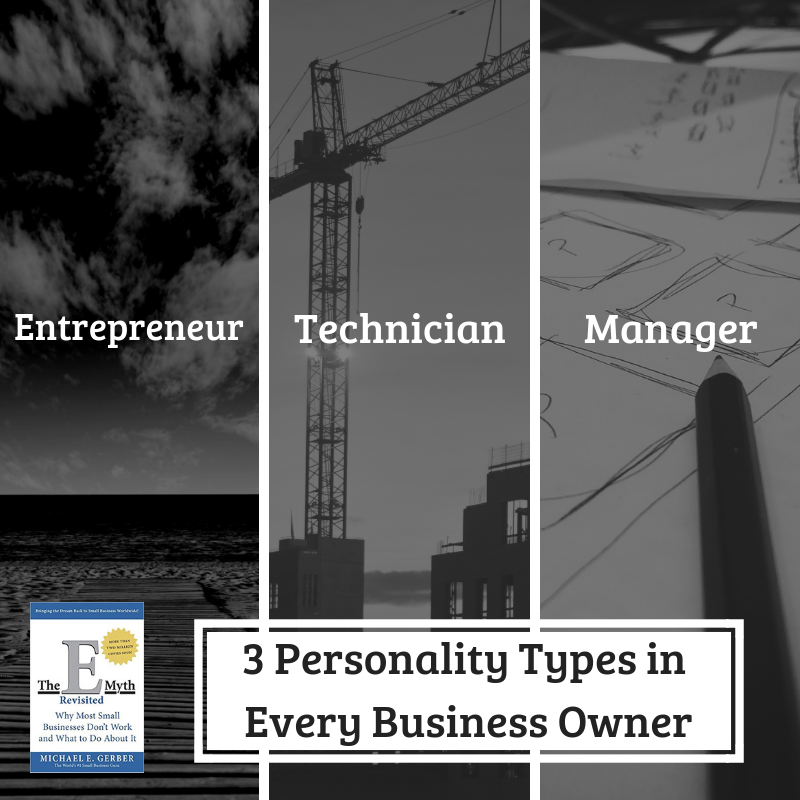
Gerbers most brilliant insight of the book comes in the recognition of three competing personalities inside every business owner – The Entrepreneur, The Technician, and The Manager. The successful management of a business depends on the balance and curation of these personality types within the owner – without recognizing this key component, failure is inevitable.
The Entrepreneur – Focused on the bleeding edge and dreams, The Entrepreneur personality within business owners drives innovation and risk, asks what’s possible, and is obsessed with the future.
The Technician – The Technician knows the nitty gritty of the tradecraft of the business. The Technician is focused on the work, is obsessed with the present, finding solutions to enhance the technical work of the business one step at time.
The Manager – The Manager is caught between the Technician and the Entrepreneur. Obsessed with pragmatism and predictability, The Manager is obsessed with the past, wishing for models and templates to guide the development of the business.
Gerber believes that every business owner is a blend of the Entrepreneur, Manager, and Technician personality types, but the balance is out of whack.
If the personalities were equally balanced, we’d be describing an incredibly competent individual. The Entrepreneur would be free to forge ahead in new areas of interest; The Manager would be solidifying the base of operations; and The Technician would be doing what they do best.
Unfortunately, experience shows that few people who go into business are blessed with the proper balance. Instead, the typical small business owner is only 10% Entrepreneur, 20% Manager, and 70% Technician.
Every business wants to grow past the Technician Phase. In order to grow, you have to change. To change you have to develop and Gerber lays out a development cycle for business owners that ultimately leads to a mature and successful business.
The Business Maturity Cycle
Infancy/Technician Stage – This is where the business and the owner are indistinguishable from one another. The business is the owner – if the owner wasn’t there, the business would disappear. You reach adolescence by realizing you need help to grow your business past the Technician Stage.
Adolescent Stage – You realize you need help. You reluctantly hire help but instead of delegating work, you abdicate responsibility. So, your business becomes a collection of processes you only half understand because you’re a Technician trying to run things from the inside.
Beyond the Comfort Zone – This is the painful part. If you’re a Technician running a business, you are actually running a job. To grow beyond the Technician Stage, you have to develop a business that can run without you. A Mature Business Model is one that can be worked on from the outside.
Maturity Stage – Successful businesses usually start from this phase. They know where they’ve come from and they know where they are headed. Mature Businesses mix two perspectives, the Entrepreneurial and the Technical, into what Gerber calls The Entrepreneurial Model.
Turn-Key Model – Thinking like a Franchise
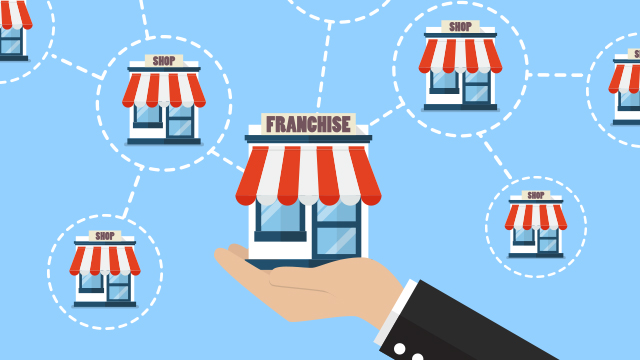
Gerber believes that businesses need to operate more like franchises; turn-key business models with operational processes that can be easily learned by unsophisticated users, workflows that don’t rely on technical expertise to run properly. McDonald’s, basically.
McDonald’s delivers exactly what we expect, every single time. That’s what integrity is.
By developing a Franchise Prototype you can test assumptions, build experiments and optimize your business so that it is “systems-dependent,” not a “people-dependent business.”
Creating an Expert System
Most business owners hinge their success, or failure, on the quality of workers they get. Good help is hard to find, they say.
Gerber believes that if you own a business, you can’t depend on hiring brilliant workers. If you need ‘the best,’ you will continually be disappointed. Rather than pine for better quality workers, you need to create the very best system through which good, decent workers can be leveraged to produce exquisite results.
McDonald’s doesn’t look to hire French Fry Wizards, or only those with an MBA in Hamburger Development. Anyone can walk into a McDonald’s and follow the manual on how to create a burger, and produce the same exact results whether they are in Tulsa or Tibet.
That’s the extraordinary power of a Turn-Key Business Model. Once you fully understand and create systems that result in predictable service, you’re doing the extraordinary.
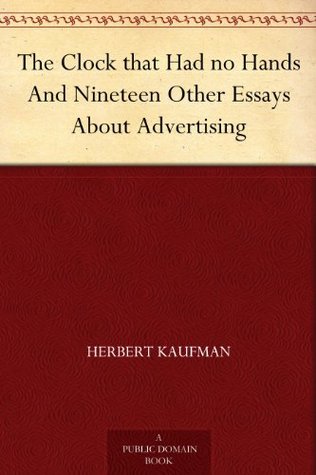
Marketers today have thousands of options when it comes to inspirational advice on how to sell their brands. So the opening lines of Herbert Kaufman’s “The Clock That Had No Hands,” published in 1912, should sound eerily familiar to modern marketers.
“In these days of intense and vigilant commercial contest, a dealer who does not advertise is like a clock with no hands. He has no way of recording his movements, or letting the public know of his business.”
Herbert Kaufman lays out the case for turn-of-the-century newspaper advertising in “The Clock That Had No Hands,” through a collection of 19 essays. Though a bit floral in the wording, Kaufman’s century-old advice stands shoulder to shoulder with the latest Ted Talk.
Kaufman covers topics in 1912 that are still perplexing businesses over a hundred years later. Let’s take a look at a few essays that highlight Kaufman’s prescient advice.
The Canon that Modernized Japan
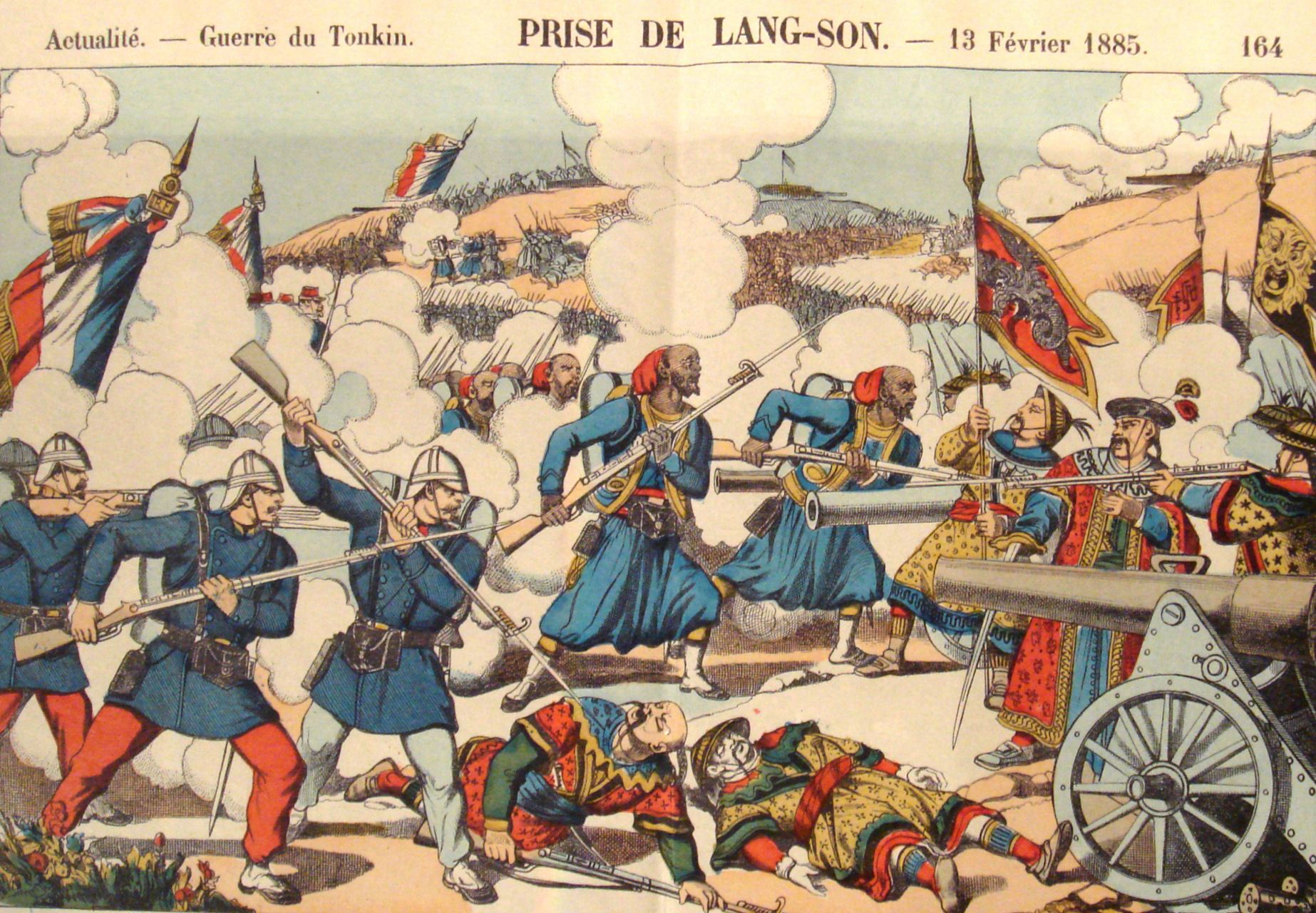
The Samurai culture of late-1800 Japan thought it was invincible and no one could compete with their weaponry and bravery. Until Western cannons blasted them to pieces. Once that happened, the Samurai realized the world was bigger than their realm and competition was well-armed and fierce.
Never mind the subtle colonialism
Kaufman believes businesses that don’t advertise are like the Samurai, living in an insular world, unprepared for a stronger adversary to come along and blast them to bits. Advertising is the cannon.
There is a lesson in this essay about our modern problem of disruption. Across every industry, staid and trusted brands are being supplanted for newer, cheaper alternatives. The business that fails to hear the cannonballs approaching won’t last.
The Man Who Retreats Before Defeats
Advertising isn’t magic – it requires patience and honesty to be effective.
Advertising promises that won’t be kept is a recipe for failure. All advertising does is draw people in to investigate the claims you’ve made. “If you promise the Earth and deliver the moon, advertising will not pay you”
Another way to fail, is expecting more out of advertisements, than there is in it. “Advertising is a seed which a merchant plants in the confidence of the community” Ads must be given time to grow like trees and babies. If you don’t see results in a week, don’t be shocked. Stay the course and don’t retreat before you’re defeated.
The modern correlation to the above can easily be seen in click-bait headlines, fake news sites powered by ad fraud, and marketers chasing the latest tech solutions. We are far too eager to switch up creative and copy on ads, swap this audience out for that one, and change directions and messaging to follow trends.
The Perambulating Showcase
The newspaper is a huge shop window, carried about the city and available in every home. Ads in the paper are a perambulating showcase. BUT, this showcase displays ‘descriptions’ NOT ‘things.’ Enticing window trimmings and decorations are obvious when you see them. So it is with copywriting.
“An advertiser must know that he gets his results in accordance with the skill exercised in preparing his verbal displays. The copy has to stand out.”
“He must not only make a show of things that are attractive to the eye, but to the needs as well.”
“Just like the window trimmer realizes the showiest stocks aren’t always the best-selling, the advertiser must not make the mistake fo thinking the showiest words are the most clinching.”
And more. . .
There are so many gems in this book, lemme just provide a few quick hits before closing up – – – “Regularity is JUST as important in advertising as copy. Persistence is the foundation of advertising success.”
TAKEAWAY = Hit them over the head with it. We are so leery of bothering people online that we give up on ad campaigns too fast.
“The simpler the language in an ad, the better. The skilled advertiser uses the smallest words possible. Newton’s Theory of Gravity is six pages long – “What goes up, must come down.” <- six words.”
TAKEAWAY = Simplifying language will always be in vogue, and is perennially solid advice. To me, the language in advertising today suffers more from being banal and bland. Filled with industry standard buzzwords and guided by “best practices,” most ads are beige, non-offensive, and appeal to the most general and wide-spread concerns. 100 years ago ad copy had to stand out, why is today different?
“Ad placement is massively important. It isn’t the number of copies printed, but the number of copies that reach the hands of buyers. It isn’t the number of readers but the number of readers with money to spend.”
TAKEAWAY = The main goal of ads are to get the word out about your brand. So most people go for big numbers – get in front of as many people as possible. This is PARTIALLY a great idea. We may reach 100,000 people, but if not a single person takes an action on behalf of our brand, we’re wasting our time. Such was the case over 100 years ago – and with digital advertising, the risks are exponentially tripled.
“The price of the gun never hits the bull and the bang seldom rattles the bells it’s the hand on the trigger that cuts the real figger the aims what amounts – that’s what records count are you hitting or just wasting shells? “
TAKEAWAY = Kaufman is speaking here about hiring the best people to write the language of your ads. The man who writes your copy, aims your policy. Are you investing in copywriting?
In Summary
For those marketing and advertising professionals who are looking for time-tested advice, Kaufman’s collection of essays are like finding a box of old WW1 love notes in an attic. The business concerns of our great-great grandparent’s are still our concerns – nothing has changed. And so, it’s refreshing and disheartening that the advice on advertising in a book over 100 years old can seem so relevant.
Every single human alive today has access to all of the best advice. Advice that guarantees us the best lives possible, successful businesses, great relationships, healthy bodies and minds. AND YET – people fall apart, businesses collapse, relationships crumble – why?
We are just as overwhelmed with good advice, lists, blogs, hot takes, as we’ve ever been. But the pace at which information inundates us individually, has increased to a dangerous degree. One theory, as to why we don’t take good advice, is that our core values are being smothered by the firehose of data we subject our brains to everyday.
Our core values shape what we want from the world on a foundational level, what we think is important, what we want for ourselves. Core values are like broccoli, a nutrient-rich food group, and the constant stream of advice and memes are more like sugar. When sugar is all we see, we shouldn’t be surprised that we skip over more foundational content for the quick hits. But after subsisting off of advice for a while, we lose the ability to connect and find nourishment for our core values, and just become a loose collection of positive vibes, memes, and quotes.
It seems to me that the advertising industry itself has become a clock with no hands. Advertising trends change so often, and with it, every advertiser. With every Google update we change our sites, with every new shiny platform we chase the audience, with every new viral craze we chase clicks and views.
With increasing digital ad fraud, fake influencers, surveillance capitalism in full swing, and the slow-cooked death of effective, traditional, mass-media advertising concepts, Kaufman’s work may have been more prescient than planned. Businesses that advertise today are like Kaufman’s clock with no hands – because they switch marketing strategies so often and forego defining their foundational core values, they have no way of recording their movements, and they make the same mistakes that have been happening for HUNDREDS of years. And with no hands on the clock of your business, the customer moves on, unable to spare the time.
Marketing and advertising professionals need to stop what they are doing and read this book.
I’m not kidding.
9 out of 10 of the top minds in the field of advertising and marketing have already read Richard Shotton’s “The Choice Factory,” and are now using the insights to catapult their brands from obscurity into revenue-saturated popularity. Do you want to be the one that misses out on this opportunity?
Cognitive Bias and Choice
In the age of infobesity, content shock, and choice paralysis – getting solid advice on any subject can be extremely difficult. Marketers today are obsessed with brand purpose, shiny-automated-dashboards, Big Data & artificial intelligence. Each business hoping to differentiate, to be the first to discover and use “the next big thing in marketing.”
Marketers and advertisers, like everyone picking out their next “self-help” book, are AWASH with options. But, if we reduce the complexity of choice down to a single element – cognitive bias – we can start to appreciate the genius behind Shotton’s book.
The author is careful to point out that there is not a GRAND THEORY of advertising and marketing. People make decisions for a variety of reasons – so why not focus in on that moment of decision; what forces compel us to CHOOSE one thing over another?
Shotton boils consumer behavior down to a collection of 25 cognitive biases that, for this book, makeup the bulk of decision making. Cognitive biases effect the way we make choices, the products we choose to buy, and more importantly, biases are the foundation for our beliefs about the world.
By incorporating real studies from the fields of psychology and sociology, and case studies of brands that have used these biases, or failed to use them, “The Choice Factory” is a useful, inspirational, well-crafted book that every self-respecting marketer and advertiser needs to read.
I’ll briefly share my favorite biases here – but if you want to a piece of this action, GO BUY THE BOOK.
Fundamental Attribution Error
Attributing actions to “fundamental” characteristics, rather than context.
EXAMPLE – Guy cuts you off in traffic, that guy is FOREVER a huge asshole, through and through. His mom was an asshole. I hope his family dies for the sake of the planet.
REALITY – He’s headed to the hospital from a job he just was fired from for excessive absences; his wife is sick with cancer and has hours to live.
This bias is HUGE and behind such hits as road rage, xenophobia, domestic abuse, racism – but also impacts the work being done in advertising meetings around the world.
How can marketing and advertising folk take advantage of this bias?
Consider the context in which someone will see your ad – don’t just focus on the content. Can they see the tiny copy on your billboard as they speed past? Does your display ad campaign take advantage of sites or pages with high dwell time?
Target the context your audience is in – not just the audience.
Distinctiveness
Most brands want to differentiate, they want to be unique – but, these same brands are obsessed with “best practices.” Best Practices is when you look at what everyone else is doing in your vertical, and then act accordingly.
Brands don’t want to take a chance, they want to review the case studies of someone who took a chance – they want to form a design committee – they want it to feel sure in the boardroom; but something that’s safe in the boardroom, is DEAD in the real world.
When it comes to the cognitive bias of “distinction,” Shotton reminds us that there is no “safety-in-numbers” in advertising. To stand out, you really do have to take chances.
SOLUTION – Find the rules, find the best practices and subvert them! –> When the world zigs, zag.
Claimed Data
Claimed data refers to info that has been collected from a survey – it’s what people claim is going on inside their heads. Problem is, most folks are completely unaware of what effects their decisions (hence the book) –
The rational mind thinks it’s the Oval Office, when in reality, it’s Office Depot. When we are asked a question, we answer it like we’re being interviewed for Heaven. We pad our history, forget our shortcomings, and see nothing but sunshine ahead of us.
EXAMPLE –
Don’t ask a guy, “Do you wash your hands before you leave the bathroom?”
Instead, ask – “What percentage of men your age wash their hands before they leave the bathroom?”
SOLUTION – When asking people a question, ask them how they think OTHERS in their own demographic would answer the question. This leads to a stronger truth. When answering a survey question personally, the participant’s reputation is on the line. So they’ll give you the answer society and biases have nudged them towards.
Primacy Effect
The order in which we receive information, effects how we interpret it.
EXAMPLE – People were given a brief description of someone they had never met, and then asked to provide their thoughts about this person, after the description. They were split into two groups, each given the same description, but the order of adjectives was reversed in one group.
Group A – This person is intelligent, industrious, impulsive, critical, stubborn, envious. Group B – This person is envious, stubborn, critical, impulsive, industrious, intelligent.
Group A described the person in much more glowing terms than Group B, even though the description given to both groups had been essentially the same.
LESSON –
Pay attention to ad rotation. Be the first ad they see during commercial break.
Pay attention to first impressions and copywriting – start strong!
Wishful Seeing
We see what we want to see.
The hungrier we are, the more everything looks like food.
I like Transformers, so EVERYONE likes Transformers!
People love a zero-carbon, environmentally-conscious, locally sourced brand connected to a strong brand purpose – – –
But in reality – things are much different.
EXAMPLE – After reviewing a list of Forbes Top 50 companies, it may be easy to attribute success for a brand to any number of factors. In his book “Grow,” Jim Stengel attributed brand success to strong brand purpose. However, the data does not support the hypothesis.
Of the 50 brands chosen fro Stengel’s 2011 book, only 9 had stock evaluations that held up over time.
Brand purpose is really just a description – success can never be guaranteed by holding fast to some internal behavior or brand ideal.
Have a look at the definition for three of the brands:
Moët & Chandon ‘exists to transform occasions into celebrations’.
Mercedes-Benz ‘exists to epitomise a life of achievement’.
BlackBerry ‘exists to connect people with one another and the content that is most important in their lives, anytime, anywhere’.
If you switched the brand names above with any competitor, you would be hard pressed to tell which is the “best” –
Why are marketers so keen to adopt a brand purpose? Because it makes us feel better. Shotton believes that helping a company sell products may not be as rewarding – so we say our product saves dolphins and makes tomorrow’s rainbows, today. Feels better, right?
LESSON – Hit the pause button before you go all in on brand purpose. It’s not the secret sauce everyone thinks it is.
Anyone living during the late 60’s to early 80’s will be familiar with commercial superstar, Mr. Whipple – the famed store owner who would advise customers “Don’t Squeeze The Charmin,” and then grab a furtive squeeze after he had run them off. Cheeky bastard!
Mr. Whipple is not a groundbreaking advertising concept.
There is nothing award winning here.
However, Charmin sales SKYROCKETED thanks to this ad campaign, which ran for over 21 years. At the height of the commercials popularity, Mr. Whipple was found to be the most recognizable face in America – beating out President Jimmy Carter.
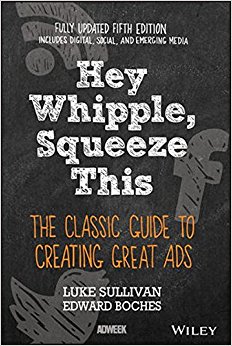
Award winning copywriter and advertising giant Luke Sullivan’s “Hey Whipple, Squeeze This!” is a deep dive into advertising; What it is, how to create it, what makes it effective, lasting, and how traditional advertising concepts can be applied to the modern/digital age.
In the beginning of the book, Sullivan locks in on the Whipple ad – Is the key to advertising annoying folks into buying things? Find something horrible, grating to put in an ad, capture the attention, and then sell them stuff? For this, we have to go back to the beginning of modern marketing.
Modern Marketing
Sullivan takes us back to post WW2 – the advertising landscape is not cluttered because there are only a few networks. Once TV networks starts to proliferate, brands start pushing out more products to compete – so modern marketing is born.
The goals of modern marketing are product differentiation and unique selling propositions. There are three other choices available to the consumer other than your product. So advertising becomes a chance to claim that top spot. Your ad has to defeat “The Wall” of ads that face consumers. An effective ad slides through the perceptual filter that blocks every other advertisement.
In advertisement, you’re not writing a novel – you’re creating something most people AVOID. Nobody wants to see it. People are indifferent or enraged at advertising. So how do you break through?
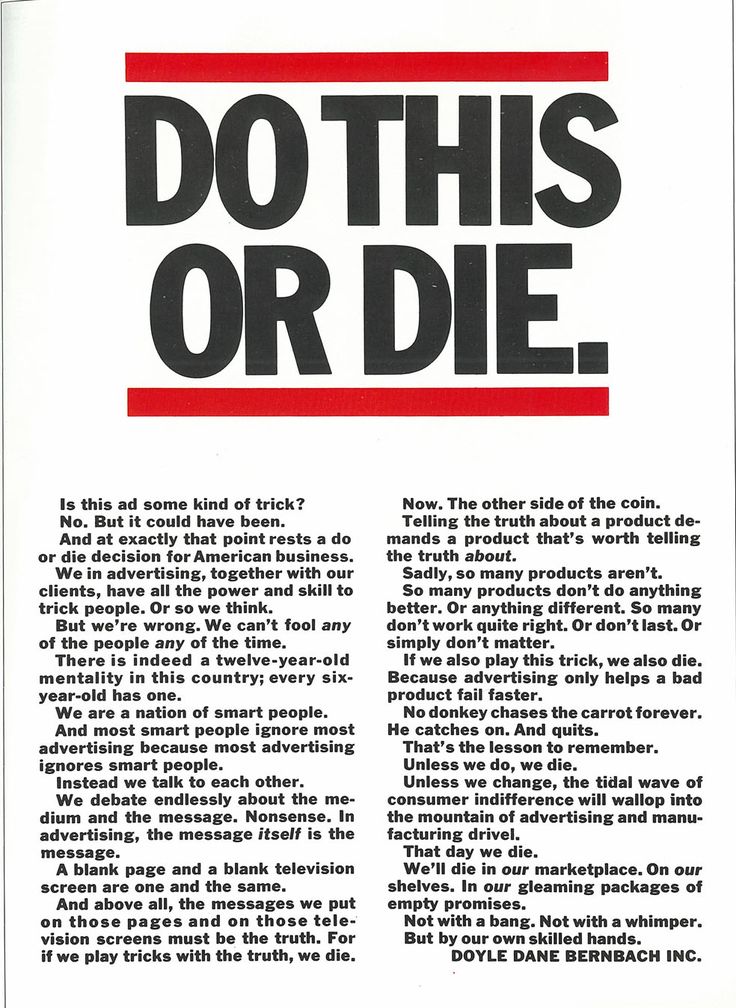
Bill Bernbach states the essential nature of creativity in advertisements very succinctly here
“The truth isn’t the truth till people believe you, and they can’t believe you if they don’t know what you’re saying, and they can’t know what you are saying if they don’t listen, they won’t listen unless you’re interesting, and you won’t be interesting unless you say things imaginatively, originally, freshly.”
The brain behind many wildly successful and creative campaigns in the 60s, Bernbach’s classic style is undoubtedly the hero of the book. Sullivan suggests that great ads like Bernbach’s, challenge the audience, assumes they have a brain, and let’s them in on the joke.
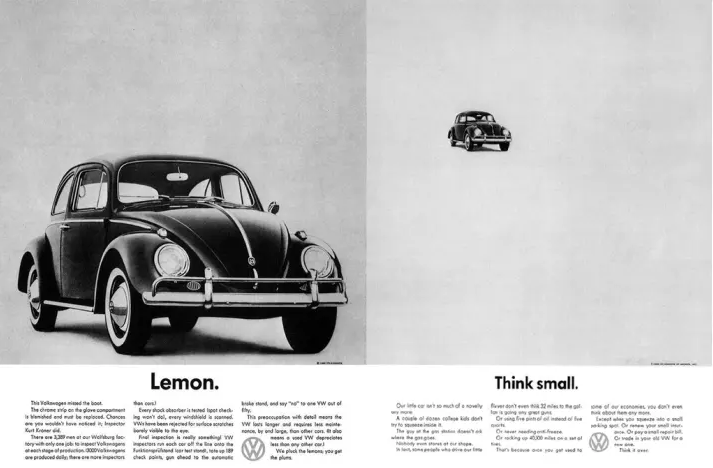
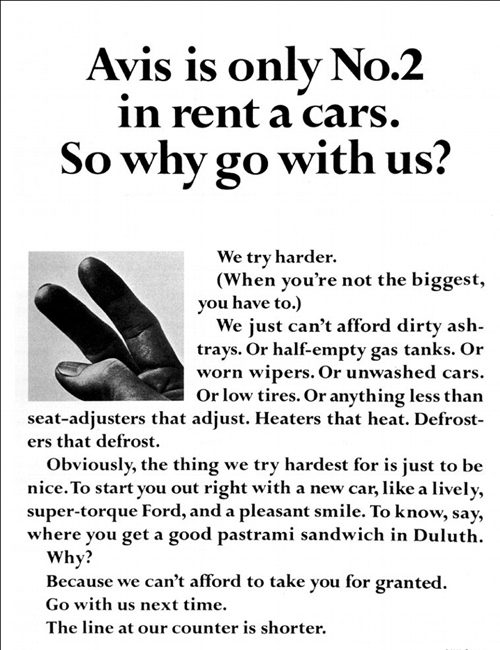
His work with VW and Avis are legendary. Bernbach’s insistence on creating ads that stand out, that embrace the rough edges, that are frank, simple, honest, and impactful, are on display in these ads. It’s not just creativity for it’s own sake, it’s creativity in service of the brand – a fine line that advertising still walks today.
Nuts and Bolts – How To Create Advertisements
The majority of the book is a step-by-step framework on how to conceive and execute and deliver advertising concepts. The first step to creating an ad for a brand, is to DEEPLY understand and research the brand. Tour the factory, interview customers and staff, look at the numbers – when you really get to know a product or service from the tail to the snout, you can create a more impactful ad based on acquired knowledge, not just impressions or preconceptions.
On-Brand?
The balance between what a client wants for an advertisement, and what an advertiser thinks will work, is always shifting. The brand wants safety, security, and sales – the ad agency wants attention, awareness, and acquisition. Bernbach again, says it best; “Dullness won’t sell your product, but neither will irrelevant brilliance.” This balance is the life and death of ads. Mostly the death.
Brand Adjective
Most brands have ONE word that can focus the ad – Jeep is “tough” – Volvo is “safe” – It’s up to good copywriters to identify that adjective for their brand, and let that inspire the ad. Find your adjective!
Simple = Good
Brevity is the only solution to cut through the clutter of ads. How Draconian and stark can the copy be? One goal – don’t make an ad that adds to the clutter. Good advertising is density of content and elegance of form.
What’s In It For Me?
No matter how creative your ad is, it still has to answer the one question on everyone’s mind, all the time – “what’s in it for me?” Understanding the context and lives of your target audience can help you make an ad that breaks through the clutter.
Avoid Inauthenticity
Avoid these things – Puffery, Vanity, Authority, Insincerity, Gimmickry – to create an ad that has rapport. Maybe find a weakness, admit it, share it – this can lend believability to things you say afterward. “Hertz is 2nd best” “It’s ugly, but it’ll get you there” “Tastes horrible; works”
Brand Context
Great advertising finds the truth about a brand. Not what the brand thinks about itself, but what the CUSTOMERS think of the brand, how the brand fits into their lives.
The above headline could have easily been brand focused – “We’re proud of our various floral arrangements – there’s one for every budget!”
But this ad is about the customer, and how the brand fits into their lives.
Go for an absolute
When writing an ad, don’t go for half measures. If you want to say “quicker, faster, and quieter” – SAY – “quickest, fastest, and quietest” – all claims in the middle are forgettable.
Wit Invites Participation
An idea that happens in the mind, stays in the mind. When ads use metaphors or jokes or “wink-wink” moments, the connection happens inside the target’s head. Once that click happens, a smile in the mind occurs. Can you craft an ad that leaves room for the audience to finalize the connection? This will be effective!
“When baiting a trap with cheese, always leave room for the mouse.”
BUY THIS BOOK
There is so much more to this book, but you should go out and buy it – Sullivan goes on to discuss ways digital advertising is different than traditional, why focus groups are crap, how to work with visuals. Anyone interested in marketing, advertisng, or consumer behavior will love this book. It’s like your uncle is sitting you down and rapping about advertising before you go off for a summer internship.
Advertising can be powerful and can shape communities and societies – for those that want to do good work in the field of advertising, this book is essential.
I’ll close with this inspirational quote – “Instead of coming up with advertising ideas, come up with ideas worth advertising.”
BUY THIS BOOK –> https://www.amazon.com/dp/B01AVKWLCS/ref=dp-kindle-redirect?_encoding=UTF8&btkr=1
Imagine living and interacting with technology and advertisements, in a world where EVERYTHING is personalized – it’s all about YOU!
Books, billboards, search engines, display ads, your thermostat, your home computer – all of them are constantly speaking about you, talking to you specifically – everything is about you, your choices, your purchases, your habits – it’s all about YOU!!
Now, imagine living in a world where technology and advertising is impersonal, a world where everything is NOT ABOUT YOU!
All of the content and advertisements you interact with are static – the messages and delivery of marketed communications happen to everyone around you equally at the same time. There is a general absorption level of content across a wide social spectrum. Society interacts with mass media, and that symbiotic relationship inspires both to change and evolve together.
Now – envision the psychological differences between citizens living in the first society, versus citizens living in the second society. . .
Of course I am being reductionist here, but I think advertising can be segmented into two schools of thought –
1) – Hyper-personalized ads – powered by Big Data amassed from customer surveillance – Ads are able to follow customers wherever they go; on their fridge, in their phones, in their car, on their desktops, on their kid’s faces, on all the billboards they pass.
2) – Mass media – powered by impressions, communicating through shared values on larger scales, interacting with and inspiring popular culture on a societal level. Advertising aims to get groups of people talking to one another about a common, shared experience. The public square – the big billboard – the SuperBowl Commercial – the water cooler.
Modern marketers use a mixture of both of these approaches when it comes to advertising, but more and more our culture and society is embracing the first school – hyper personalized experiences, big data science, surveillance.
Could hyper-personalization and heavy curation of advertising environments to the individual level, endanger our society, our culture, our idealogical mobility?
What happens to the individuals living in a society that depends economically on its citizens living in a hyper-personalized world? Does this reinforce our echo-chambers, our egos, our narcissism?
What are the psychological ramifications of living a commercial existence that is shaped and tailored to fit your every need, understand your desires, predict your behaviors?
As marketers, do we question what kind of society we are creating when we adopt the latest technology, advertising philosophies, or market research capabilities?
Do we recognize the important and powerful effect advertising has on shaping people, on shaping culture? What will we lose when we abandon thinking about advertising, marketing and business development on a social level?
What kind of consumers are we creating?
What world do you want to live in?
Is there a socially responsible way to market products and services, develop sound business strategies, and create valuable, meaningful advertisements – without having to monitor and collect everyone’s search engine history, credit card purchases, FitBit analytics, social media posts/reactions/shares, private messages, emails, voting records, chats, thermostat usage, medical history, media consumption, driving habits and bathroom usage?
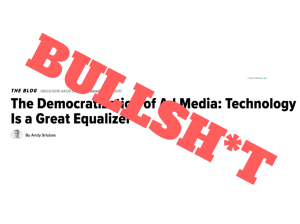
When I hear that advertising is being “democratized” by Facebook and Google, I cringe. Marketing and advertising thought leaders talk about it incessantly – Examples of this are here, here, and here.
However, what seems to be a “democracy” of advertising, is in realty a monopolization of advertising, and paired along with it, possibly, the destruction of actual democracy.
Social media has been around for a while now, and a lot of industries, companies and even countries – have felt the power of social, both negative and positive.
From the revolutions in Egypt to the collapse of the newspaper industry, social media has been purported to be a tool of “democratization,” where the will and voice of the people are being heard. People are now in charge!
The local mom and pop shop can take control of their advertising on Instagram, do their own Google AdWords, and finally have access to their customers through the genius of Facebook. These new found abilities are what is being referred to as the “democratization” of advertising.
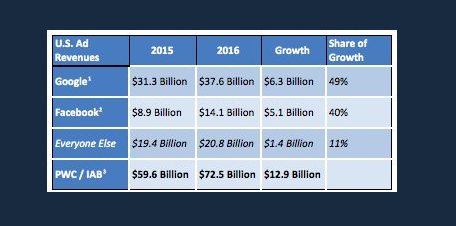
Last year, digital advertising raked in around $72 billion – 89% of that revenue went into just TWO companies – Google and Facebook.
So what was originally seen as a boon to the local advertiser, a means to connect them with their valuable customer, should really be seen as the continued support of just TWO companies. And these two companies have a goal to dominate every transaction on the Internet. So is this democracy in action?
What does the well-meaning marketer have to say to the recent reports that Facebook collected well over $100k in ad revenue from a Russian troll farm, which spewed out profile-targeted disinformation during the 2016 US Presidential Election? They denied this for months – and now, it turns out that they did profit off the propaganda. Not only that, Facebook also assisted the Russian efforts with their always expanding suite of top-shelf marketing technology.
Facebook provides advertising access to any user that creates an advert account. Doesn’t matter who you are, or what your intentions are, as long as the Credit Card runs. They’ve also collected a MASSIVE amount of user generated data, that can be parsed to identify psychographic profiles, which can be used in turn by advertisers, or other nefarious parties, to slowly adjust behaviors and even influence voting outcomes.
With evidence popping up that shows FB promises an advertising reach to many times more people on the planet than Census data shows exists, are the marketing gurus right to call this the “democratization” effect?
Tools like Google and Twitter actually increase our political divisions, because these sites run on hidden algorithms that select what should be shown to who, and when, and why. And no one knows how the algorithms work. Doesn’t sound democratic.
And lastly – Technology is Not A Great Equalizer!!
Access to all of the tools associated with the “democratization of advertising” are still dependent on economic and technological advantages that are unattainable by a large portion of the Earth’s population. The person/company with the most money, the fastest connectivity to broadband, and the most talented manipulation of big data sets (the lifeblood of social) will win the advertising game on social, every time. For people with no access to the internet, and a throttled utility-based market economy around telecom industry, the big money that lives on FB and Google is out of reach completely for a vast majority of us. This, to me, is the final nail in the coffin for the myth of democratized advertising.
Marketers need to really start engaging on a tactile level with this issue, start discussing the ramifications of these metastasizing monopolies, and stop throwing around the word democracy. The expanding economic in-equality and rise of nationalism and political subterfuge across the world is directly tied to our love of these behemoth companies, and our blind belief that their inherent structures are supported by good causes and people. We need to open our eyes.
To blithely think that the “people” are in charge, as we pad the walled gardens of FB and Google with our advertising money, is stupid. The long-term survivability of civilization is at hand, and while marketers hail the new revolution of people-powered advertising networks – the entire fabric of trust and democracy is being ripped apart, boiled and bleached, and turned into money for two giant companies.
























 Last year, digital advertising raked in around $72 billion – 89% of that revenue went into just TWO companies – Google and Facebook.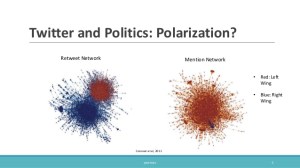
 POSMarketing