When I was growing up, watching TV that had 4 channels, I sat through a lot of daytime commercials, things for technical colleges, trucking, modeling, art schools, and registering patents.
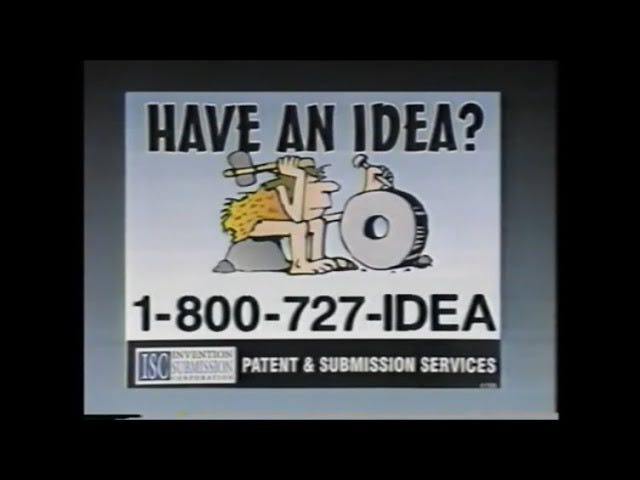
As a young child watching the adult world as advertised, I remember being keen on the art school and patent commercials. If you could draw well, you might have a future path. If you can invent things, or come up with ideas, you might have a shot in the adult world.
Being inventive with artistic flourish, might be a yellow-brick road to adulthood.
My takeaway was: ideas were valuable to grown ups.
Flash forward to my professional incarnation as an award-winning creative marketer, Grammy-nominated musician/composer, cartoonist, and audio illustrator, it’s safe to say I decided from an early age that applied creativity was a strong bet for a career, and I went all in.
But new technology like GenAI has dramatically damaged the valuation and perception of ‘creativity’ and disrupted the weights and models of the traditional Idea-to-Artistic Execution pipeline.
Not only has AI devastated the job opportunities for the creative class, (the word used in this headline is “eviscerated”) but the technology is decimating creativity itself; the capacity to generate new ideas that don’t seem to fit, the will to stand by ideas that stand out, resilience to craft ideas that are uniquely our own.
The Risk of Having a Point of View
In an era where creativity is fast-ordered & cheaply available, terms and service agreements are skipped over, responsibility is diffuse, production costs and risks of detection are low, AI not only hampers creative muscle building and increases the amount of risque thieving, but this tool-based-service decreases our appetite for actual risk.
Risks that every professional creative, innovative thinker, or stand out brand (the types that others emulate and steal from) already know.
Creativity is risky, art is risky, performance is risky because these things come packed to the gills with perspective and experience and stance, as in you have to take one.
When we outsource the effort to create work, and use technology to rip off other people, we outsource the risk of having a point of view. Period.
But that doesn’t stop the thieving…
Creative Theft and the Limits of Public Shaming
Take this instance of GenAI enabled theft, where Stil Sunscreen had their advertising art and copy robo-jacked by a direct competitor, Body Blendz.
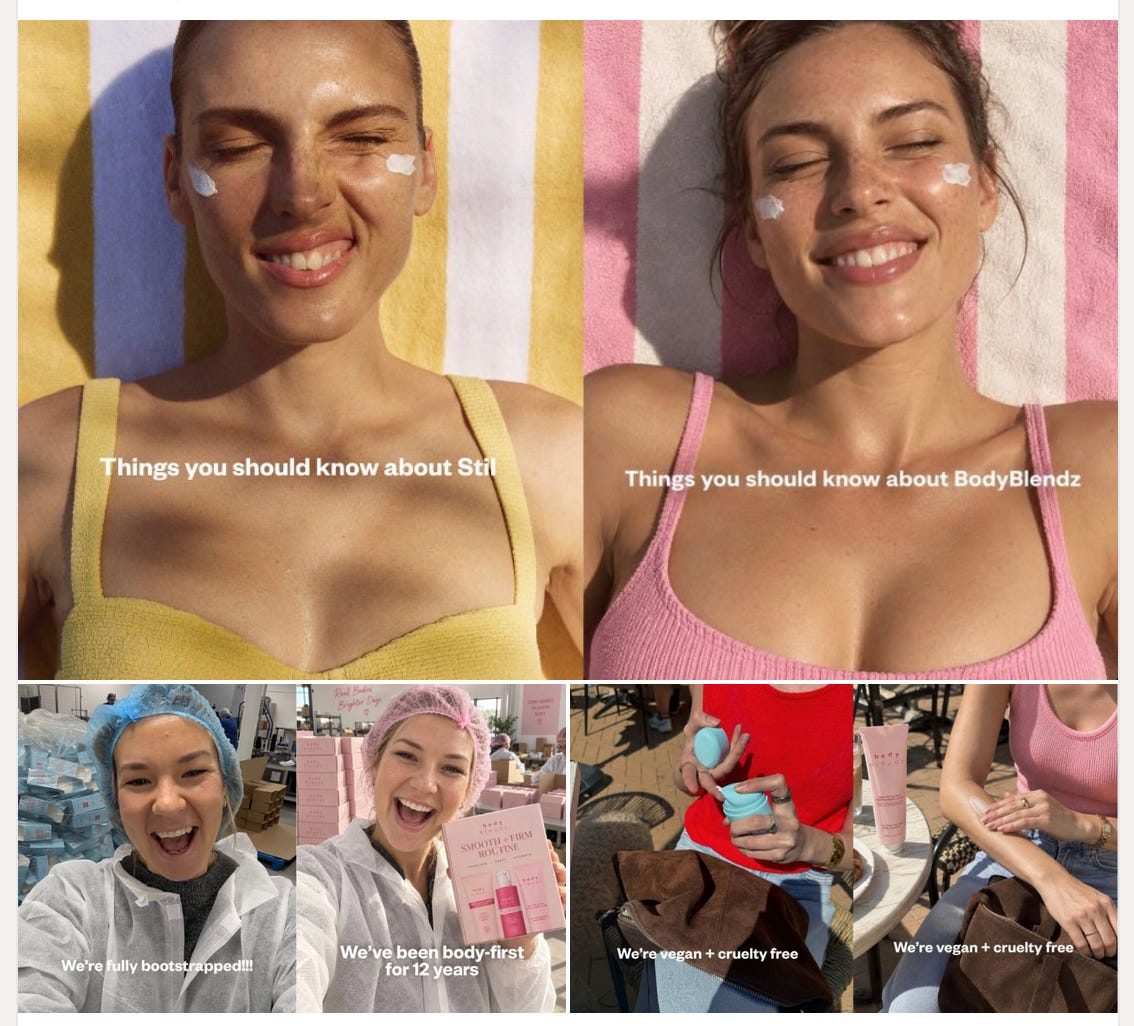
The owner of Stil Sunscreen is featured in the main image on the left, as are all the examples of the original asset, paired with the pirated content to the right. The origin of the fraudulent version is clear, as are the AI enhancements.
What’s clear in reviewing the massive amount of comments under the post, offering support to Stil and deriding the offending brand, is that claims of laziness and shamelessness are at the top of the word cloud.
The same can be said for this other instance of tech-enabled theft, where the consulting firm Pretty Little Marketer has been having to fend off copy-cats for YEARS…
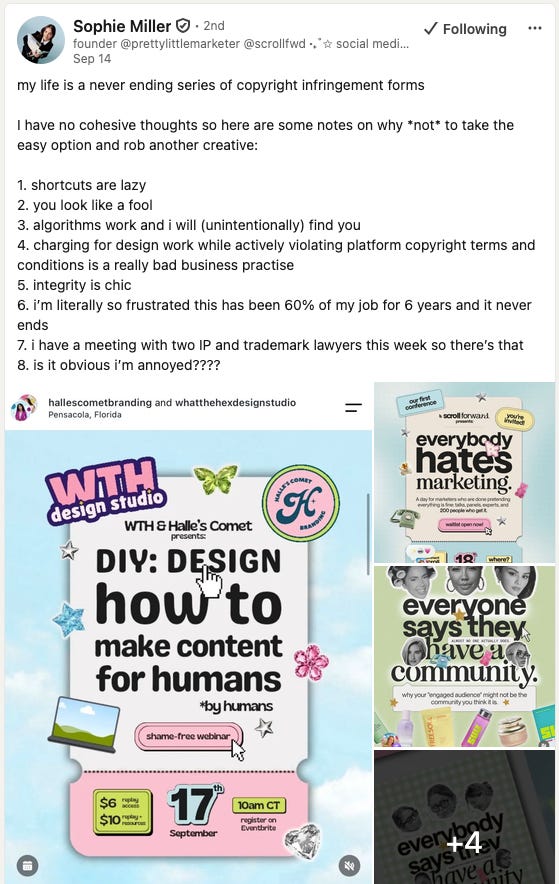
It’s important to note the positive and supportive response from the marketing community at large; we love work that is inspired by reference material, has a little wink and nod at things, but we reject straight up stealing ideas.
We’ll even call you out…
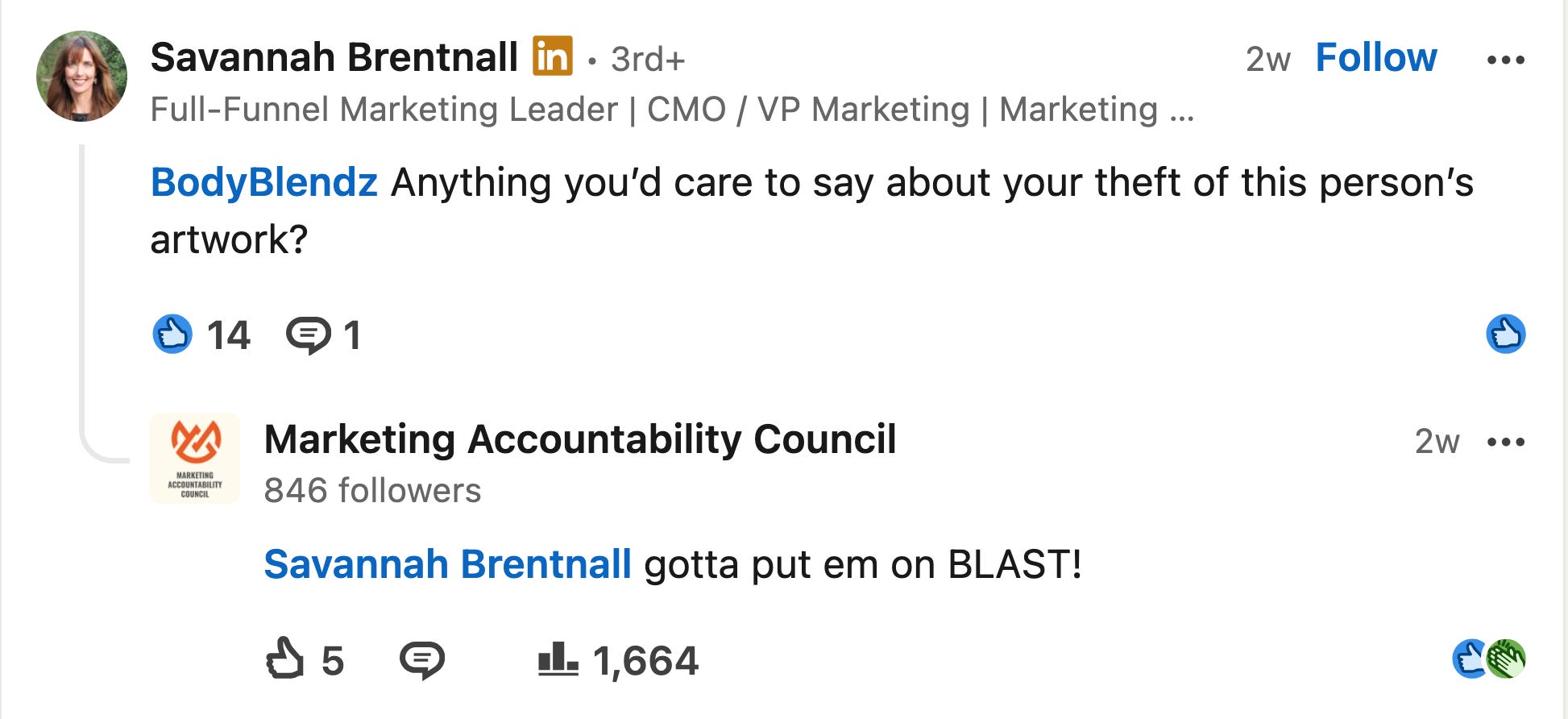
But I noticed something missing in the responses. The fact that we ratioed these thieves, showed care for the original creators, and shamed the offenders is almost proof that this kind of response doesn’t work. Sophie Miller, founder of Pretty Little Marketer said she’s been fighting this for the entirety of her career.
The crime continues.
Blame and shame on social media is not going to solve it. And maybe that’s because we’re booing the wrong player on the stage.
It’s too easy to steal everything now, so it’s too easy to blame thieving on the traditional ends-vs-means calculations of criminals; laziness, shameless greed, desire.
Maybe theft is so rampant now, not just because AI makes it possible, but because something deeper and more ingrained has been allowed to surface; cowardice.
One of the motivating forces for large scale theft, particularly through GenAI, is individual & institutional cowardice, disguised as creative (read: cost-cutting) efficiency.
Cowardice Is Gas to The Engine of Theft
Here’s an Uncomfortable Sentence for marketers and advertising pros, but mostly brands and the business brains behind them – “I would rather produce something derivative that gets approved than something distinctive for which I might be held responsible.”
Does that feel true? I think so, and I’m Mr. Creativity himself! It’s a big leap from derivative to theft, but again, I’m questioning the compelling reasons to not give a flying fuck and steal some shit.
The incentives for creative theft can look attractive. The work is already validated, internal approvals will be easier, since “everyone is doing it” the risk of getting caught are low, and it doesn’t seem to phase the brands who do get called out.
When marketers steal creative ideas, it isn’t just the look and feel that’s been appropriated.
What fraudulent marketers really steal is someone else’s creative risk.
A distinctive brand requires someone willing to be accountable for a choice before the market has validated it. A pirated brand doesn’t have to sweatily walk that plank. There’s no effort.
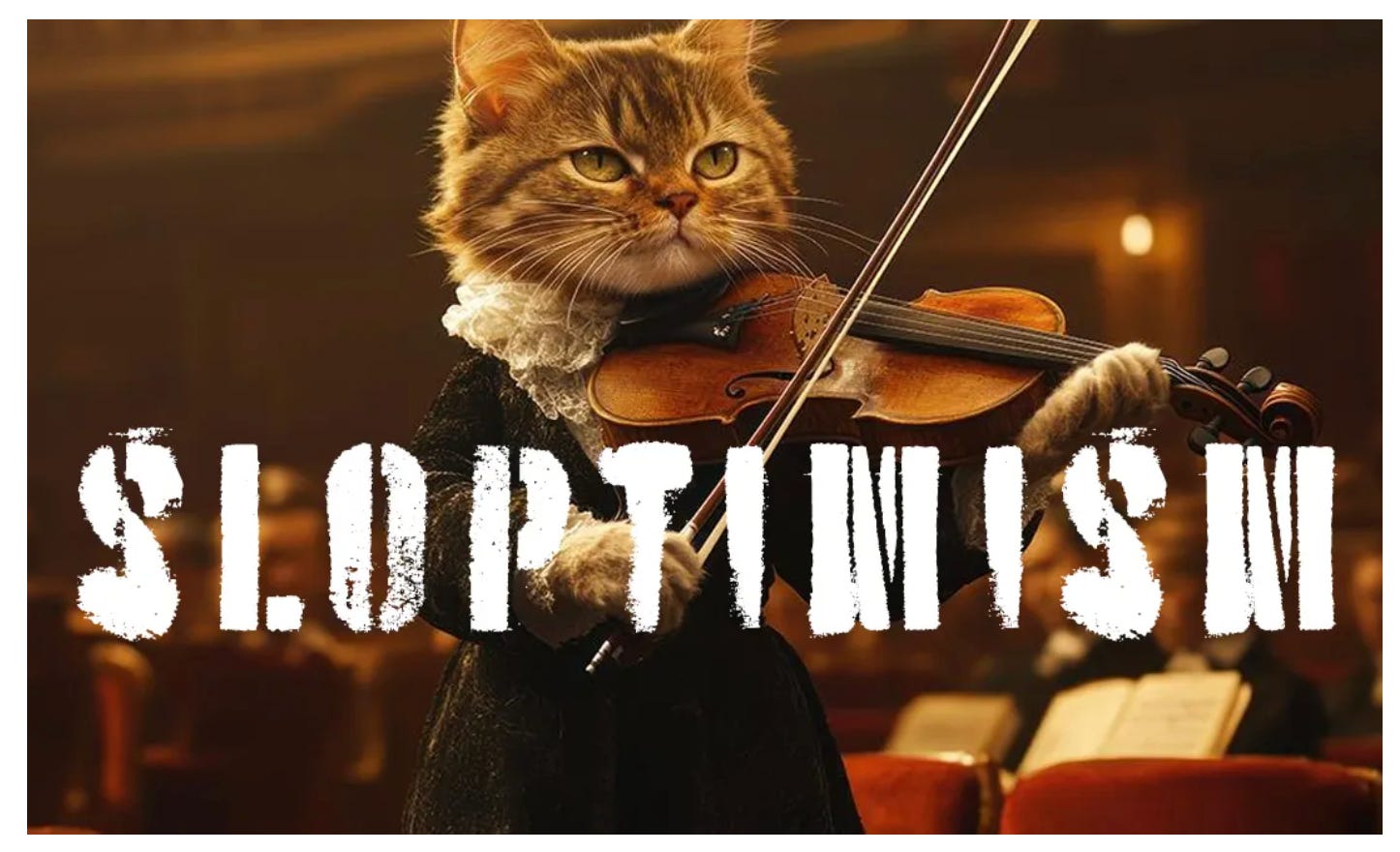
In his latest book “This is Pop; What the Shit Is, and What Isn’t the Shit,” advertising’s punk anthropologist Eaon Pritchard talks about the clash between technology, cultural products, and society. His Substack is similarly focused, and this bit from a recent essay, “Sloptimism” lands right on the target of this one;
“Effortlessness disqualifies something when effortlessness is the point, when the entire cultural act consists in demonstrating that the machine can produce an object without any of the friction that used to make cultural production a form of human risk.
The tech bro who declares his AI image to be Art is not wrong because the image is ugly. He is wrong because the image is safe. And art, even in its most poptimist-friendly forms, has never been totally safe.
Britney Spears making Toxic needed timing, precision, physical discipline, studio craft, and a kind of performative bravery that can’t be generated by a prompt. The AI image of Britney as a Renaissance painting requires none of that.”
Frictionless risk has always been a problem in creative pursuits, and so the most important task in the modern era for marketers isn’t to focus on idea generation, but generating the conditions where ideas can flourish, tending the land, managing the estate.
What’s required is a thirst for friction and sense of stewardship for funky ideas.
Someone Has to Stand Behind the Idea
In a brilliant essay, creative consultant Jane Goldman writes about how good ideas go to die in the frozen middle; that place where a possibly out-there idea needs care and support.
“Good ideas do not need unanimous agreement. They need enough courage, structure, and stewardship to survive the part of the organization where everything gets complicated.”
The creative friction required when/where we sell ideas, is the same friction that gets sanded down by consensus. In a group approval everyone gets a veto and no one defends a choice because no one holds accountability because the buck stops everywhere.
If we ask marketers to take creative risks, but leave them to absorb all the blame when an idea fails, we make borrowed certainty an attractive proposition.
Stealing remains a choice, but the more we feel institutionally pressured to be perfect and the less we’re inclined to deal with friction, creative theft will continue to feel like the least riskiest default option.
Anyone that wants more original work has a responsibility to help ideas survive: give people room to develop them, take risks, defend choices worth keeping, and share responsibility for the outcomes.
Steel Yourself Before You Steal Someone Else’s Courage
I grew up believing ideas were valuable to grown ups, and I still believe that, but I now see the stakes a lot clearer.
Ideas are aplenty, but courage is rare.
Valuing ideas, means that you’re willing to stand behind creativity before you know whether it will work. And not a lot of people are willing to do that. But the ones who do, are the ones everyone emulates, the creatives that catalyze culture.
Someone has to keep taking those risks, and if culture eats strategy for breakfast, then someone definitely will. Will it be you, risking it all on an original idea, or will it be your copy-paste team, taking the risk of being caught stealing someone else’s risk?
It’s all risky business, but we can make a difference. Will we lazily accept a culture that steals spotlights, or one that earns electricity and builds lightbulbs.
Will we continue to participate in a thieving culture, or will we try to find honorable work?
Do you want to be dope, or do you want to deal it?

