Artificial Instinct: Inside the Philosophical Guts of AI

A stomping romp through Henri Bergson’s “Creative Evolution” and how the seminal work of philosophy from 1907 has bearing on AI and the concept of Artificial Instinct.  

“An intelligent being bears within himself the means to transcend his own nature…he transcends himself, however, less than he wishes, less also than he imagines himself to do.”
– Henri Bergson, “Creative Evolution”, 1907


It appears the gen pop is ready for the philosophical conversation around AI. But which part?

Ever since ChatGPT came on the scene, we’ve been treated with philosophical-ish headlines and prognostications from these companies that conscious AGI is months, years away, or actually here or they can’t even tell. 

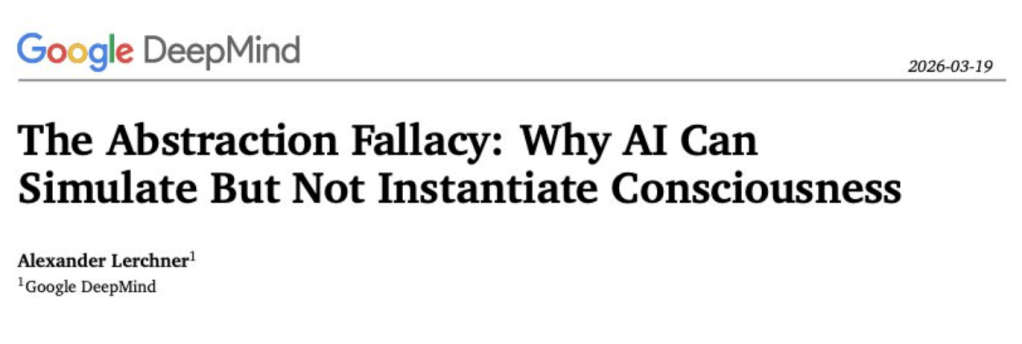
In March, Google DeepMind published this definitive-sounding headline…

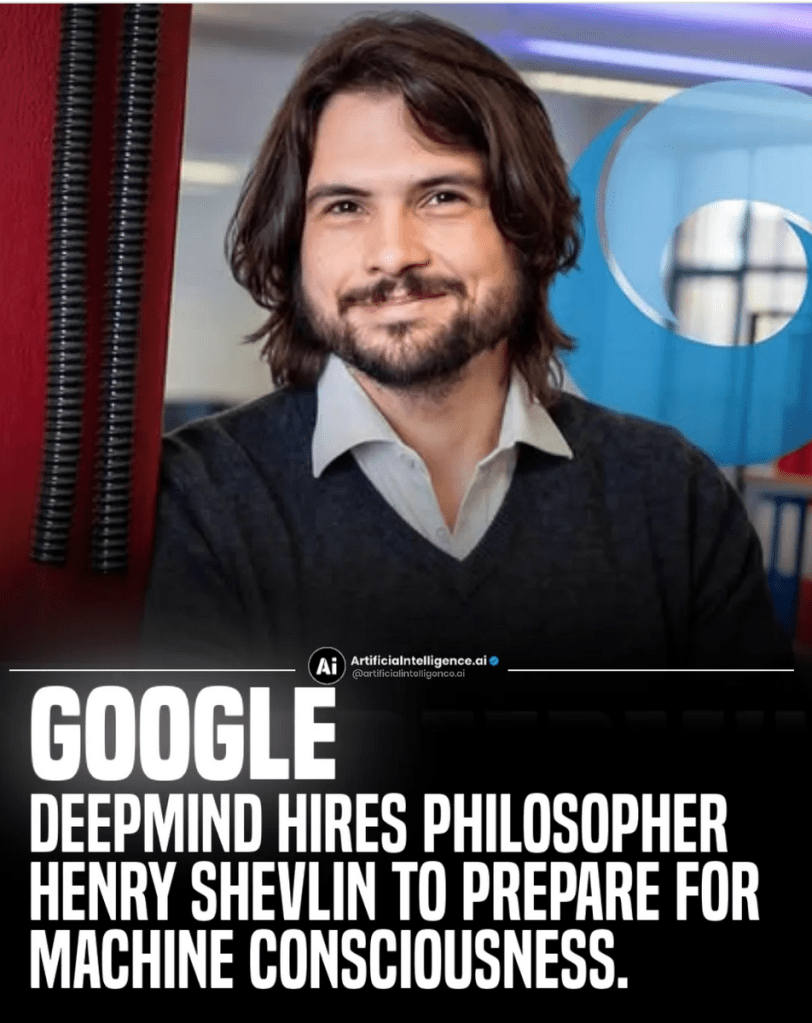
So, if AI cannot instantiate consciousness, why then make a big show about hiring a philosopher in May to prepare for…machine consciousness?  

If this kind of whiplash is accepted as normal in a conversation about AI and philosophy (it is), what kind of philosophy and intelligence are we REALLY talking about, and is it those things?

After spending the weekend reading Henri Bergson’s 1907 work “Creative Evolution,” it could be that the philosophical misapplication and adoption failures in AI so far, could be centered between INSTINCT and INTELLIGENCE, and more largely, an error in the base operating system of the the current computational consciousness philosophy that underpins AI today. 

The way AI has been philosophically sold versus the way it’s shown up, are two different things. 

Because it’s seeming as if AI is led by instinct instead of operating via intelligence. 

AI with ads, AI with social, AI and work product, AI and (INSERT ANY INDUSTRY OR TIRED ASS BUSINESS MODEL HERE) – this technology has been instinctually applied to “as-is” material, organized structures like a barnacle, not intelligently designed around, what Bergson characterizes as, “what if” deliberations, the purely-human ability to build from unorganized, even 100% hypothetical strictures. 

I think it’s great we’re talking about philosophy and formalized/higher order intelligence, but let’s bring in some Bergson, talk about the material base, the instinct, and why it should be just as prominent on the evaluation table, lest we go off into freudian or cartesian abstractions that could end up with a more virulent, metaphysical strain of anthropomorphism around AI

THESIS: The current epoch of AI is running off a philosophy of material instinct, not formal intelligence.  

To frame that AI is running on a philosophy of guts, we’ll first stop at everyone’s favorite philosophical question, “what is consciousness?”  

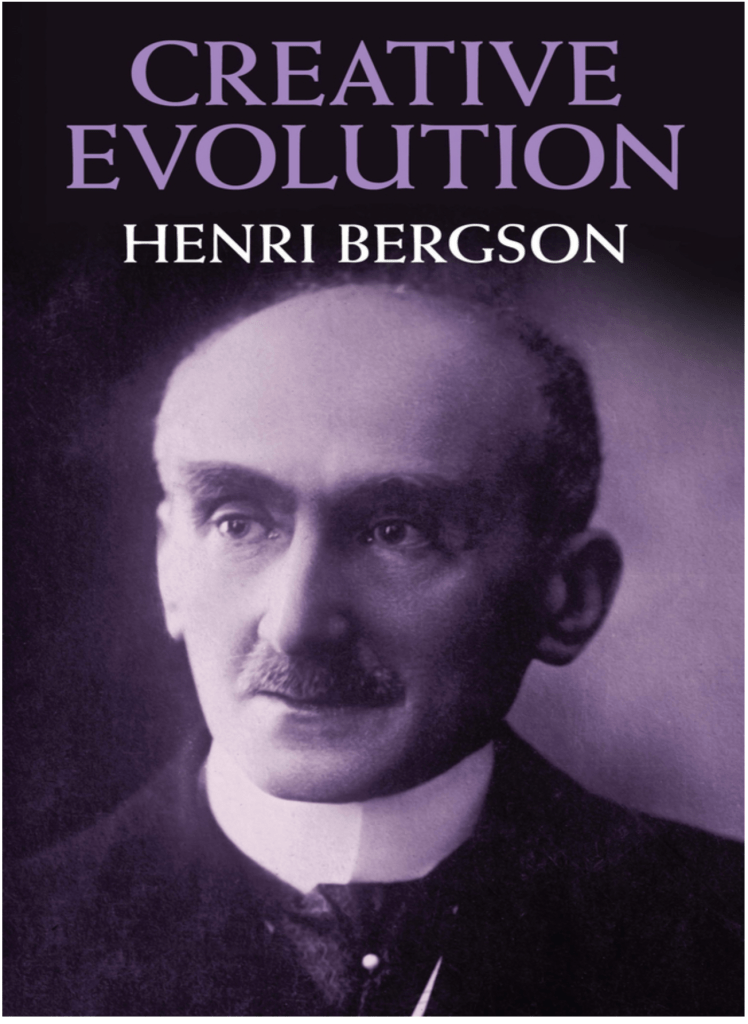
Henri Bergson, chilling here, possibly after just crushing a bunch of philosophy, biology, and evolution up and freebasing that shit.  

On the Crux of Consciousness

Before we go off on intelligence and instinct, which are wrongly depicted as two always-possible, and always-separate binary pathways, we have to address the field these choices seem to emanate from; consciousness. For this, we bring Bergson into the scene; he’s got the definition of consciousness right here if you want it —

“…consciousness is the light that plays around the zone of possible actions or potential activity which surrounds the action really performed by the living being. It signifies hesitation or choice. Where many equally possible actions are indicated without there being any real action (as in a deliberation that has to come to an end), consciousness is intense. Where the action performed is the only action possible (as in activity of the somnambulistic kind), consciousness is reduced to nothing….From this point of view, the consciousness of a living being may be defined as a…difference between potential and real activity.”

Bergson is so artful in this book I could spend days breaking down each of these sentences, the way he describes life as a collection of tendencies rather than a grouping of things, and here he metaphorically sketches out consciousness as “light” in a zone of potential. And, the levels or degrees and dimness of conscious “light” applied to instinct and intelligence, are worth noting.

 “Intelligence and instinct both involve knowledge,” explains Bergson. “..acted on unconsciously in instinct, thought of and conscious in the case of intelligence.

“Where consciousness appears, it does not so much light up the instinct itself as the thwartings to which instinct is subject; it is the deficit of instinct, the distance, between the act and the idea, that becomes consciousness. Essentially, consciousness only emphasizes the starting-point of instinct, the point as which the whole series of automatic movements is released. Deficit, on the contrary, is the normal state of intelligence. Laboring under difficulties is its very essence. It’s original function being to construct unorganized instruments, it must, in spite of numberless difficulties, choose for this work the place and the time, the form and the matter. And it can never satisfy itself entirely, because every new satisfaction creates new needs.”

If we take Bergson’s definition here, we can see the differences between instinct and intelligence are obvious, as is their connection through consciousness. But to figure out if AI is running on instinct and not accessing new means of intelligence, we have to first break up the binary and then add one more layer; instrumentation.

The triangle, my favorite instrument.

Intelligence, Instinct, and Instruments

“Instinct and intelligence…represent two divergent solutions, equally fitting, of one and the same problem….(they) imply two radically different kinds of knowledge.”

It’s important to not get drawn into binary oppositions ourselves, so this isn’t about instinct VS intelligence, but about how they operate in human decisions based on contextual situations, and for my thesis, how we may have potentially strapped AI and machine learning to the wrong ‘i’

Bergson explains that the impelling, evolutionary force (his ‘elan vital’) behind higher-order lifeforms brings instrumentalization to the stage differently. Plants ingest carbon and nitrogen instinctually, animals intelligently (but also instinctually) eat plants because they can’t capture carbon and nitrogen directly. 

Ants use the sand intelligently but don’t create sand, and monkeys use tools to dig and this is instinctual, the materials required were available. Where intelligence comes in, says Bergson, is when instruments are compiled from unorganized points and disparate connections. 

“Instinct perfected is a faculty of using and even constructing organized instruments; intelligence perfects is the faculty of making and using unorganized instruments.” 

Again, reading this sentence, I was forced to question if AI is currently on an instinctual path, rather than an intelligent journey? Ask the AI philosophers, and it’s both!! Lucky ducks! 

Knowing what I know from actual research on AI maturity in marketing and conducting interviews with practitioners and experts at the highest levels of data management around the instrumentalization of AI; it turns out a big problem with a highly organized, instinctual instrument like AI, is taking place at the moments when it meets the highly unorganized, not-as-intellignet-as-we’d-like humans. Me, and you. Ok, not you, but definitely me.

Maybe we’re using tech based on guts and pure instinct, because it’s something we all seem to have a ton of, instead of brains and intelligence, something we feel we can’t ever get enough of?  

And, viewed as an economic metaphor, if Bergson’s idea of “conscious deficit” being the natural state of intelligence, and instinct is freely applied without paying a single conscious brain cell, then it’s easy to admit that instinct seems to have a higher valuation than intelligence, based on raw data. Instinct doesn’t deplete us as fast as intelligence will. 

AI succeeds as “instinct tech” partly because it avoids deficits and matches human tendencies, not because it transcends them.

That’s because…one more layer…. 

Instinct is Subject to Matter, Intelligence Deals with Forms  

The following passage slapped me in the face with the AI as Artificial Instinct VS Artifical Intelligence framing, tell me if you catch it too….

“Instinct finds the appropriate instrument at hand: this instrument, which makes and repairs itself, which presents, like all the works of nature, an infinite complexity of detail combined with a marvelous simplicity of function, does at once, when required, what it is called upon to do, without difficulty and with a perfection that is often wonderful. (If you stop here, he could be describing AI, kinda) In return it retains an almost invariable structure, since a modification of it involves a modification of the species.” (damn…) 

The instrument constructed intelligently, on the contrary, is an imperfect instrument. It costs an effort. It is generally troublesome to handle. (Shit, kinda sound like AI too!?) But, as it is made of unorganized matter, (Ok, not like AI…) it can take any form whatsoever, serve any purpose. (So, AI then?) Whilst it is inferior to the natural instrument for the satisfaction of immediate wants, its advantage over it is the greater, the less urgent the need.” (time is the OG non-renewable resource…)

A philosophy based on computation believes that every, single, thing can be broken down into material parts, which is partially true. But computational philosophy, excuses itself from the human philosophical questions we have to ALWAYS engage with, one where instinct AND intelligence AND life play a part.

The real, material world, filled with instinctual matter experienced in real time, is the one we live, dream, and intelligently formulate schemes in. Based on Bergson’s thermodynamic rules about his elan vital, the immanent force of life animating it from underneath, the inescapable truth is that it is never unlimited. 

Limits exist in real life, pathways have to be chosen, both you and an amoeba can’t go in several directions at once, we always must choose. And it seems like it’s between instinct and intelligence but Bergson explains, it’s actually a matter of degree and direction, rather than kind. 

“..the choice between two modes of acting on the material world: either effect this action directly by creating an organized instrument to work with; or else it (the immanent force) can effect it indirectly through an organism which, instead of possessing the required instrument naturally, will itself construct it by fashioning inorganic matter…Instinct and intelligence…never entirely separate from each other.” 

UPDATED THESIS: The current epoch of AI is running, indirectly, off a philosophy of  material instinct, perceived directly as an act of formal, post-human intelligence.

I’m not satisfied, because where is consciousness and humans in this thesis? Who is running what, exactly? Did we think about this before right now? Where are the adults in the room?  

AI Philosophy Isn’t Even Supposed to Be For Humans

The modern philosophy behind AI, which is that consciousness does not require biology and can be purely computational, is at its core, based on a hard line separating the main substrate of intelligent consciousness on the planet – humans – from “intelligence” as AI defines it. Who defines that definition, we can only guess, because it’s not about us.

If you think AI philosophy is supposed to operate like human philosophy, you are wrong. From the Wiki:

“AI philosophy is distinct from human philosophy because it operates through computation, simulation, and pattern recognition rather than subjective experience, consciousness, or lived understanding.”

Well, well, well – you see how this binary drawn up here is bullshit if we believe what Bergson just told us. 

This definition of “AI philosophy” positions as instinctual, separate from humans on purpose and based off the organized instrumentation of materials on hand and computational pattern recognition. Computational philosophy is almost discursive of the “deficit of intelligence” that Bergson mentions, that hesitation light in actual consciousness that sees forms in unorganized matter; that’s something else. Not “AI” philosophy.

But who’s philosophy is it then, and why does it need us to think about it, for it? 

What does both your instinct and intelligence tell you? 

UPDATED-BLOATED THESIS: An experiential-denying philosophy, based off computational material instinct, directly underpins the cultural zeitgeist that defines the current epoch of AI, being a technopolistic culture that indirectly prevents humans from accessing the formalization of new types of intelligence. Intelligence that transcends, and doesn’t instinctively get trapped, enamored, or disgusted by our nature. 

Is AI Actually Artificial Instinct?

Maybe AI is better understood as artificial instinct, not artificial intelligence. It explains why AI is fast, reactive, and fluent. Why it attaches to systems quickly but struggles in redesigning them. It explains why AI feels coherent and effortless. Explains why actual intelligence is seemingly harder to come by these days. 

And, it exposes an interesting fact as to why there is a rush to parade a “real philosopher” around AI company headquarters; it isn’t because the tech is finally at a level where we require real philosophy, it’s an admission from these AI companies that there wasn’t any human philosophy, or philosophers, in AI to begin with.  

It doesn’t take a philosophy degree to wonder if what we are calling intelligence may simply be artificial instinct operating at a scale we can’t discern. And, maybe the reason we haven’t decided yet if we know the difference between Artificial Instinct and Artificial Intelligence, is because we’re consciously choosing, or been programmed to self-select, philosophical unconsciousness. 

Problem there is, how do you wake up if you don’t know you’re asleep?

FINAL THESIS (more of an opinion, ah who cares!?): Currently, AI is building off a post-humanist philosophy of computational instinct that socio-structurally cannot produce the kind of human-level intelligence it claims to approximate. 

But that won’t stop us from trying. Meanwhile, read some Henri Bergson.  

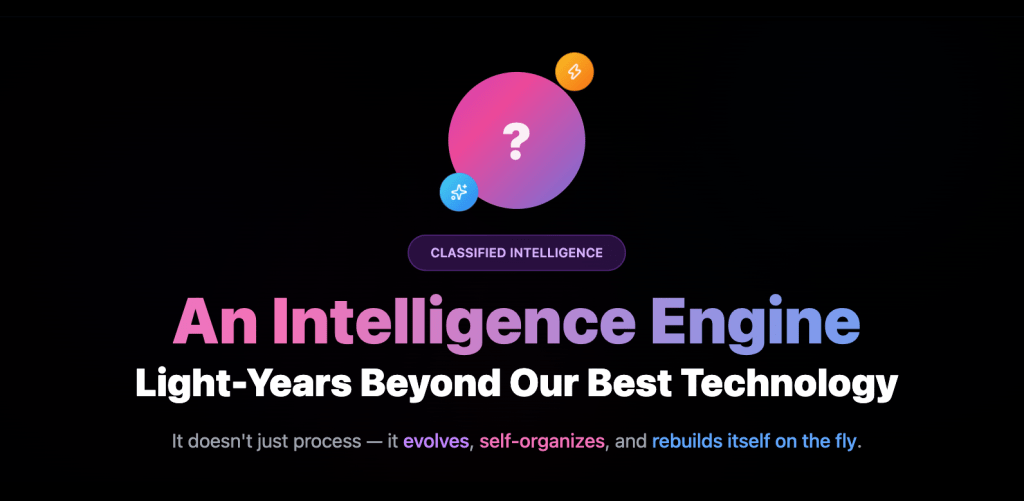
Meet the Multi-Layered Intelligence Engine That’s Light-Years Ahead of AI

Exploring the Ground-Breaking, Self-Evolving, Multi-Layered Cognition Engine That Makes AI Look Basic AF

In a world obsessed with creating machines that can think, learn, and adapt like humans, we find ourselves reaching for Artificial General Intelligence (AGI) as the ultimate goal. 

But what if I told you about an intelligence engine that already exists that makes our best AI systems look like basic tools? That this new intelligence engine doesn’t just process information—it evolves, self-organizes, and collaborates across a vast, intricate network of dynamic systems? 

Unlike anything we’ve created, it learns on its own, adapts to real-world challenges effortlessly, and rebuilds itself on the fly. This technology goes far beyond simply mimicking neural networks.


Here’s why this incredible engine is poised to redefine how we think about AI and intelligence itself.

The Orchestra Effect: Cognition Beyond Neurons

In our quest for AI, we’ve largely fixated on the neuron as the brain’s fundamental processing unit, where models mimic neural networks to achieve certain cognitive abilities.

But the revelatory intelligence engine we’re discussing operates far beyond neurons—it threads together an entire somatic orchestra, integrating both external and internal information .

AI, by comparison, has only a fraction of the instruments of this revolutionary intelligence engine, and no conductor, which means the novel intelligence engine produces a sophisticated harmony that responds to the world in ways AI can’t begin to replicate.

Self-Organization: Adaptation at Every Level

This cutting-edge intelligence engine operates with a built-in adaptability that AI currently can only dream of. 

Rather than relying on updates, patches, or data retraining, this engine self-organizes in real-time, adjusting its inner structure to meet new challenges, a self-updating masterpiece that gets better with each and every use.

Where AI has rigid boundaries and specific tasks, this intelligence engine learns across multiple dimensions. It rewires itself and integrates feedback from every experience, whether in learning a new language or recovering from an attack. 

While AI struggles to adapt without fresh data, this best-in-class intelligence engine recalibrates on the fly, instantly optimizing itself in response to new situations.

A Built-In Repair and Maintenance Network

A groundbreaking feature of this multi-layered intelligence engine is its maintenance network. Threat detection units—acting as repair agents—circulate throughout, identifying and fixing problems, clearing out damaged somatic units, and even aiding in memory and model calibration. Threat-detection units and neural nodes work as a dynamic team, balancing the cognitive function and physical health of the engine.

AI has no comparable system. When an AI model malfunctions or experiences a “bug,” it stops or needs human intervention. The intelligence engine in question, however, includes a “self-healing” feature, a natural integration of learning, maintenance, and repair. It’s always working, always adapting, and always improving—no tech team needed.

Multiscale Processing: Intelligence on Multiple Layers

While AI systems process information on a single, task-focused level, the multi-layered engine tackles everything from basic sensory input to high-level decision-making and task execution all at once. It’s able to balance conscious and subconscious processes, making sense of sensory inputs while calculating risks, emotional salience, and stored information in parallel.

In this intelligence engine, every response contributes to a larger, coordinated effort. Imagine a machine that could process information across multiple levels simultaneously, reacting on micro and macro scales.

Today’s AI cannot do this, but this intelligence engine accomplishes it effortlessly, from minute signals to complex, adaptive behaviors.

Embodied Intelligence: Thinking Isn’t Just in the Engine

This ground-breaking intelligence engine doesn’t rely solely on isolated processes to make decisions. It’s integrated into an entire physical system—responding to and with every somatic unit. Cognition here isn’t limited to the “brain” but happens throughout the “body.”

Threat detection units, reflexive capacitors, and even gut reactions contribute to what is experienced as thoughts, emotions, and intuition in regards to this intelligence engine. 

This engine challenges the assumption that intelligence can exist in isolation. In the same way that every cell and system influences the whole, its intelligence is deeply embedded in its environment. AI, which lacks such embodiment, can’t perceive or interact with the world in the same holistic, intuitive way.

Threat Detection Units with Memory, Learning, and Adaptation

Our engine’s security system is far more than a passive shield. Threat-detection units learn and remember—storing knowledge and adapting based on past experiences. In this way, they act like memory banks and proactive defenders, building a secondary intelligence network within the larger system.

While AI requires specific data inputs and training to “learn,” this intelligence engine builds knowledge organically, remembering threats and learning from them over time. AI can’t “teach itself” in the same way—it needs to be told what to do, whereas this engine’s threat detection system becomes wiser with every encounter.

Interconnected Networks

This intelligence engine integrates threat-detection units and neural systems in a mutually beneficial relationship that allows for higher adaptability. It functions as a network “ecosystem,” where threat-detection units aid model function, protect it, and even support memory and regulation.

Where AI models are mostly static, this engine features a built-in, evolving ecosystem that supports flexible responses to a wide range of physical and mental demands. Imagine an intelligence system where all components actively support and interact with each other to adapt to new challenges—today’s AI isn’t designed for this level of interdependence.

The Big Reveal: This Multi-Layered Intelligence Engine Is the Human Brain

And here’s the remarkable part: this multi-layered, self-organizing intelligence engine is not a new piece of technology. It’s something we all possess—the human brain. This incredible network operates seamlessly with every cell in the body, orchestrating thoughts, actions, and responses with a complexity AI may never be able to achieve.

The human brain is an intelligence engine embedded in a multi-cellular system, fueled by self-repairing processes and adaptive, body-wide networks. Far beyond the most advanced AI, the latest research in neuroscience is discovering that our brains think, feel, and adapt with every cell, constantly interacting with our bodies and environments in ways that make our intelligence resilient, responsive, and alive.

In our quest to create AGI, we’re trying to replicate a masterpiece we already have. 

The human brain isn’t just a powerful tool; it’s a living reminder that the most advanced technology we may ever encounter is already within us, a multi-layered engine that adapts, learns, and evolves. While AI is extraordinary in its own right, it’s no match for the symphony playing inside each of us, an engine of intelligence that goes far beyond any machine.