
Checking the Fit
“It’s not what happens to you, but how you react to it that matters.” – Epictetus

How do you develop an opinion on the clothes you wear? In private, responding to mirrors, magazines, and measurements? Is it in public, or maybe in a group chat? Chances are, it’s a mixture of both, with personal choice being 100% preferred but, due to fashion crazes or “the latest thing,” not always chosen.

Unlike an opinion, which you cook up all on your own and might not ever tell anyone, you have to wear your clothes out in public. So while you might select the outfit in private, the perceived & actual public reaction to your clothes is, most likely, a stronger arbiter of judgement.
Fashion is a place where private beliefs and public behaviors eventually collide.
You can believe whatever you want about yourself or your opinions or your clothes. At the end of the day, the behaviors and reactions of others have an outsized influence on an individual’s fashion choices, not because we lack independence but on account of us living as socialized creatures do.

Clothes can operate as a transmission tower between personal belief and socialized behavior.
The way we slip in and out of clothes, and envision ourselves as habituating different personalities, trying different fits out to see if we look like we fit in, is an important allegory for participating in a thriving, socialized, democratic life.
But the option to ‘try something on,’ hasn’t always been a given.
The History of the Fitting Room
Fitting rooms were invented in 1907 at Selfridge’s – back in the day anyone wanting clothes would have to describe what you wanted, and the staff would pull something out. No one could ever try clothes on before purchasing them.

Harry Gordon Selfridge, owner of one of the largest department stores in London (and the world) at the time, had a radical idea: let people try things on before they pay.
Retailers thought he was insane. Letting customers handle the merchandise? They’ll damage it. They’ll waste time. They’ll try and leave without buying.
Instead, after the first fitting rooms were installed, conversion rates at Selfridge’s went through the roof. Returns dropped. Customer satisfaction skyrocketed.
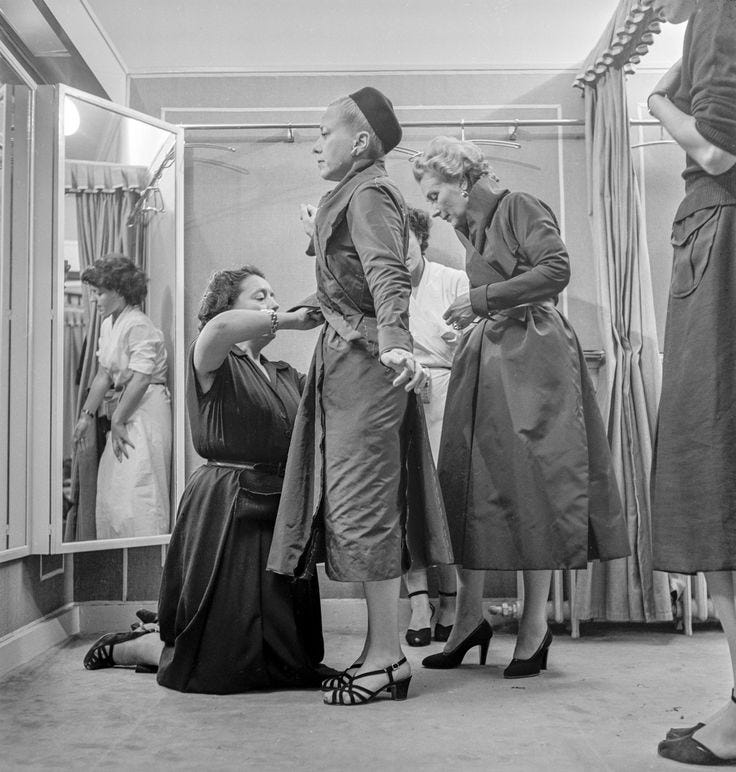
Within a handful of years, every department store in the world had fitting rooms which were important attractors for all day shoppers. The fitting room became a third space to socialize away from society.
“It’s not what happens to you, but how you react to it that matters.”
Within decades, fitting rooms were standard, but some department stores chose another route, maybe to save money, maybe to save space, maybe both – group dressing rooms.
How Group Dressing Rooms Fit In
A month or so ago, I was chilling with my wife and her friends and they got on the subject of old department stores, and two of the ladies mentioned the group dressing rooms at Loehmann’s, both having diverging takes on the experience.
Group. Dressing. Rooms. I tried these words out in my mind, but they made no sense.
What is a group dressing room? Why would that even be a thing?
When I looked up group dressing rooms at Loehmann’s, I was treated with a 2014 HuffPost article from fashion blogger and designer, Mara Menachem, “Everything I Learned, I Learned in the Group Dressing Room at Loehmann’s.”
Writing at the time of the store’s shuttering, Mara fondly remembers the communal fitting rooms of the now-defunct discount retailer as an unlikely place of human connection.
“I realize I’m not the only person eulogizing the loss of our beloved Loehmann’s. This was more than a store and I hope the Loehmann Family realizes the great impact of their famed stores. But before laying my precious Loehmann’s to rest, I must not only memorialize it, but educate the unfortunate individuals who will never experience being stark naked in the group dressing rooms at Loehmann’s”
The scene Mara paints of Loehmann’s group dressing rooms is one where ladies were physically exposed but socially uninhibited.
Women and girls of all ages and body types undressed together, offered unsolicited opinions, helped strangers squeeze into dresses, and learned the unwritten rules of fitting in.
They said things to strangers that most people would hesitate to say in public. They were both positive & policing, candid & encouraging toward one another’s bodies, tastes, and appearances.
The dressing room was simultaneously a place of vulnerability, belonging, and conformity.
In the Loehmann’s group dressing room, you got the answer you were gonna get from the streets, early before you bought the item.
Group dressing rooms made the social negotiation of belonging physical & visible.
“The closing of Loehmann’s is not surprising in the age of quick access and highly educated consumers. But the loss is so great, because what we miss out on when participating in what may seem a shallow activity like shopping, is a real, organic human experience in pure connection.
So maybe Loehmann’s wasn’t a “fancy” store filled with sales people who could tell you where the designer jacket you tried on was made, but what the staff and shoppers at Loehmann’s would teach you, is how to squeeze your hips in a dress too small or what they thought of the President’s speech last night. So yes, I am going to miss this special place and most of all I will miss being naked in the group dressing room at Loehmann’s.”
I’m not advocating for a return to group dressing rooms, there are more positive and negative reviews of them to review online, but I’m wondering, when these experiences went away, did they also close down an important relational vehicle, a third-place we could connect as people?
“It’s not what happens to you, but how you react to it that matters.”
Learning to Fit In
I was a modest teen, and I had my reasons – skinny as a rail, usually with a cold sore, a pigeon chest – so I was not keen on gym class/locker room dynamics, showering with the boys.
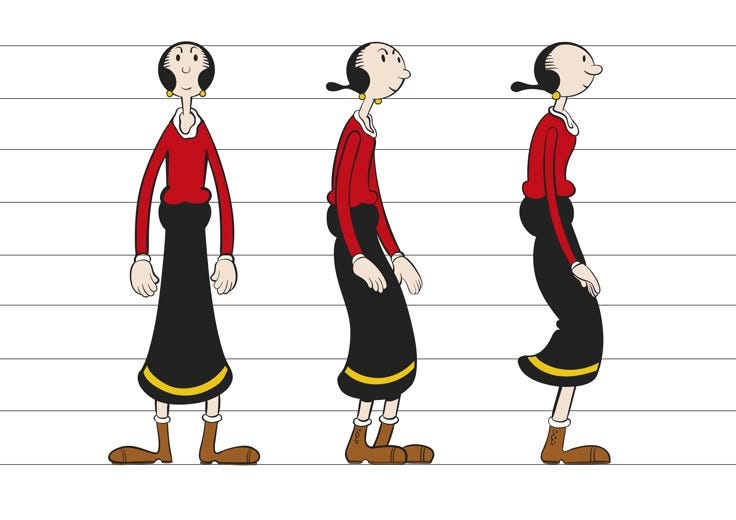
At that time I was a big fan of Jean Claude van Damme and Schwarzenegger action movies, so I knew what men could look like, and I knew I was nowhere close to that, so whenever possible, I avoided locker rooms like a plague.
Don’t get me started on ‘shirts vs skins’ in gym class…what the actual hell?
All that began to change when my parents took us to see the 1993 adaptation of Shakespeare’s “Much Ado About Nothing.” I remember feeling embarrassed by the opening scene – everyone, young and old, is happy and naked and changing and bathing, without a single shred of embarrassment between their scampering butt cheeks.

The scene is so overjoyous, it got me thinking what changing room confidence I might be missing, or what indifference I might be lacking. The “just-so” nature of the actors gave me an idea that my hesitation about dressing rooms might be a missing acceptance that we are all humans, every shape, and this is what’s underneath the surface.
The poem that opens the movie adds another flavor of nonchalance, and hits on this idea of accessing the raw and real of humanity, something you have to cast off like clothes, to get to the real joy, to get to the nonny nonny.
“Sigh no more, ladies, sigh no more.
Men were deceivers ever,
One foot in sea, and one on shore,
To one thing constant never.
Then sigh not so, but let them go,
And be you blithe and bonny,
Converting all your sounds of woe
Into hey nonny, nonny.
Sing no more ditties, sing no more
Of dumps so dull and heavy.
The fraud of men was ever so
Since summer first was leafy.
Then sigh not so, but let them go,
And be you blithe and bonny,
Converting all your sounds of woe
Into hey, nonny, nonny.”
“It’s not what happens to you, but how you react to it that matters.”
The Dressing Room Gets Binned
Lately, stores are doing away with changing rooms entirely. Brandy Melville, a sizable national brand, recently announced the closure of their fitting rooms in the US and UK.
Although no official reason has been given, according to The Guardian, store staff in several locations (such as Boston and Austin) attributed the removal to chronic vandalism, including a viral TikTok trend where shoppers stuck chewing gum to the dressing room walls and curtains.
With examples of dressing room closures at Sainsbury’s and Tesco in the UK, it’s more than likely there’s an anti-social trend here. But we’re picking up the social scraps with technology.
TikTok has normalized the “Outfit of the Day” (OOTD) ritual. Girls frequently record transition videos or quick mirror selfies as they assemble their clothes in the early AM, sharing them either publicly or on private “spam” accounts for a close circle of friends.
With technology being tied into social rituals, there’s been an emergence of something called Digital Co-Presence. Getting ready for school can feel isolating or mundane. By sending outfit updates, photos of their makeup, or complaining about being tired in the early morning, teenage girls create a sense of “getting ready together” even when they are physically apart.
One fashion blogger, responding to this trend, reflected that these rituals aren’t necessarily about the clothes – it’s about “am I enough?” “will they accept me, do I belong?”
Today, the physical fitting room may be private, or stratified over social or private messages, but the social calculation has gotten mutated online and in many ways, it’s missing entirely offline.
We stand in front of mirrors, or screens, asking what fits. We’re judging the clothes, ourselves, and what we believe to be the expectations of everyone waiting outside.
“It’s not what happens to you, but how you react to it that matters.”
What the rise of techno-dependent social rituals, and the closure of fitting rooms and Loehmann’s group dressing room indicates, is that as opportunities to experience shared, relational, physical space with multigenerational cohorts go away, we loosen our roots to something deep, profoundly social, inherently human.
We forget about the importance of feedback, and at a time when the places/spaces/opportunities for it are at risk of going away.

Feedback Extinction
How do you form a “good” opinion on something? Is it in private isolation, with books, calculators, or facts and figures? Is it in public, with colleagues or friends and family?
It’s probably a hybrid of both, but in an algo-mediated, individualized/personalized, metric-driven, one-way opinion-drenched, social media culture powered by recommendation engines (and no group dressing rooms), I wonder if there’s a current risk of a new information environment crisis – Feedback Extinction.
Not of too much information or too many opinions, but a dismissal & disavowel of them entirely, a total disregard for the raw reality and thoughts of others.
With an ecosystem of tools custom made for narcissism available to everyone, who thinks outside themself? Why would they? What benefit is it to consider someone else’s view, someone else’s body? Why peek over my private fitting room, why acknowledge the others while I’m trying to fit in and “work on myself?”
In many ways we are loathe to admit, the statements – “I don’t need to acknowledge, care, or know about any other opinion than my own” and “I don’t need to see/hear/engage with anyone” could apply to ourselves in certain contexts, just as easily to any garden variety sociopath.
And similarly, maybe we’re filled with unrepentant, mythological longing for a time when all of us would cast of the deceit of men, and be blithe and bonny, trying fits on and wondering how we fit in, together, converting sounds of woe into hey nonny, nonny.
If locations like group dressing rooms are gone from existence, is it so hard to think that the memory of a time where everyone would get naked and talk shit, would slowly turn into a myth?
With no option to be in a dynamic, physical social setting with strangers, how would you be aware that this was an option? Would you know there are others with opinions, would that even matter?
What would facing a feedback extinction feel like?
How would we know we’re feedback endangered?
What if you had to talk and be vulnerable with others to find out? 😳
“It’s not what happens to you, but how you react to it that matters.”

