The Marketing Metaphorest – HORSE RACING

Looking for a better way to describe and define marketing to clients, or for your business? Well then, step into the Marketing Metaphorest w/ Jake Sanders!

Marketing is like a horse race, in that people are overly-obsessed with winning & dissecting champions to discover fail-proof-strategies, which unfortunately reinforces biases, and creates ethical & strategic blind spots for business development.

1 – Winner Takes All

In horse racing, winning is everything, And so if what it takes to win may be dirty, sneaky, edgy, or otherwise, most racers that want to be “winners” entertain these thoughts, not because they are amoral, but because if the racer next to us is “enhancing” their performance, to win at all costs, then why shouldn’t we?

In George Brenkert’s excellent “Marketing Ethics,” he outlines why game and racing metaphors are incompatible with marketing ethics, exactly because they warp our sense of morality around business development decisions.

Instead of obsessing over how to “win the race” for your brand, set internal goalposts & benchmarks for “marathon” marketing performance, that are aligned with driving business results, over the long run. 

2 – More Data, Doesn’t Mean Better Prediction

Part of horse racing is dissecting champions to discover proven-strategies, and race fans will use everything, from superstition to big data, to get insights from every which seemingly all lead to big rewards.

A note on this –

In 1973, Paul Slovic, Univ. of Oregon, studied horse betting and data interpretation and found, the more data points a trained handicap setter had to predict a winning horse, the less accurate the prediction became. 

Out of a total of 88 data points, test groups were given 5, 10, 20, 30, and 40, the most accurate predictions for winning horses occurred in the group with just 5 variables. 

With more data, comes overconfidence, which in the horse racing study dramatically increased inaccurate predictions.

So – when it comes to data-driven marketing decisions, don’t be fooled, be focused. Reduce data points, and divine direction via interpretation, not intuition.  

3 – Survivorship Bias

And finally, the horse racing world, like marketing, is so biased towards understanding every nuance of winners, that strategic, possibly winning insights, gleaned from the whole competitive field, tend to be ignored because, losers don’t write the rule books.
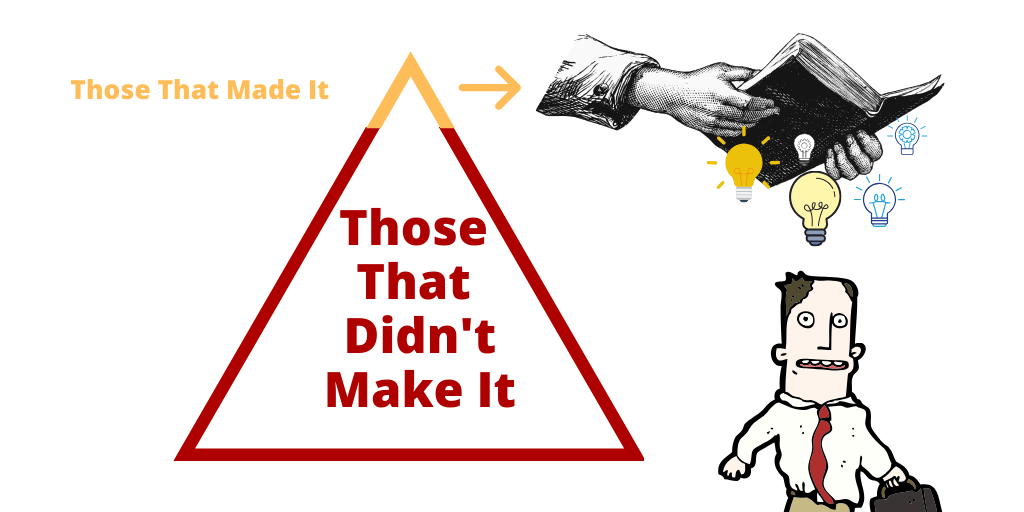
Survivorship bias or survival bias is the logical error of concentrating on subjects that made it past some selection process and overlooking those that did not, typically because of their lack of visibility.

The famous example is Abraham Wald’s study on returning WW2 bombers – where he discovered that the places on the aircraft that needed reinforced armor were not the places that bullets had punctured the surviving aircraft, but where the bullets had missed, and hit the aircraft that had been shot down.

Taken in the horse race marketing context – we’re obsessed with what it takes to win a race, we fail to study and research the bounty of knowledge in what it takes to lose one.

So – to create a marketing strategy that’s robust and not reliant on the winning horse to come in – dedicate some research to the thousands of unlucky, anonymous brands that never made it, rather than studying and copying the ins-and-outs of the few, lucky, anomalous winning brands at the top of the marketing hill.

Follow The POSMarketer – https://twitter.com/POSMarketer
On LinkedIn – https://www.linkedin.com/in/whalehawk/
Music by WhaleHawk – https://whalehawk.bandcamp.com/
The Marketing Metaphorest – NEWTONIAN DYNAMICS

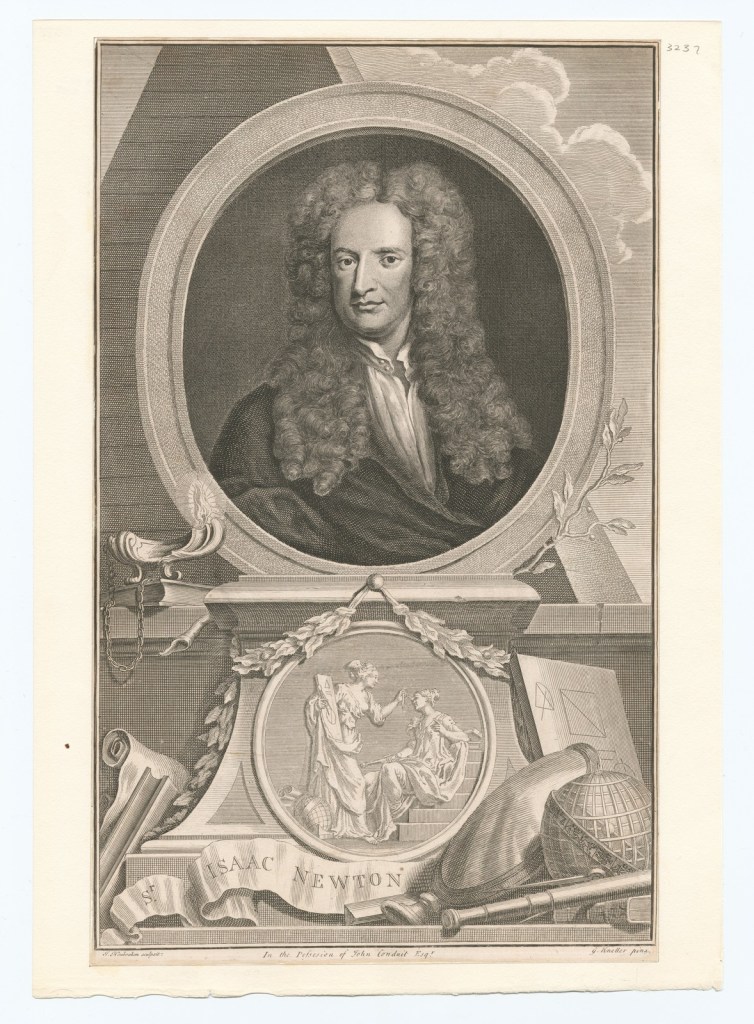
Hey everyone, Jake Sanders, POSmarketer here, today we’re overlaying the metaphor of Newtonian Dynamics on Marketing, but first, we should probably define Newtonian Dynamics….

1) A body stays at rest, or in uniform motion, until acted on upon a force.

2) The rate of change seen in the body is proportional to the force acting upon it.

3) When a force from one body impacts another, then an equal and opposite force acts simultaneously on the impacted body.

So, are you ready to find out how this all relates to marketing? Let’s go!

A body at rest, stays at rest

Taken in a marketing context, this principle really means your brand, good ideas, solid content, won’t go anywhere without being affected by an external source of energy. You have to promote, your marketing. You have to advertise, your advertisements. 

This sounds dumb but folks are filling up their organic content bins with no plans on promoting any of it. Well, newton says, unless you got the energy to commit to it, all that content ain’t goin nowhere. 

You get out, what you put in

If the result expected from marketing strategy is huge, the energy and commitment that goes into executing the strategy needs to be equally huge.

You want SuperBowl results, but you’re only paying for junior football scrimmages…Newton says, if you want unreal results, plan to work unrealistically hard for them. 

3. Every action, has a reaction

Lastly, it’s important to remember that while external forces influence your marketing, your brand is also capable of influencing and guiding external forces. 

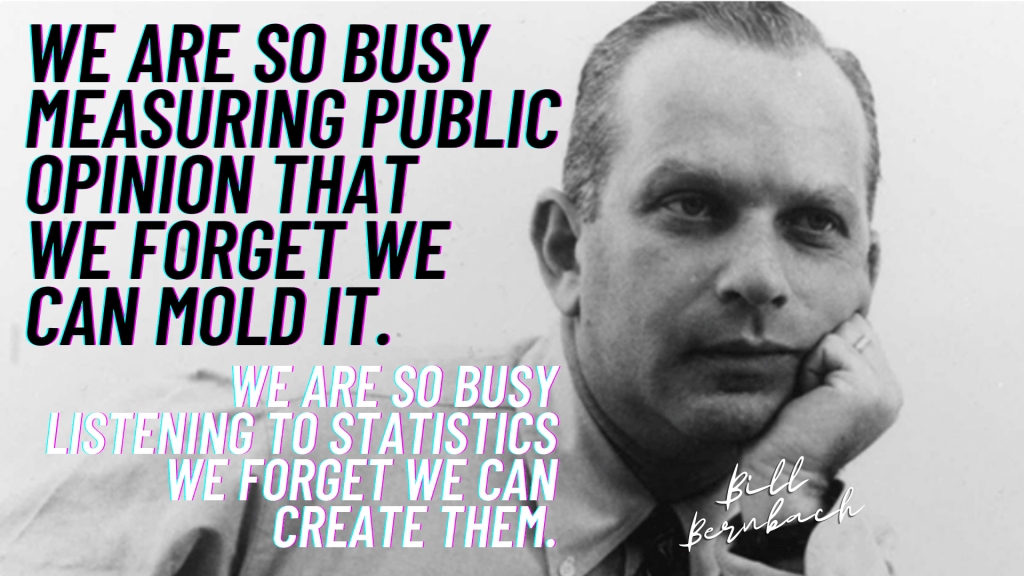
Marketers spend so much time reacting to things, new trends, following standards and statistics, that we forget we can create new standards, and statistics, OURSELVES.

Ad legend Bill Bernbach, had a quote, that outlines this idea…..

So Newton says, if you’re looking to create distinct, momentum for your brand, focus less on how you respond to market dynamics & trends, and more on how you can create them.

Follow POSMarketer – https://twitter.com/POSMarketer
LinkedIn – https://www.linkedin.com/in/whalehawk/
Music by WhaleHawk – https://whalehawk.bandcamp.com/
The Marketing Metaphorest – MOUSETRAPS

In this episode we talk: MOUSETRAPS. Is it necessary for an exterminator to know every mouse’s name, before they can do their job? Is a floor full of traps, better than a big piece of cheese? When you bait a trap with too much cheese, where does the mouse fit in?

If one of the main goals of marketing is to lure buyers out of their homes, using associated, maybe cheesy, memories, to guide behavior, action, and close the deal, then the mousetrap is a perfect metaphor to explore.

Mousetraps help explain marketing & advertising in a few ways…

To catch a lot of mice – do you need to know each one personally?

Imagine, if an exterminator came to your house and before handling the mouse problem, he wanted to get all their names.

Seems silly, but for marketers, we spend more time obsessing over “sales personas” than obsessing over selling.

In today’s hyper-targeted world, advertisers believe that marketing budgets are wasted on not understanding every movement and click of every mouse – that with enough data, we can ID all personas, find the loyalists, and get them to buy, buy, buy.

But serious research, from Byron Sharp, Ehrenberg Bass, and others, shows that personalized ads perform poorly next to generalized ads, buyers are extremely brand agnostic, and loyalty isn’t a growth strategy, if not an outright myth.

Would you rather oversee ONE plan to market and capture the attention and intention of a single category audience, mice, or have to manage MULTIPLE plans, based on THOUSANDS of individualized, market-segmentations?

That’s where AI comes in, you say? Deep learning in your martech stack? Yeah….no.

You want to attract & catch the most mice, which of the following do you think would perform the best?

Giant Cheese on Floor – think of this as mass media. Expensive.

Floor full of traps – Think of this as direct response. Exhausting.

AR projection of mice eating cheese – Think of this as social media, or influencers. Exhibitive. 

Pretty sure every CEO would be interested in the AR mousetrap – low overhead, low stakes for failure, no one get’s hurt, and no one wastes cheese. Actually, nothing happens! 

Most marketers think if they push out enough sales messaging and activity, if they lay traps all over the floor – that the mouse will show up, eventually. 
Nothing wrong with this. But overtime – the mice become wise to it, ignore the inticements. The ROI for short activations like this, diminish overtime.

In initial polls, everyone chose the giant cheese. Why? If the main point of advertising is to bring awareness and drive action, then the giant cheese hits it – it’s less important that certain mice show up, and more important that ANY and ALL cheese eating mice show up, and remember the experience. 

“When baiting a trap with cheese, leave room for the mouse.” – Saki

This quote merits deep reflection – marketers tend to bring too much of their own cheese to the marketing trap.

Too much brand puffery, too much “We,” very rarely a “You”

Every customer is looking at a brand’s advertising asking, “What’s in it for me? Where do I fit in?”

Your marketing should be relatable, not just BULL.

Before you write that next cheesy bit of copy, ask yourself, “am I leaving enough room, for the mouse?”

So – to summarize – In order to capture the most attention and intention for your brand, focus on categorization rather than segmentation, utilize broad-reaching campaigns, and make sure your marketing copy is focused on, and leaves room for, the buyer.

Follow POSMarketer – https://twitter.com/POSMarketer
LinkedIn – https://www.linkedin.com/in/whalehawk/
Music by WhaleHawk – https://whalehawk.bandcamp.com/

The Marketing Metaphorest – TREES

Looking for a better way to describe and define marketing to clients, or for your business? Well then, step into the Marketing Metaphorest w/ Jake Sanders! The POSMarketer, musician, audio illustrator, and content strategist mixes metaphors & marketing science, to demystify this important business development function.

In this episode we talk: TREES. A single acorn contains the mighty oak, depends on a diverse forest ecosystem for distribution, and if the rate at which trees are planted, is slower than the rate at which you cut them down, then trouble starts.

ONE – Like tiny acorns contain all the information required to grow a forest of full blown oaks, a marketing campaign should 1) seek to condense required brand messaging into small, distinct, easy to ingest packages, that are 2) easily replicable, dropped by the thousands, and spread by a variety of category buyers in the audience, 3) with the knowledge that without broadcast awareness, singular behaviors will never take root.  

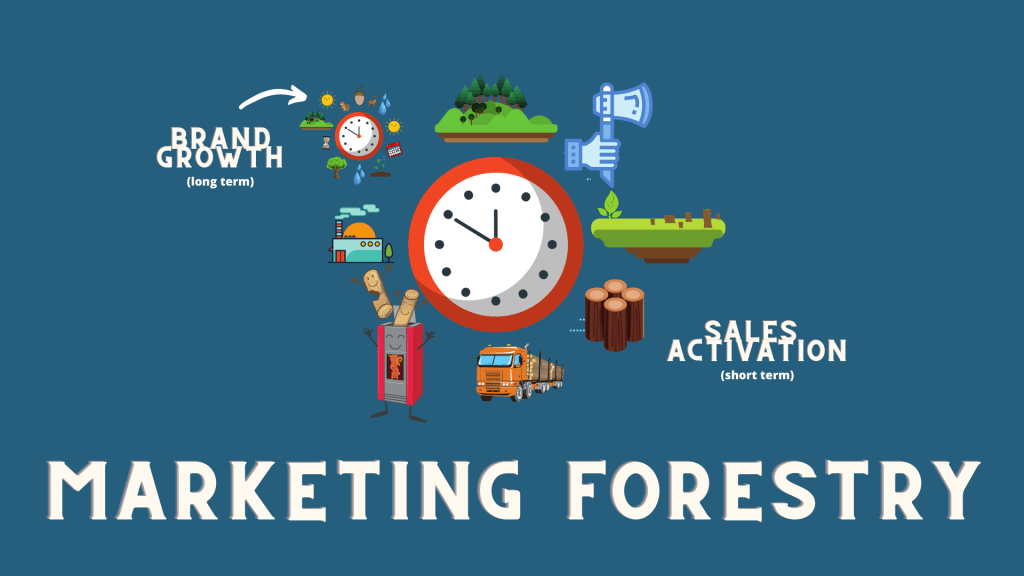
TWO – Like a tree can become a forest, effective marketing strategy takes a while to grow business into self-sustaining cycles. 

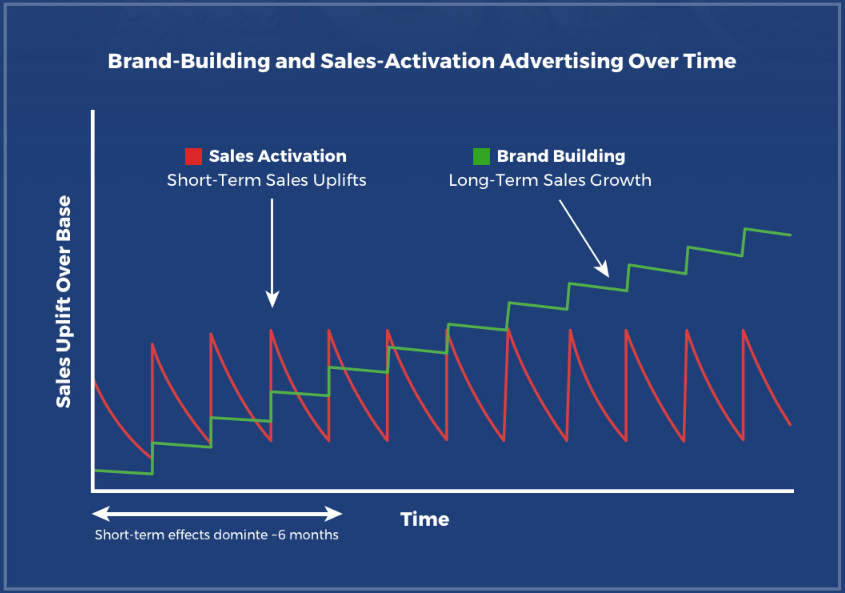
And if the rate at which you plant the long term strategy seeds for new business, outpaces the rate at which you seek short term rewards, (i.e. cutting down trees for fire) progress will be unattainable.


THREE – Like an interdependent collection of diverse trees & shrubs, ensures holistic health and progress for an entire forest ecosystem, marketing strategies must be diverse in tactics/methods/applications/settings, because business development that relies on a single cash crop is waiting for famine. 

Follow The POSMarketer – https://twitter.com/POSMarketer
On LinkedIn – https://www.linkedin.com/in/whalehawk/
Music by WhaleHawk – https://whalehawk.bandcamp.com/
The Marketing Metaphorest – WATER

Looking for a better way to describe and define marketing to clients, or for your business?

Well then, step into the Marketing Metaphorest w/ Jake Sanders! The POSMarketer, musician, audio illustrator, and content strategist mixes metaphors & marketing science, to demystify this important business development function.

Dive into the latest episode of the Marketing Metaphorest – WATER!

In this episode we talk: WATER. Water is everywhere, but it’s quality (drinking water vs salt) and conditions it exists in (ice, clouds, liquid), can vary greatly, without ever changing it’s substance.

How else does marketing relate to water?

Marketing is like WATER in a few different ways

1)

Just like rivers and oceans were the connective tissue for thriving port-towns throughout history, developing business effectively through marketing, depends upon understanding and viewing your audience through the natural pathways that brought them to the marketplace, not just as consumers in a decision vacuum.

Too many marketers think about their product only in context of it’s relationship to their buyer, but never consider the things outside of that relationship, behaviors in the buyer’s busy life and brain, which impact a brands chance of sticking out.

When you understand the tides & behaviors of your marketplace, research the rivers your buyer crosses everyday, you create more effective, resonant marketing.

To learn more about taking a behavioral approach to marketing & advertising, I recommend  “Competing Against Luck” by Clayton Christensen and CO. and “The Advertised Mind” by the brilliant Erik DuPlessis.

2)

The quality of water in the river, leading up to a spring, isn’t equal to the water you’d drink from it – and yet, both types of water, potable and non-potable, are necessary for survival.

In this metaphor, the spring is a marketing source for clear, quality sales, and the river is a pathway that ensures traffic. Business owners need to cultivate marketing activities which secure traffic as well as leads, and should respect the differences in quality.

3)

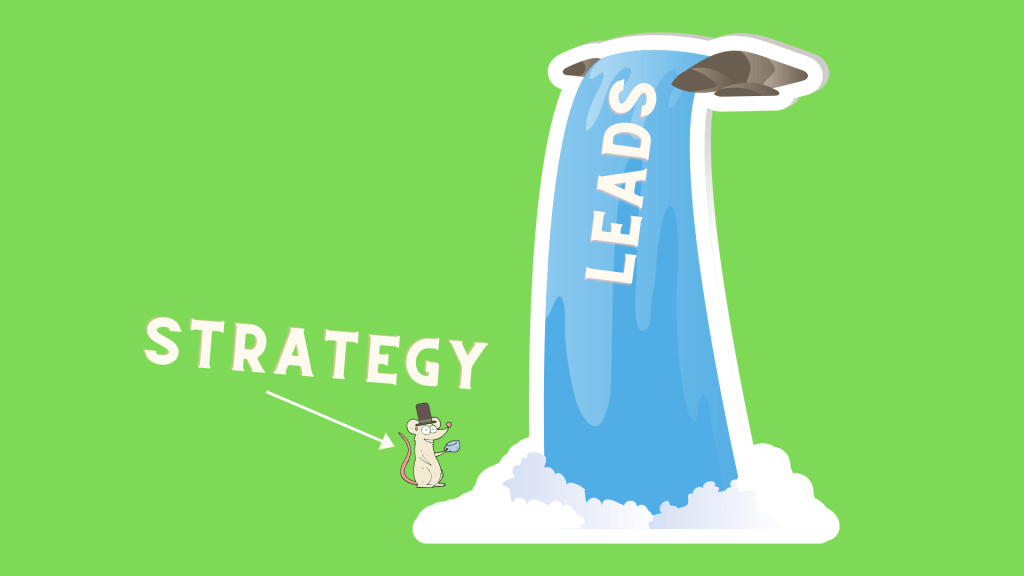
Like water, marketing effectiveness fills the strategic vessel you pour it into. You could be under a torrent of leads, but if you only have a teacup commitment to marketing strategy, you’ll be sipping progress, when you could be chugging it.

4)

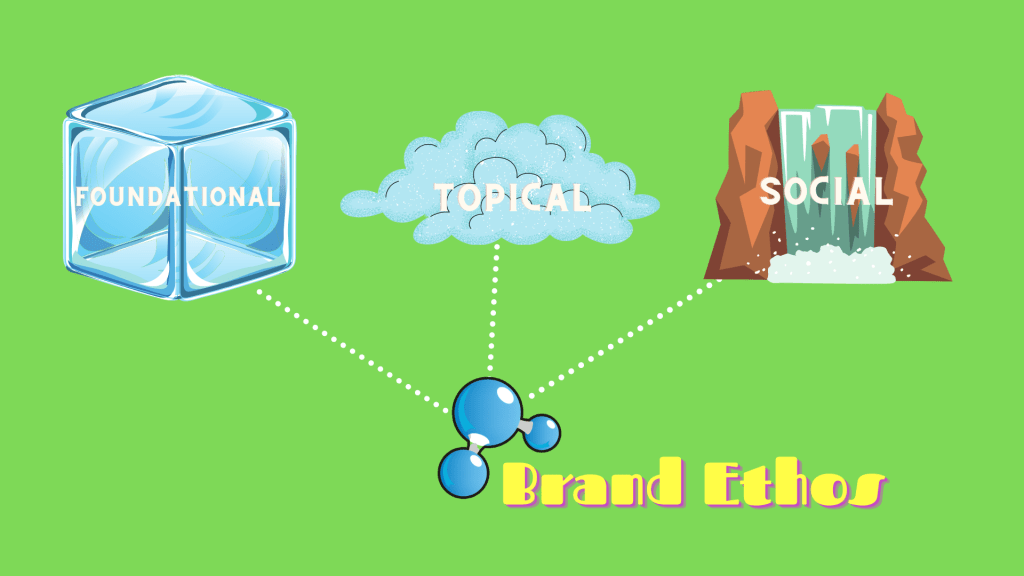
Like water, effective marketing strategy needs to be able to change and adapt, based on environmental conditions. Marketing should be lithe enough, and supported by a strong enough brand, to shift easily through varying mediums, lengths, and tone. 

Like water can become ice, liquid and vapor, while remaining water, marketing must be able to phase shift through mediums and messaging, without sacrificing brand ethos.

From email to billboards, from one-line-copy to 3,000 word white papers, and ranging in tone from boardroom-buzzwords to borderline bawdy, the execution of your marketing strategy needs to contain an element of adaptability to survive, and thrive, as the environment of your marketplace changes.

Interested to learn more about this metaphor, want to pile on your own version, or find ways to apply it all in your business? Hit me up on the POSblog, follow me on social, and until next time – I’ll see you on the internet!

The Marketing Metaphorest – NUTRITION

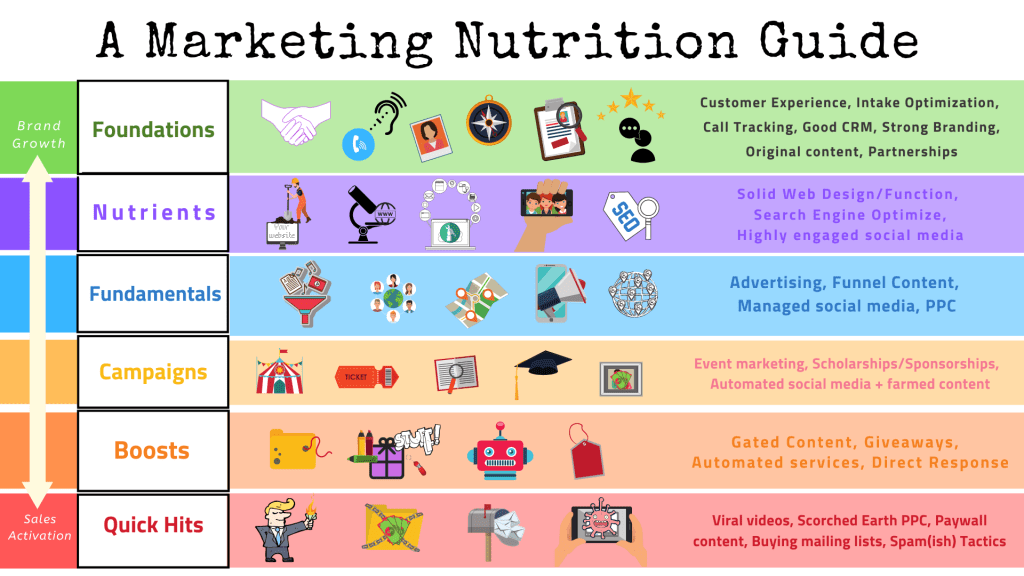
In this episode we talk: NUTRITION. Like balanced nutrition, a healthy marketing “diet” should consist of a balance of activities and practices that fulfill short-term energy demands, while also increasing brand longevity.

The latest marketing metaphor from POSMarketer, Jake Sanders.

Marketing is Nutrition – Like balanced nutrition, a healthy marketing “diet” should consist of activities and practices that fulfill short-term energy demands while increasing brand longevity.


Follow The POSMarketer – https://twitter.com/POSMarketer
On LinkedIn – https://www.linkedin.com/in/whalehawk/
Music by WhaleHawk – https://whalehawk.bandcamp.com/
Choreography by Lexy Rose – https://stretch.works

Marketing Metaphorest – INTRO & FUNNELS

Looking for a better way to describe and define marketing to clients, or for your business? Well then, step into the Marketing Metaphorest w/ Jake Sanders!

The POSMarketer, musician, audio illustrator, and content strategist, mixes metaphors & marketing science, to demystify this important business development function.

In this opening episode we learn why metaphors, and why now, and then we dive into the first metaphor:

FUNNELS

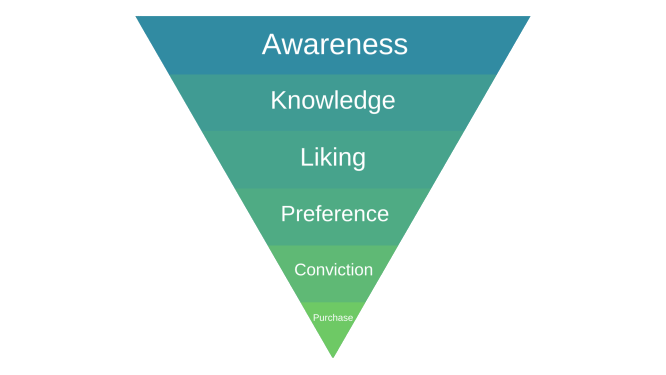
Marketing is a funnel; first goal to broadly reach potential buyers with Awareness, which narrows into Consideration for a smaller group of buyers, which then shrinks into a Decision set of buyers.
In regards to prioritizing budget for marketing activities, turn the funnel upside down to get a sense of how to properly fund marketing.

Follow The POSMarketer – https://twitter.com/POSMarketer
On LinkedIn – https://www.linkedin.com/in/whalehawk/
Music by WhaleHawk – https://whalehawk.bandcamp.com/

How Brands Grow – Byron Sharp

It seems like every book available on marketing today promises a bunch, vows to be different & useful, but then delivers little in the way of truly unique & applicable advice.

Most marketing books are tactical in nature, focusing on segments, specific channels, drilling into smaller and smaller arenas of activity, until the expertise acquired from the book is only applicable under the tightest environmental conditions….. I am now an expert in demand generation from specialized microsite SnapChat retargeting campaigns for 30-34 year old art school graduates concerned about credit liquidity, living in/around Baltimore with cat allergies.

While we are awash in advice on tactics, marketers are SUPER THIRSTY for strategic advice on how to properly employ such activities.

That’s why Byron Sharp’s “How Brands Grow” kicks every other marketing book in the shins.

Let’s jump right in with this graphic, I’ll explain Byron’s Old/New World vision as far as I can, but in the end, you have to read this book to feel it’s healing waters quench your parched marketing soul.

The book starts off like a goddamn birthday party for a creative like me – “Marketing is a creative profession and one of the main jobs is to get noticed!” — That sounds like my entire schooling history and explains why I was in trouble a lot as a kid!

Supported by mountains of evidence from the work of Ehrenberg-Bass and the IPA, Sharp details the benefits of marketing from a “new world” perspective, that is juxtaposed against an “old world,” Kotlerian (Philip Kotler) view of the profession.

The “old world” view of marketing, which many hold up as the current paragon of the profession, emphasizes segmentation, brand loyalty, and persuasion as the hallmarks of good marketing & advertising. No qualms there, right?

Zero in on loyal brand audiences who are viewing your ads in a rational capacity, teach them the messages, convince them of the uniqueness, and show them you are different and create conversations and then they will crave your marketing!

Adding technology to this only makes sense; digital ads and the concomitant surveilling opportunities, social ad stacks, A thru G intention testing capabilities, dashboards aplenty – find the exact people, at the exact location, at the exact moment, serve them the quantum slice of advertising that fits their unique persona, funnel them in, measure it all…now we’re marketing!

Sharp sees things a little differently in the “new world”….

You advertise in a crowded world and very few people pay attention to messaging, indeed, the large portion of a consumer’s purchase decision is actively ignoring a vast majority of labels to find a small set of recognizable and salient brands to make a choice from.

So the good news here – no one truly gives a shit about your UVP, USP, merits and benefits – not because these things aren’t there or meaningful to you, but because consumers just don’t even know your brand exists in the first place!

The goal of advertising is to first get noticed and then build and refresh memory structures through relevant associations, not convince an emotional and distracted audience of the rational/unique merits of a product.

Marketers build brands with advertising by getting noticed, and not just to brand loyalists, but to everyone in the category because, there is no such thing as 100% brand love.

100% loyalty is a dumb thing to quest for in marketing because consumers are brand agnostic, and metrics-wise, focusing on a smaller slice of any market segment, no matter how loyal, caps your potential for actual growth. (This is so painfully eloquent it hurts)

Huge successful brands like Coke & Dove – the majority of their buyers are not Brand Loyalists that hoard these precious brands in their underground bunkers.

No, the goal in big brand ad campaigns is to rope in Ultra-Light buyers, because that is the overwhelming majority of the brand buyers.

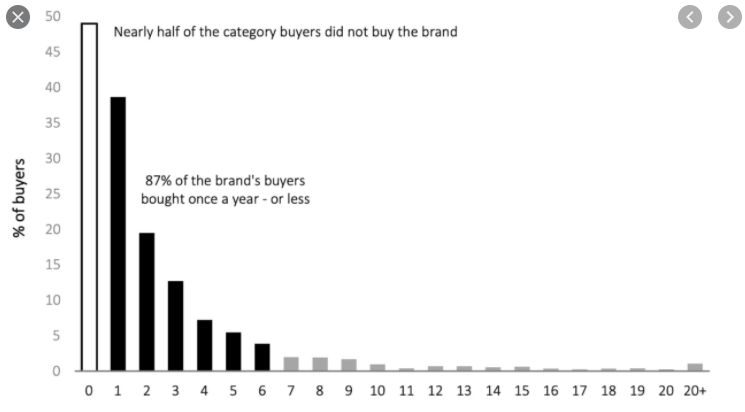
Meaning, 50% of all people who buy Coke, in one year, buy it once or twice.

A whopping 87% of all Dove buyers bought the brand only a few times…in five years. Take a look from this chart from “Eat Your Greens” –

That 20+ bump on the far right are the “loyal purchasers,” the Valhalla for most modern marketing strategies. And the huge bars to the left are brand buyers who bought Dove once, and the shaded bar is people who knew the brand, but did not buy it.

Look at the potential for growth here – where could it possibly come from?

Does brand growth mean getting more & more of that small bump on the right, or, does it happen by capturing a few of the category buyers with distinct, branded, salient and broad reaching marketing campaigns?

What else?

  • Pareto’s Law is bullshit, for the most part….
  • Your customers are not unique, they are your competitor’s customers.
  • Segmentation isn’t reflected in buyer behavior
  • Branding lasts – differentiation doesn’t

I could keep going but at some point you’re gonna have to cough up the money and BUY THIS BOOK!

This book is amazing for several reasons, but the most profound to me is this seemingly old school advertising advice somehow feels new.

As marketing interfaces with digital culture, we’ve become so entranced by behaviors, segments, and finding ways to hack into psychological consumer models, that we’ve left the heavy, brand lifting activity behind us in favor of whisper-thin bullshit tech fixes that have zero (or negative) consequences for the companies we work for. And so, the average lifespan for a CMO is dwindling down because from them upwards, no one has a firm grasp on what the marketing department ACTUALLY DOES IN THE FIRST PLACE!

Any other profession would see people up in arms, taking to the streets, demanding that we save our industry and jobs, hitting the books and finding answers – but in marketing & advertising today, the highest-rewarded minds are working on CTRs, synthesizing personas and research, making apps that are more addictive than the last; all focused on creating smaller and smaller pools of loyalty in an ever-expanding desert of consumer interest.

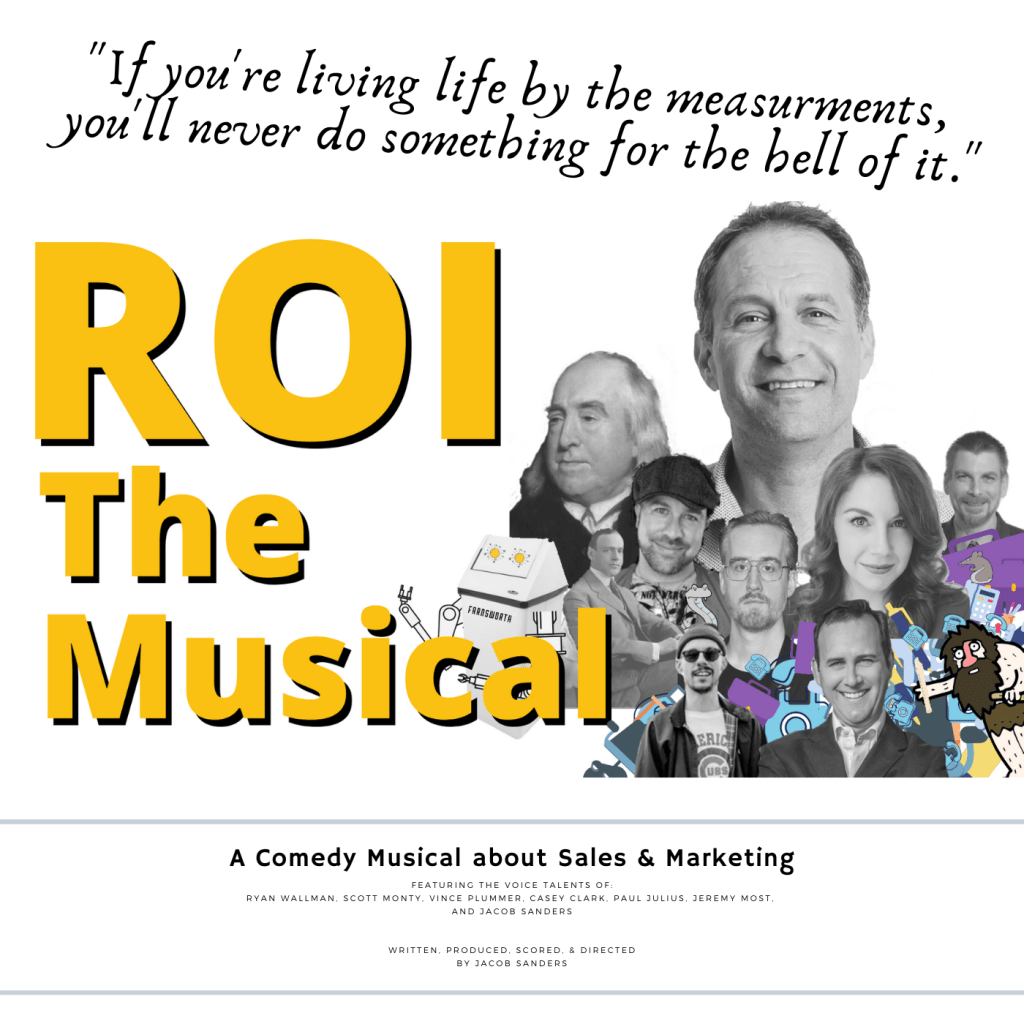
ROI: The Musical

THE MUSICAL

ELEVATOR PITCH

A time-traveling, genre-spanning, thought-leading comedy musical podcast experience about marketing, sales, and ROI, that’s sure to enchant anyone in business that’s ever asked, “RO-Why are we doing this?

STRAP LINE

“If you’re living life by the measurements,
you’ll never do something for the hell of it!”

The Trailer

BASIC IDEA

A musical audio drama, in which, the leadership staff of a fictitious company, after a journey of transformation, discover that investing in marketing the business isn’t about ROI, it’s about RO-Why.  

The question business leaders should ask in regards to marketing & ROI is not “what will we get out of marketing,” but “why are we even doing this?” 

Beyond just getting more leads & business, why choose marketing?

The WHAT of marketing, the tactics & measurements of marketing can be mishandled, misinterpreted, crammed into square holes; you want ROI, I can get you ROI.

The WHY of marketing, the strategy, is about more than a return on investments, it’s about the purpose for being in your brand’s marketplace. RO-Why.

With a marketing strategy strongly focused on WHY, the tactics, expectations, and measurements of marketing are aligned, so the way forward becomes clearly defined.

So when it comes to marketing, it’s RO-Why, before ROI. Or else, you endlessly chase more metrics that prove more things that are disconnected from the value you create and offer in your marketplace.

The Soundtrack

The Credits

Ryan Wallman as The CEO
Scott Monty as Donaldson Brown
C. Vincent Plummer as the Marketing Director
Casey Clark as Head of Sales
Jeremy Most as The CMO
Paul Julius as Paul Julius
Neon Brown as Jeremy Bentham
and Jacob Sanders

Written, Scored, Produced, and Directed by Jacob Sanders

Want a custom musical or podcast experience for your company or business? Get In Touch.

So You Wanna Start a Podcast?

Deciding to start your own podcast is a great idea – or is it?

In the process of launching the LAWsome podcast for Consultwebs with Paul Julius, we learned what it takes – and it takes a lot. 

The suggestions made below are based on our own research and preferences – for each suggestion, there are more expensive options, and indeed there are cheaper/shittier options – We encourage you to do your own research and find solutions that fit with your own preferences.

This outline is also ordered in a specific way – 

  • You must first Presearch; create a powerful purpose for your podcast, ID specific/narrow audience and install business goals – before you record anything. 
  • Then, focus on Content; what will you be saying, how will you say it, how will you pitch it? Get the words right, speak them aloud.  
  • Then, get your image right by dialing in the Creative; logos, show art, episode art cards for social media.
  • Then, get all of your Sites together; figure out where it’s going to live, be distributed, connect the dots – everything short of publishing an episode. 
  • Finally, get all the Tech and equipment you need to create, record, edit, and produce the podcast you’ve envisioned. 

We did NOT do it this way, and learned in a roundabout, hit our head on the doorway, stubbed our toe in the dark kinda way.  

Let this guide serve as the diving board into the pool of podcasting. And just like real swimming, the best way to learn is through experience, so, good luck! 

Here are some considerations, software, tools, templates and tech that you may find helpful as you get your podcast off the ground.  

PRESEARCH – Figure Out ‘Why’ First

Audience? – Narrow audience, narrow focus = loyalty, who needs this podcast?

Content? – Theme? Topics? How deep can you go on the topics, how many episodes can cover this topic?

What kind of format? – Interviews, long-form, story/chapters, product reviews, length, who is Host/Co-Host, advertising potential, will you be live-streaming, will there be video?

Competitors? – Who is doing similar? What are they offering? How can you differentiate? Can you go more narrow with your topic? Focus in on what they haven’t.

VMOSA – The Vision, Mission, Objectives, Strategies and Actions. COMPLETE THIS before doing anything – Learn more → HERE 

Goals – Are you ultimately looking for emails, bookings, sales? Find a way to incorporate the “Ask” naturally.  

CONTENT – Show format, content schedule

Show/Episode Flow & Formatting – Use Google Docs to keep a list of topics, guests, links, and show lengths to make sure you’re staying on theme.

One-Sheet – Create a one-sheet pitch for your podcast, highlight benefits/topics/themes – sell the podcast – this can be sent to potential guests, advertisers, used on social, in show blogs

Content Schedule – Map out the episodes and dates for recording and distribution 

Email Templates – Have prefabricated starting points for your most frequently sent emails – Interview requests, sharing requests, links – be sure the footer includes podcast logo! 

ID3 Settings Template – For your mp3s, you’ll want to make sure the ID3 (metadata) tags are complete, so keeping a good reference of what a complete ID3 tag looks like is a good idea.

Blog Per Episode – Your site needs to be updated with every episode. 

Influencer List – Research people who frequently talk about your show’s themes on social media, get with them/tag them when publishing

SITES – Destinations, Applications to Create/Distribute Podcast

Your Website – A place to send folks, collect info, update with episodes, embed LibSyn code.

Social Platforms – Twitter, FB, Pinterest? Where is your audience – ?

LibSyn – Pay to host content and distribute to major platforms, ensure ID3 tags (metadata that explains the file on the web and connects back to you) are complete.  

iTunes Podcast Connect – Submit your LibSyn RSS feed to iTunes, refresh, some analytics – Only takes a day or so to submit, make sure you are ready to Publish before submitting to iTunes 

Google Docs – A place to create show notes, links for guests, collect art/logos/episode cards, 

Calendly – To schedule interviews

CREATIVE – Podcast brand/logo/show art

Canva.com – Image editor, visual content engine – online, quick, easy to use and provides templates! 

Show Logo – review iTunes podcast art, create similar – 3000 x 3000 px – 

Social Platform Art – Banners, right-sized art cards for distribution

Episode Art Cards – Social posts that feature the episode art, logo, features of the episode, visual banners for iTunes and GooglePlay – 

Follow LibSyn FAQs – Art requirements (size, file type) will be explained in LibSyn to ensure that all your logos, wallpapers and backgrounds will look good. 

TECH – Running a radio station

Microphone – Audio Technica AT2035 Condenser

Stand – On-Stage Stands MS7701B Tripod Microphone Stand – Mic needs to be free-standing, not on desk.

Pop-Filter – Prevent the “pffs” and unnecessary mouth noises

Mic Baffle – Deaden the room sound.

No alt text provided for this image

Closed-ear headphones – Sennheiser HD 280 Pro – closed-ear contains audio bleed from headphones better

Digital Audio Workstation (DAW) – Audio editing platform to edit show, add music, etc – Audacity, Logic, Garageband – YOU NEED TO LEARN HOW TO EDIT WAVEFORMS – how to maintain audio levels with compression and other mastering tools, and how to export MONO mp3s. 

Audio HiJack – A program that allows you to capture audio from either specific applications like Skype, or your entire computer, then export as mp3 and edit in your DAW.

Skype – For interviews or audio access to guests, including options for video, Skype is the way to go. 

Original Music – You’ll want a theme and music that is distinct to your show – HIRE A COMPOSER – or, find royalty-free music and be sure to credit musicians and composers/links to their work. 

Total cost for Tech investments → $500+

So that’s it then…..?

Not quite.

The two main ingredients to a podcast, or any successful content marketing idea, are CONSISTENCY and TONE.

Be consistent or be forgotten.

We all have awesome ideas, passionate ones. But passion doesn’t scale.

When you set out for this endeavor, think romance, not passion. Make sure you have a deep well of topics and ideas you can drink from regularly and for a long while.

Podcasting is a performance art.

Don’t think for one second that a podcast is “just talking.” Your podcast is here to perform, and the hosts better deliver because the competition isn’t the next business in your vertical, it’s the New York Times, or WNYC, or Serial, or any other high-quality audio experience up for grabs in the marketplace of podcasts.

Speaking in public or on record is an art with artistic tools like rhetoric, grammar, colloquial flourishes, inflections, and melody. If you are still thinking of doing a podcast, consider the entertainment quality of your hosts and ensure they are ready to deliver a performance with each and every episode

In Conclusion….

If you have any questions about your podcast, or are interested to learn more, let’s connect here on LinkedIn.

Good luck and happy podcasting!